
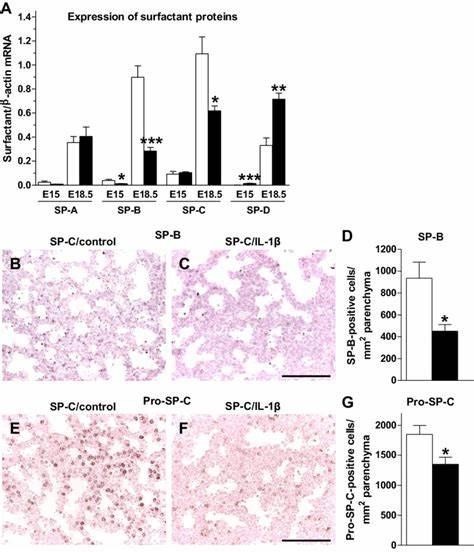
Decreased surfactant production in the preterm lung is a problem because surfactant
dilates the bronchioles, decreasing airway resistance.
provides transportation for oxygen to enter the blood supply.
keeps the alveoli open during expiration.
causes increased permeability of the alveoli.
The Correct Answer is C
Choice A) dilates the bronchioles, decreasing airway resistance: This is not the correct function of surfactant.
Surfactant is a substance that reduces the surface tension of the fluid that lines the alveoli, which are the tiny air sacs in the lungs where gas exchange occurs. Surfactant does not affect the diameter of the bronchioles, which are the small airways that branch from the bronchi. Bronchodilation and bronchoconstriction are regulated by the autonomic nervous system and various mediators, such as histamine, epinephrine, and acetylcholine.
Choice B) provides transportation for oxygen to enter the blood supply: This is not the correct function of surfactant. Surfactant does not transport oxygen or any other gas. Oxygen diffuses from the alveoli into the capillaries, where it binds to hemoglobin in the red blood cells. The red blood cells then transport oxygen to the tissues via the blood circulation. Surfactant does not play a role in this process.
Choice C) keeps the alveoli open during expiration: This is the correct function of surfactant. Surfactant prevents the alveoli from collapsing during expiration by lowering the surface tension of the fluid that lines them. This allows for easier breathing and better gas exchange. Without enough surfactant, the alveoli tend to collapse and stick together, causing atelectasis, which is a condition where some or all of a lung collapses. Atelectasis can lead to hypoxia, respiratory distress, and infection.
Choice D) causes increased permeability of the alveoli: This is not the correct function of surfactant. Surfactant does not increase or decrease the permeability of the alveoli, which is the ability of substances to pass through them.
Permeability of the alveoli depends on several factors, such as pressure gradients, solubility, molecular size, and membrane thickness. Increased permeability of the alveoli can occur in conditions such as acute respiratory distress syndrome (ARDS), where fluid leaks into the alveolar space and impairs gas exchange. Surfactant does not cause this condition, but it can be affected by it.
Nursing Test Bank
Naxlex Comprehensive Predictor Exams
Related Questions
Correct Answer is D
Explanation
Choice a) Placenta previa is incorrect because this is a condition where the placenta partially or completely covers the cervix, which can cause painless vaginal bleeding in the third trimester. It is not related to trauma and does not require hospitalization unless bleeding occurs.
Choice b) Dehydration is incorrect because this is a condition where the body loses more fluid than it takes in, which can cause symptoms such as thirst, dry mouth, headache, fatigue, and dizziness. It is not a complication of pregnancy and can be prevented by drinking enough water and avoiding caffeine and alcohol.
Choice c) Gestational hypertension is incorrect because this is a condition where the blood pressure rises above 140/90 mmHg after 20 weeks of pregnancy, which can cause complications such as preeclampsia, eclampsia, and fetal growth restriction. It is not caused by trauma and can be managed by regular antenatal care and medication if needed.
Choice d) Abruptio placentae is correct because this is a condition where the placenta separates from the uterine wall before delivery, which can cause severe vaginal bleeding, abdominal pain, uterine contractions, and fetal distress. It is a life-threatening emergency that can be triggered by trauma and requires immediate delivery of the baby and treatment of shock and blood loss. Therefore, a woman who is 8 months pregnant and involved in a serious motor vehicle crash should be admitted to the hospital for observation for this complication.
Correct Answer is D
Explanation
Choice a) They are born before 38 weeks of gestation is incorrect because this is not the definition of SGA. SGA refers to newborns who have a birth weight or length that is significantly lower than expected for their gestational age, regardless of when they are born. Therefore, a newborn can be SGA even if they are born at term or post-term.
Choice b) Placental malfunction is the only recognized cause of this condition is incorrect because this is not the only factor that can contribute to SGA. Placental malfunction can cause fetal growth restriction due to insufficient blood supply and nutrients to the fetus, but there are other possible causes such as maternal factors (e.g.,
hypertension, diabetes, smoking, malnutrition), fetal factors (e.g., chromosomal abnormalities, infections, congenital anomalies), and environmental factors (e.g., altitude, pollution, stress).
Choice c) They weigh less than 2500 g is incorrect because this is not the criterion for SGA. SGA is based on the comparison of the newborn's weight or length with the expected values for their gestational age, not on an absolute cutoff. Therefore, a newborn can be SGA even if they weigh more than 2500 g, as long as they are below the 10th percentile for their gestational age.
Choice d) They are below the 10th percentile on gestational growth charts is correct because this is the most commonly used definition of SGA. Gestational growth charts are tools that plot the expected weight or length of a fetus or newborn according to their gestational age and sex. They are based on population data and can vary
depending on the ethnicity and region of origin of the mother and the baby. A newborn who falls below the 10th percentile on these charts is considered SGA, meaning that they have grown less than 90% of their peers .
Whether you are a student looking to ace your exams or a practicing nurse seeking to enhance your expertise , our nursing education contents will empower you with the confidence and competence to make a difference in the lives of patients and become a respected leader in the healthcare field.
Visit Naxlex, invest in your future and unlock endless possibilities with our unparalleled nursing education contents today