
During a respiratory assessment, which breath sound would you expect to hear that is soft and low-pitched, resembling the sound of wind blowing through trees?
Rales
Tracheal breath sounds
Bronchial breath sounds
Vesicular breath sounds
The Correct Answer is D
Choice A reason: Rales, also known as crackles, are adventitious (abnormal) lung sounds that indicate fluid in the small airways, such as in pneumonia or congestive heart failure. They are characterized by discontinuous, popping sounds rather than the soft, low-pitched, rustling sound of normal healthy lung ventilation.
Choice B reason: Tracheal breath sounds are very loud, high-pitched, and harsh, heard directly over the trachea. They are distinctly different from the soft, low-pitched sounds of normal peripheral lung tissue. These sounds are not indicative of normal peripheral respiratory gas exchange but reflect air moving through the main airway.
Choice C reason: Bronchial breath sounds are loud, high-pitched, and hollow, heard over the large airways such as the manubrium. They have a distinct pause between inspiration and expiration and are much more intense than the gentle, soft sounds heard throughout the majority of the peripheral lung fields.
Choice D reason: Vesicular breath sounds are the normal, soft, low-pitched sounds heard over most of the peripheral lung fields. The sound is often described as a soft, gentle rustling, similar to wind blowing through trees, produced by air moving into the smaller bronchioles and alveoli during inhalation.
Nursing Test Bank
Naxlex Comprehensive Predictor Exams
Related Questions
Correct Answer is D
Explanation
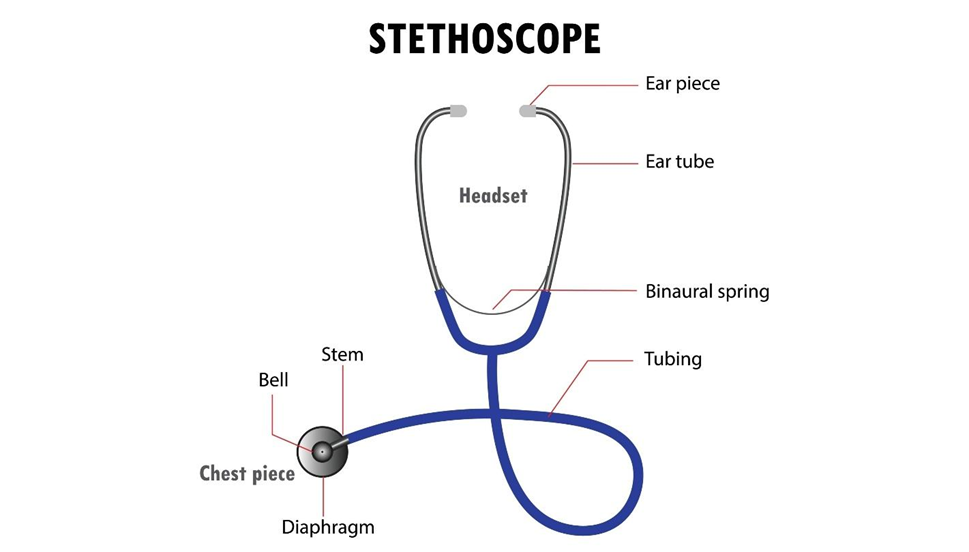
Choice A reason: The bell of the stethoscope is a concave component designed specifically for detecting low-frequency sounds, such as the S3 or S4 heart sounds or low-pitched diastolic murmurs. When placed lightly against the skin, it allows low-frequency vibrations to pass through without being dampened, making it ineffective for high-pitched sounds.
Choice B reason: The tubing is a conduit for sound waves traveling from the chest piece to the earpieces. Its length, thickness, and internal diameter are optimized to minimize sound loss and ambient noise interference, but the tubing itself has no role in the filtering or specific auscultation of high-frequency versus low-frequency heart sounds.
Choice C reason: The earpieces are designed to ensure a comfortable and secure fit in the user's ear canals to exclude external ambient noise and direct sound into the ear. They do not possess any functional mechanism for frequency discrimination or the selective enhancement of high-pitched sounds during the cardiac examination process.
Choice D reason: The diaphragm is a stiff, flat disc that effectively transmits high-frequency sounds. It functions by filtering out low-frequency sounds while permitting high-pitched sounds, such as the S1 and S2 heart sounds and certain systolic murmurs, to pass through clearly, making it the essential component for standard cardiac assessment.
Correct Answer is B
Explanation
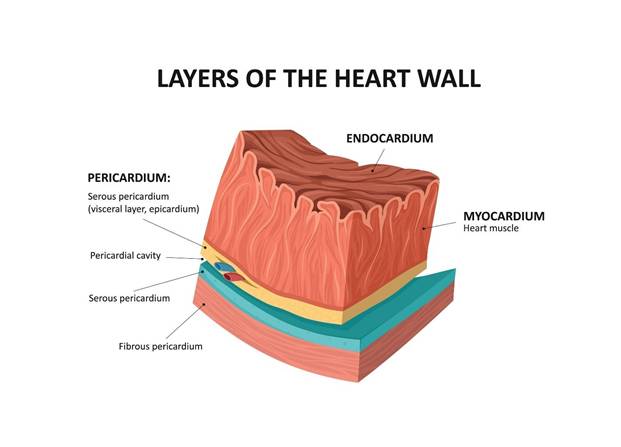
Choice A reason: The endocardium is the innermost layer of the heart, consisting of endothelial cells that line the chambers and valves. While it provides a smooth, frictionless surface for blood flow, it does not possess the contractile properties necessary to generate the mechanical force required for pumping blood.
Choice B reason: The myocardium is the thick, muscular middle layer of the heart wall. It is composed of specialized cardiac muscle cells that possess the contractile ability to generate high pressure and force, making it the primary engine responsible for the mechanical pumping action that circulates blood throughout the body.
Shutterstock
Choice C reason: The epicardium is the outer serous layer of the heart wall, also known as the visceral layer of the serous pericardium. It serves a protective function and contains coronary blood vessels and adipose tissue, but it plays no role in the direct contractile force production for blood circulation.
Choice D reason: The pericardium is the fibrous sac that surrounds and protects the heart. It provides physical support and prevents the heart from over-expanding. While it is essential for cardiac health, it is a structural covering and does not contribute to the contractile muscular force of the heart chambers.
Whether you are a student looking to ace your exams or a practicing nurse seeking to enhance your expertise , our nursing education contents will empower you with the confidence and competence to make a difference in the lives of patients and become a respected leader in the healthcare field.
Visit Naxlex, invest in your future and unlock endless possibilities with our unparalleled nursing education contents today