
Which of the following layers of the heart is most involved in the pumping action?
Endocardium
Myocardium
Epicardium
Pericardium
The Correct Answer is B
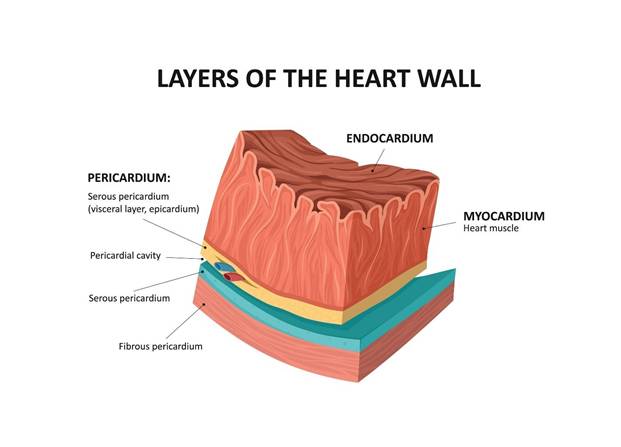
Choice A reason: The endocardium is the innermost layer of the heart, consisting of endothelial cells that line the chambers and valves. While it provides a smooth, frictionless surface for blood flow, it does not possess the contractile properties necessary to generate the mechanical force required for pumping blood.
Choice B reason: The myocardium is the thick, muscular middle layer of the heart wall. It is composed of specialized cardiac muscle cells that possess the contractile ability to generate high pressure and force, making it the primary engine responsible for the mechanical pumping action that circulates blood throughout the body.
Shutterstock
Choice C reason: The epicardium is the outer serous layer of the heart wall, also known as the visceral layer of the serous pericardium. It serves a protective function and contains coronary blood vessels and adipose tissue, but it plays no role in the direct contractile force production for blood circulation.
Choice D reason: The pericardium is the fibrous sac that surrounds and protects the heart. It provides physical support and prevents the heart from over-expanding. While it is essential for cardiac health, it is a structural covering and does not contribute to the contractile muscular force of the heart chambers.
Nursing Test Bank
Naxlex Comprehensive Predictor Exams
Related Questions
Correct Answer is D
Explanation
Choice A reason: Increasing fiber intake without a concomitant increase in fluid consumption can actually exacerbate constipation by creating a hardened, dry fecal mass in the colon. Fiber requires adequate hydration to swell and provide the bulk necessary to stimulate normal bowel motility and prevent impaction.
Choice B reason: Dairy products, such as milk, cheese, and yogurt, are generally devoid of dietary fiber. Consuming high amounts of dairy will not assist in managing opioid-induced constipation and may, in some individuals, contribute to gastrointestinal discomfort or constipation depending on individual digestive tolerance to lactose.
Choice C reason: Fiber does not decrease peristalsis; rather, it promotes it by increasing the mechanical stretch on the intestinal walls due to bulk. Opioids themselves are what decrease peristalsis by binding to mu-opioid receptors in the gut, and fiber acts as a counter-measure to improve stool consistency and transit.
Choice D reason: Dietary fiber, particularly insoluble fiber, adds bulk to the stool and retains water within the intestinal lumen. This process hydrates the stool, making it softer and larger, which facilitates easier passage through the colon and helps counteract the slowing effects of opioid medications on the gastrointestinal tract.
Correct Answer is C
Explanation
Choice A reason: A traumatic hematoma or muscle contusion is a localized collection of extravasated blood within tissues resulting from vascular disruption. It is a benign inflammatory and reparative response to trauma, not a neoplastic process; therefore, suggesting it might become cancerous demonstrates a fundamental misunderstanding of the etiology of trauma-induced tissue lesions.
Choice B reason: While hematoma formation involves blood, it occurs as a local response to blunt force trauma that tears small blood vessels. It is not an indicator of a systemic coagulopathy or hematological disorder in the absence of other symptoms such as spontaneous bruising, petechiae, or excessive gingival bleeding.
Choice C reason: When blunt trauma causes a muscle tear or disruption in the myofibrillar architecture, the resulting damage to local vasculature leads to the extravasation of blood into the interstitial spaces. This hematoma initially feels firm or "hard" as the blood pools and begins to coagulate within the limited space of the muscle compartment.
Choice D reason: Hematomas are dynamic, self-limiting lesions. Over time, the body initiates a resorption process where macrophages and other inflammatory cells break down the coagulated blood and heme products. Most traumatic hematomas resolve spontaneously through this physiological remodeling, meaning the assertion that the lump is permanent is clinically incorrect.
Whether you are a student looking to ace your exams or a practicing nurse seeking to enhance your expertise , our nursing education contents will empower you with the confidence and competence to make a difference in the lives of patients and become a respected leader in the healthcare field.
Visit Naxlex, invest in your future and unlock endless possibilities with our unparalleled nursing education contents today