
How does the kidney respond to low systemic blood pressure?
By increasing urine production
By producing erythropoietin
By excreting more sodium
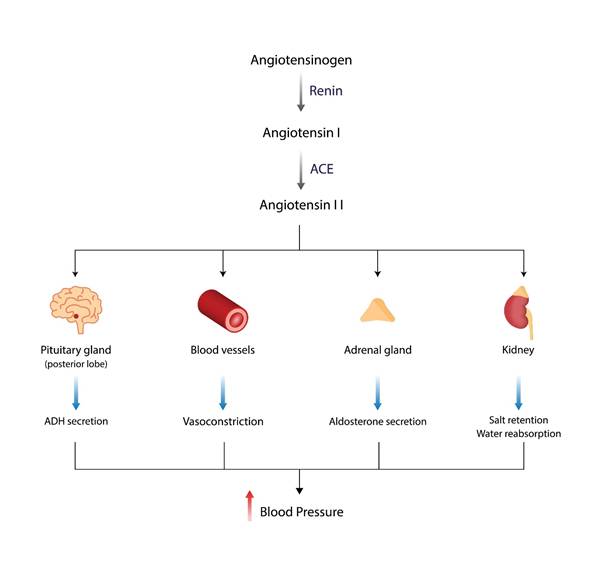
By releasing renin to activate the renin-angiotensin-aldosterone system
The Correct Answer is D
A. By increasing urine production: Increased urine production would lower blood volume and further decrease blood pressure.
B. By producing erythropoietin: Erythropoietin is released in response to low oxygen (hypoxia), not specifically low blood pressure.
C. By excreting more sodium: Excreting sodium causes water loss, which would lower blood pressure. The kidneys actually retain sodium to raise blood pressure.
D. By releasing renin to activate the renin-angiotensin-aldosterone system: When blood pressure drops, the juxtaglomerular cells in the kidney release renin. This triggers a cascade that results in vasoconstriction and salt/water retention to increase blood pressure.
Nursing Test Bank
Naxlex Comprehensive Predictor Exams
Related Questions
Correct Answer is D
Explanation
A. Increased number of alveoli: Emphysema causes loss, not an increase, of alveoli.
B. Enhanced pulmonary blood flow: Pulmonary blood flow is often impaired due to destruction of capillary beds.
C. Increased elasticity of lung tissue: Emphysema is characterized by decreased elasticity, leading to air trapping.
D. Destruction of alveolar walls: Loss of alveolar walls reduces surface area for gas exchange and destroys capillary networks, impairing oxygen and carbon dioxide exchange.
Correct Answer is A
Explanation
A. Production of erythropoietin: While the kidney produces EPO, this is a hormonal function and not the primary physical process of the nephron unit itself.
B. Filtration, reabsorption, and secretion: These are the three fundamental processes that allow the nephron to clear waste from the blood while retaining essential water and nutrients.
C. Only filtration of blood: Filtration is only the first step; without reabsorption, the body would lose all its fluid and nutrients in minutes.
D. Regulation of acid-base balance: This is one outcome of nephron function, but the primary mechanism involves the combined effort of filtration, reabsorption, and secretion.
Whether you are a student looking to ace your exams or a practicing nurse seeking to enhance your expertise , our nursing education contents will empower you with the confidence and competence to make a difference in the lives of patients and become a respected leader in the healthcare field.
Visit Naxlex, invest in your future and unlock endless possibilities with our unparalleled nursing education contents today