
Which of the following statements best describes the relationship between intrinsic factor and vitamin B12?
Intrinsic factor is necessary for the absorption of vitamin B12 in the ileum.
Intrinsic factor aids in the conversion of vitamin B12 to its active form.
Intrinsic factor is required for the excretion of vitamin B12 in the kidneys.
Intrinsic factor enhances the synthesis of vitamin B12 in the liver.
The Correct Answer is A
A. Intrinsic factor is necessary for the absorption of vitamin B12 in the ileum: Intrinsic factor acts as a carrier protein; without it, the receptors in the terminal ileum cannot recognize or transport B12 into the bloodstream.
B. Intrinsic factor aids in the conversion of vitamin B12 to its active form.: Conversion to active forms occurs within the cells/body; intrinsic factor's role is strictly limited to transport across the intestinal wall.
C. Intrinsic factor is required for excretion of vitamin B12 in the kidneys.: It is required for absorption (entry), not excretion (exit).
D. Intrinsic factor enhances synthesis of vitamin B12 in the liver.: Humans cannot synthesize B12 in the liver; it must be ingested.
Nursing Test Bank
Naxlex Comprehensive Predictor Exams
Related Questions
Correct Answer is A
Explanation
A. Concentration of urine: The Loop of Henle creates a concentration gradient in the renal medulla (via the countercurrent multiplier system), which allows the kidney to reabsorb water and produce concentrated urine.
B. Filtration of blood: This is the function of the Glomerulus/Bowman’s capsule.
C. Regulation of blood pH: This occurs primarily in the proximal and distal convoluted tubules.
D. Excretion of waste products: While waste passes through it, the primary unique structural function of the Loop is the osmotic gradient.
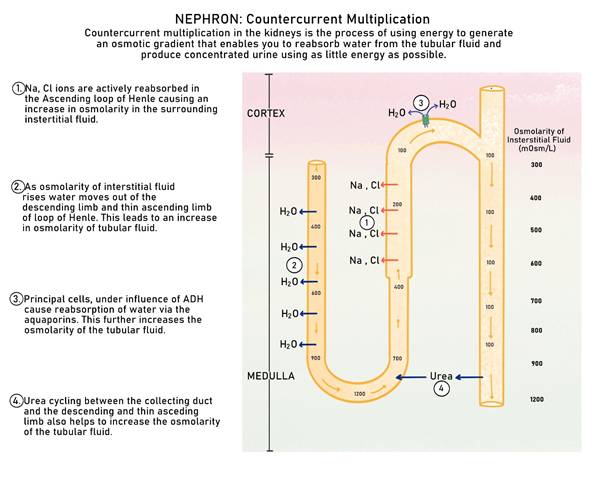
Correct Answer is A
Explanation
A. Vitamin B12: This is the specific vitamin that requires intrinsic factor (produced in the stomach) for absorption in the ileum.
B. Vitamin K: Vitamin K is synthesized by gut bacteria and absorbed with fats.
C. Vitamin C: Vitamin C is water-soluble and does not require intrinsic factor.
D. Vitamin A: Vitamin A is fat-soluble and does not require intrinsic factor.
Whether you are a student looking to ace your exams or a practicing nurse seeking to enhance your expertise , our nursing education contents will empower you with the confidence and competence to make a difference in the lives of patients and become a respected leader in the healthcare field.
Visit Naxlex, invest in your future and unlock endless possibilities with our unparalleled nursing education contents today