
A nurse is assessing a school-age child who is receiving morphine. For which of the following adverse effects should the nurse monitor?
Prolonged wound healing
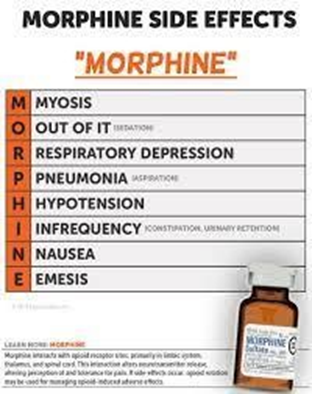
Nausea
Stevens-Johnson syndrome
Renal failure
The Correct Answer is B
Rationale:
A. This is not a common adverse effect associated with morphine.
B. Nausea is a common adverse effect of morphine and should be monitored for, particularly in pediatric patients.
C. Stevens-Johnson syndrome is a severe allergic reaction and is not typically associated with morphine.
D. While morphine can cause urinary retention, it is not typically associated with renal failure.
Nursing Test Bank
Naxlex Comprehensive Predictor Exams
Related Questions
Correct Answer is B
Explanation
Rationale:
A. This amount of drainage may be expected postoperatively, and it is not indicative of a significant issue.
B. This is a concerning finding indicating possible inadequate renal perfusion, especially considering the postoperative status of the toddler.
C. While slightly lower than the typical body temperature, it is not necessarily abnormal, particularly in a postoperative setting.
D. Pulses of 2+ indicate adequate perfusion and are not concerning.
Correct Answer is A
Explanation
A. Given the cloudy appearance of the cerebrospinal fluid (CSF) and elevated white blood cell count (WBC) in the CSF, there may be an indication of meningitis.
Ceftriaxone is a broad-spectrum antibiotic commonly used to treat bacterial meningitis. Therefore, administering ceftriaxone would be an appropriate action.
B. While vaccines are important for preventing infections, administering the pneumococcal conjugate vaccine is not the immediate priority in this scenario. The patient is already exhibiting signs of a potential infection, and treatment should focus on addressing the current condition first.
C. The infant's serum glucose level is low at 64 mg/dL (normal range: 60 to 100 mg/dL).
However, the primary concern at this moment appears to be the potential bacterial meningitis indicated by the cloudy CSF, elevated WBC count, and abnormal CSF glucose level. While monitoring serum glucose is important, it is not the most critical action in this case.
D. Neutropenic precautions are typically implemented to protect patients with low neutrophil counts (neutropenia) from acquiring infections. However, there is no indication of neutropenia in the provided diagnostic results. Additionally, the cloudy CSF and elevated WBC count suggest a possible bacterial infection rather than a neutropenic condition.
Whether you are a student looking to ace your exams or a practicing nurse seeking to enhance your expertise , our nursing education contents will empower you with the confidence and competence to make a difference in the lives of patients and become a respected leader in the healthcare field.
Visit Naxlex, invest in your future and unlock endless possibilities with our unparalleled nursing education contents today