
Provided is an ECG image of Atrial fibrillation.
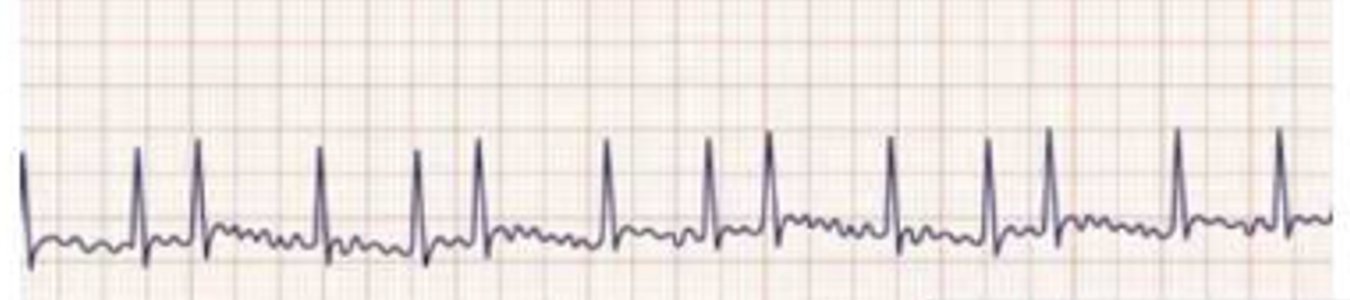
Irregularly irregular rhythm with no discernible P waves and fibrillatory waves.
Regular rhythm with sawtooth-shaped waves between QRS complexes.
Regular rhythm with a rate between 60 to 100 beats per minute.
Wide QRS complexes with a rate exceeding 150 beats per minute.
The Correct Answer is A
Choice A rationale
This rhythm occurs when multiple ectopic foci in the atria fire rapidly, leading to a loss of coordinated atrial contraction. The absence of a single depolarization origin means P waves are replaced by chaotic fibrillatory waves. Because the atrioventricular node receives these impulses randomly, the ventricular response is irregularly irregular. This hemodynamic inefficiency often leads to blood stasis in the atria, significantly increasing the risk of thromboembolic events such as stroke.
Choice B rationale
A regular rhythm characterized by sawtooth waves is indicative of atrial flutter rather than fibrillation. In flutter, a macro-reentrant circuit typically in the right atrium creates a consistent, rapid atrial rate, often around 300 beats per minute. The atrioventricular node usually blocks a portion of these impulses, resulting in a 2 to 1 or 3 to 1 conduction ratio. This maintains a regular ventricular rhythm, unlike the chaotic irregularity seen in fibrillation.
Choice C rationale
A regular rhythm with a rate between 60 to 100 beats per minute defines a normal sinus rhythm. In this state, the sinoatrial node acts as the primary pacemaker, sending organized electrical impulses through the atria and then to the ventricles. This produces a clear P wave before every QRS complex and a consistent PR interval. Since atrial fibrillation is inherently irregular and lacks P waves, it does not meet these criteria for normalcy.
Choice D rationale
Wide QRS complexes at a rate exceeding 150 beats per minute are characteristic of ventricular tachycardia. This life-threatening arrhythmia originates in the ventricles, bypassing the normal conduction system and leading to widened QRS durations greater than 0.12 seconds. In contrast, atrial fibrillation usually presents with narrow QRS complexes unless a bundle branch block is present. The primary issue in fibrillation is atrial chaos, not the rapid, wide ventricular firing seen here.
Nursing Test Bank
Naxlex Comprehensive Predictor Exams
Related Questions
Correct Answer is D
Explanation
Choice A rationale
While aspirin does possess analgesic properties by inhibiting the synthesis of prostaglandins in the central and peripheral nervous systems, this is not the primary reason for its prescription following a myocardial infarction. In the context of post-MI care, the dose of 325 mg is intended for its systemic vascular benefits rather than simple pain relief. Other medications or lower doses of aspirin might be used for pain, but the clinical priority here is cardiovascular protection.
Choice B rationale
Aspirin exhibits anti-inflammatory effects by blocking cyclooxygenase enzymes, which reduces the production of mediators that cause tissue swelling and pain. Although inflammation plays a significant role in the progression of atherosclerosis, the specific indication for a client with a history of myocardial infarction focuses more on the immediate prevention of acute thrombotic events. While the anti-inflammatory benefit is present, it is secondary to the critical need for maintaining patency in the coronary arteries.
Choice C rationale
The antipyretic action of aspirin involves acting on the hypothalamus to override an interleukin-induced increase in body temperature. While effective for reducing fever, this pharmacological action is irrelevant to the long-term management of a client with a history of myocardial infarction. Clients in this category are not typically suffering from chronic febrile conditions; therefore, using aspirin for its heat-reducing properties would not provide the specific secondary prevention required for their underlying cardiac pathology.
Choice D rationale
In post-myocardial infarction management, aspirin is primarily used for its antiplatelet aggregate effect. It irreversibly inhibits the cyclooxygenase-1 enzyme within platelets, preventing the formation of thromboxane A2, which is a potent inducer of platelet aggregation. By reducing the ability of platelets to clump together, aspirin decreases the risk of re-occlusion of coronary arteries and prevents subsequent ischemic events. This is the therapeutic cornerstone for long-term survival and reduction of recurrent cardiac mortality.
Correct Answer is ["0.15"]
Explanation
Step 1 is 0.15 mg ÷ 1 mg/ml = 0.15 ml. The nurse will administer 0.15 ml.
Whether you are a student looking to ace your exams or a practicing nurse seeking to enhance your expertise , our nursing education contents will empower you with the confidence and competence to make a difference in the lives of patients and become a respected leader in the healthcare field.
Visit Naxlex, invest in your future and unlock endless possibilities with our unparalleled nursing education contents today