
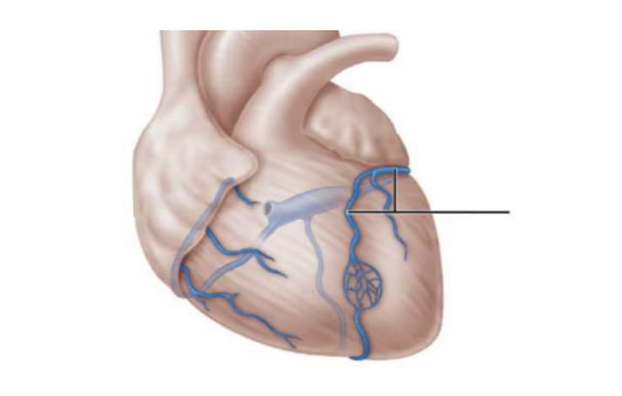
The blood vessel on the image is the
Small cardiac vein
Coronary sinus
Anterior cardiac vein
Superior vena cava
Middle cardiac vein
Great cardiac vein
The Correct Answer is F
A. Small cardiac vein: The small cardiac vein runs along the right margin of the heart and drains blood from the right atrium and ventricle. It empties into the coronary sinus, facilitating venous return to the right atrium.
B. Coronary sinus: The coronary sinus is a large venous channel on the posterior aspect of the heart. It collects most cardiac venous blood and drains directly into the right atrium, completing coronary circulation.
C. Anterior cardiac vein: The anterior cardiac veins run along the anterior surface of the right ventricle. They bypass the coronary sinus, draining directly into the right atrium, and contribute to the venous return from the right ventricular myocardium.
D. Superior vena cava: The superior vena cava is a major systemic vein that returns deoxygenated blood from the upper body, including the head, neck, and upper limbs, directly into the right atrium of the heart.
E. Middle cardiac vein; The middle cardiac vein runs in the posterior interventricular sulcus, draining the posterior portion of both ventricles. It empties into the coronary sinus, ensuring efficient venous return from the heart’s posterior myocardium.
F. Great cardiac vein: The blood vessel highlighted in the image is the great cardiac vein located on the anterior surface of the heart. The great cardiac vein begins at the apex of the heart and eventually curves around the left side of the heart (within the coronary sulcus) to empty into the coronary sinus on the posterior side. It is the principal vein of the anterior heart.
Nursing Test Bank
Naxlex Comprehensive Predictor Exams
Related Questions
Correct Answer is C
Explanation
A. The volume of blood remaining in the ventricle after ventricular systole: This refers to the end-systolic volume (ESV), which is the amount of blood left in the ventricle after contraction. While ESV is a component used to calculate stroke volume, it does not itself represent the volume of blood ejected with each heartbeat.
B. The pressure exerted by the left ventricle to open the aortic valve: The pressure generated by the left ventricle during systole is termed ventricular systolic pressure. Although this pressure must overcome aortic pressure to allow ejection, it is a measure of force, not volume, and therefore does not define stroke volume.
C. The difference between end-diastolic volume (EDV) and end-systolic volume (ESV): Stroke volume represents the actual volume of blood ejected from the ventricle with each heartbeat. It is calculated as SV = EDV – ESV. EDV is the total ventricular volume at the end of filling, and ESV is the residual volume after contraction. This difference reflects effective cardiac output per beat.
D. The total volume of blood in the ventricle before contraction: The total volume of blood prior to contraction is the end-diastolic volume (EDV). While EDV contributes to determining stroke volume, it alone does not represent the volume of blood expelled during systole.
Correct Answer is A
Explanation
Correct answer: True
The Bainbridge reflex is a physiological response mediated by stretch receptors located in the walls of the right atrium and the venae cavae. When venous return increases, atrial stretch stimulates these proprioceptive receptors, sending signals via the vagus nerve to the cardiovascular centers in the medulla oblongata. In response, sympathetic activity to the sinoatrial node increases, resulting in an elevated heart rate. This reflex helps maintain homeostasis by ensuring that the increased blood volume returning to the heart is effectively ejected, preventing venous congestion and optimizing cardiac output.
Whether you are a student looking to ace your exams or a practicing nurse seeking to enhance your expertise , our nursing education contents will empower you with the confidence and competence to make a difference in the lives of patients and become a respected leader in the healthcare field.
Visit Naxlex, invest in your future and unlock endless possibilities with our unparalleled nursing education contents today