
The charge nurse observes a new registered nurse (RN) doing discharge teaching for a client with hypertension who has a new prescription for enalapril (Vasotec). Which statement of the nurse to the patient would require the charge nurse's intervention?
"Make an appointment with the dietitian for teaching.”
"Check your blood pressure at home at least once a day." C. "Increase your dietary intake of high-potassium foods.”
"Move slowly when moving from lying to sitting to standing.”
"Move slowly when moving from lying to sitting to standing.”
The Correct Answer is C
Enalapril (Vasotec) is an angiotensin-converting enzyme (ACE) inhibitor medication commonly used to treat hypertension. One of the potential side effects of ACE inhibitors is hyperkalemia, which is an elevated level of potassium in the blood. Therefore, it is generally recommended for patients taking ACE inhibitors to avoid excessive intake of high-potassium foods.
The charge nurse should intervene because advising the client to increase their dietary intake of high-potassium foods contradicts the precautions associated with taking enalapril. Consuming high-potassium foods while taking this medication can potentially lead to an increased risk of hyperkalemia, which can have serious health consequences.
Let's review the other statements made by the nurse:
"Make an appointment with the dietitian for teaching": This is an appropriate statement as it encourages the client to seek professional guidance on dietary management of hypertension. A dietitian can provide valuable information on healthy eating habits and strategies to reduce blood pressure.
"Check your blood pressure at home at least once a day": This is also an appropriate statement as it promotes self-monitoring of blood pressure, which is important for clients with hypertension. Regular monitoring helps the client track their progress and detect any changes that may require medical attention.
"Move slowly when moving from lying to sitting to standing": This is a correct statement as it advises the client to practice orthostatic precautions. ACE inhibitors, including enalapril, can cause orthostatic hypotension, a drop in blood pressure upon standing. Moving slowly can help prevent dizziness and falls.
Nursing Test Bank
Naxlex Comprehensive Predictor Exams
Related Questions
Correct Answer is C
Explanation
The inability to move the left arm and leg suggests a neurological deficit, which is a significant finding that requires immediate attention. It could indicate a potential stroke or another neurological emergency that requires prompt evaluation and intervention. The health care provider needs to be notified immediately so that appropriate diagnostic tests and interventions can be initiated.
Tremors in the fingers when extending the arms can be a sign of tremor disorders or medication side effects but may not warrant immediate intervention.
Atrial fibrillation is a cardiac arrhythmia that requires monitoring and management but may not be directly related to the acute neurological issue.
The headache reported by the patient, although significant, is subjective and may be related to the hypertensive emergency or other factors but does not require immediate intervention compared to the potential neurological deficit.
Correct Answer is A
Explanation
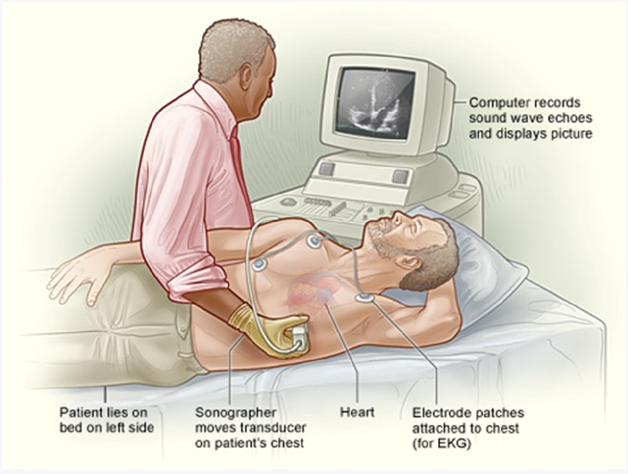
The nurse should teach the client that the transthoracic echocardiography is a noninvasive test and that nothing will be inserted into the client's body.
Transthoracic echocardiography is a diagnostic procedure that uses ultrasound to create images of the heart's structures and assess its function. It is a noninvasive test, meaning that it does not involve any insertion of instruments or devices into the body. Instead, a transducer is placed on the chest to obtain images of the heart.
The statement about managing pain aggressively during the procedure is not applicable to transthoracic echocardiography. It is generally a painless procedure that does not cause discomfort.
Transthoracic echocardiography primarily provides detailed images of the heart's structures and function, such as the chambers, valves, and pumping action. It does not specifically profile the heart's electrical activity, which is usually assessed using an electrocardiogram (ECG) or other specialized tests.
Regarding bed rest after the test, there is typically no need for bed rest following transthoracic echocardiography. The client can usually resume normal activities immediately after the procedure. However, the nurse should provide specific instructions based on the client's condition and any additional tests or interventions planned.
Whether you are a student looking to ace your exams or a practicing nurse seeking to enhance your expertise , our nursing education contents will empower you with the confidence and competence to make a difference in the lives of patients and become a respected leader in the healthcare field.
Visit Naxlex, invest in your future and unlock endless possibilities with our unparalleled nursing education contents today