
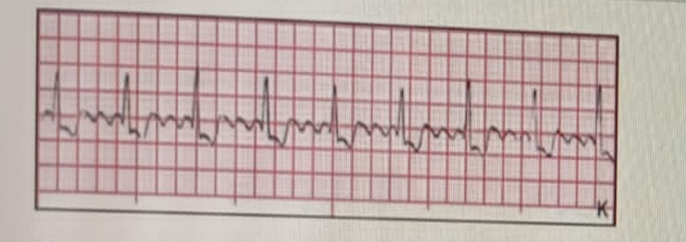
The nurse is monitoring the client's cardiac rhythm. Based on this strip, which is the correct interpretation of this rhythm?
Atrial flutter.
Normal sinus rhythm.
Sinus arrhythmia.
Atrial fibrillation.
The Correct Answer is D
A. Atrial flutter: Atrial flutter shows a “sawtooth” pattern of flutter waves, typically regular, often with a consistent conduction ratio. This strip does not show flutter waves but irregular fibrillatory activity.
B. Normal sinus rhythm: NSR is regular with a P wave before every QRS and consistent intervals. The strip lacks organized P waves and shows irregular R-R intervals, ruling out normal sinus rhythm.
C. Sinus arrhythmia: Sinus arrhythmia involves a slight irregularity in rhythm, usually associated with breathing, but the P waves remain consistently visible. In this strip, the rhythm is highly irregular without clear P waves.
D. Atrial fibrillation: Characterized by absent P waves and an irregularly irregular ventricular response, as observed in this ECG strip.
Nursing Test Bank
Naxlex Comprehensive Predictor Exams
Related Questions
Correct Answer is A
Explanation
A. Rhythm of apical heart rate: Assessing the rhythm of the apical heart rate is most important, especially with a rate of 168 bpm. This could indicate a tachydysrhythmia (e.g., atrial fibrillation with rapid ventricular response or supraventricular tachycardia) contributing to the new shortness of breath.
B. Volume of pedal pulses: Although assessing peripheral perfusion is important, pedal pulses are not the priority in the context of a dangerously high heart rate and new respiratory symptoms.
C. Degree of skin elasticity: Skin turgor evaluates hydration but is not directly relevant in the setting of acute cardiac symptoms. It does not provide timely data to explain the new-onset shortness of breath or tachycardia.
D. Length of capillary refill: Capillary refill is a general indicator of perfusion, but it is less specific and immediate compared to assessing the heart rhythm. It may be slightly delayed in this case but won’t clarify the underlying cardiac issue.
Correct Answer is A
Explanation
A. Compensated respiratory acidosis with hypoxia: The pH is at the low end of normal (7.35), PaCO₂ is elevated (60 mm Hg), and HCO₃⁻ is also elevated (35 mEq/L), indicating the kidneys are compensating for chronic respiratory acidosis. The PaO₂ is low (60 mm Hg), confirming hypoxia.
B. Compensated respiratory alkalosis with normal oxygenation: Respiratory alkalosis would be indicated by a high pH and low PaCO₂, which are not present here. Also, the client is hypoxic, not normally oxygenated, as shown by the PaO₂ of 60 mm Hg.
C. Acute respiratory acidosis: In acute respiratory acidosis, the PaCO₂ would be high with a low pH and little to no elevation in HCO₃⁻. The elevated HCO₃⁻ here shows that compensation has occurred, indicating the condition is not acute.
D. Normal acid-base balance: Although the pH falls within normal limits, the PaCO₂ and HCO₃⁻ are significantly abnormal. The body has compensated for the respiratory acidosis, but the acid-base balance is not normal due to the underlying pathology and associated hypoxia.
Whether you are a student looking to ace your exams or a practicing nurse seeking to enhance your expertise , our nursing education contents will empower you with the confidence and competence to make a difference in the lives of patients and become a respected leader in the healthcare field.
Visit Naxlex, invest in your future and unlock endless possibilities with our unparalleled nursing education contents today