
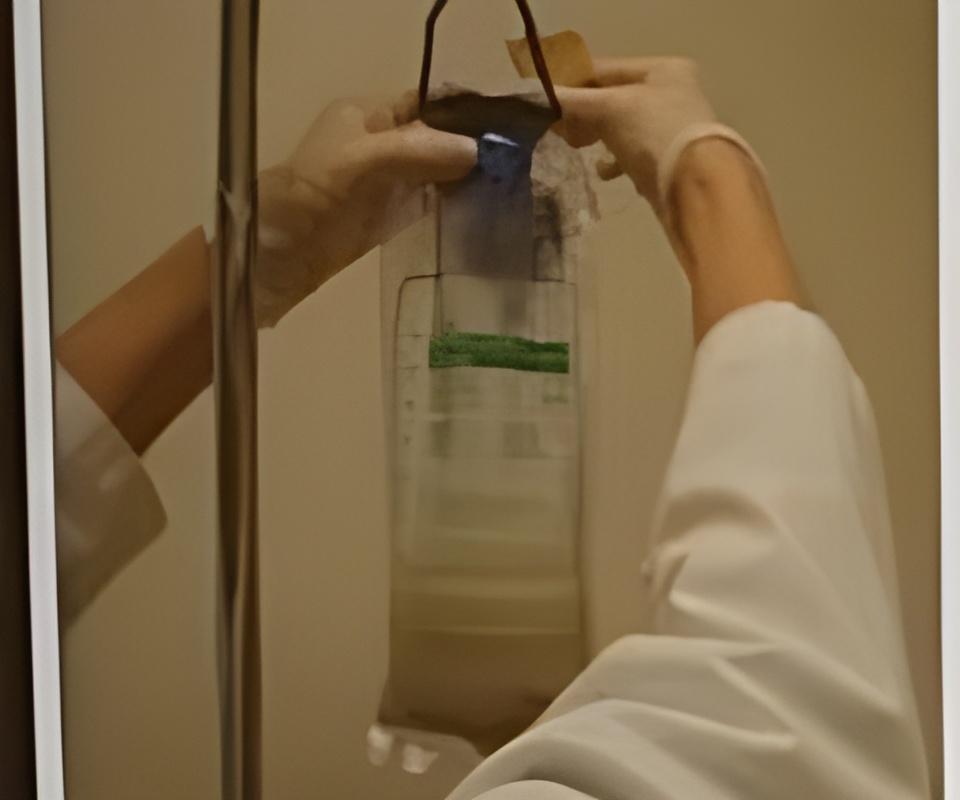
The practical nurse (PN) is observing a newly hired PN who is preparing to administer a liquid medication via a client's feeding tube system as seen in the picture. What action should the PN take?
Demonstrate how to administer medication via a feeding tube.
Confirm that the medication is only administered once daily
Determine if the medication is compatible with the solution.
Offer to assist in calculating the rate of flow for the mixture.
None
None
The Correct Answer is A
Demonstrate how to administer medication via a feeding tube.The picture shows that the newly hired PN is about to make a serious error by adding the medication directly to the feeding bag, which can cause clogging, contamination, or inaccurate dosing of the medication. The PN should demonstrate how to administer medication via a feeding tube correctly, which involves stopping the feeding, flushing the tube with water, instilling the medication, flushing again, and resuming the feeding.
The other options are not correct because:
- Confirming that the medication is only administered once daily is not relevant or helpful, as it does not address the error or teach the correct technique of administering medication via a feeding tube.Determining if the medication is compatible with the solution is not necessary or appropriate, as the medication should not be mixed with the solution in the first place, but given separately through the feeding tube.
- Offering to assist in calculating the rate of flow for the mixture is not relevant or helpful, as there should be no mixture of medication and solution in the feeding bag, but separate administration of each through the feeding tube.
Nursing Test Bank
Naxlex Comprehensive Predictor Exams
Related Questions
Correct Answer is ["B","D"]
Explanation
A) Incorrect - Providing a regular diet tray is important for the client's nutritional needs, but it is not as urgent as assessing vital signs or administering Albuterol in response to the client's acute symptoms.
B) Correct- This action is a priority after any assessment or intervention. Vital signs provide important information about the client's overall condition, including heart rate, blood pressure, respiratory rate, and oxygen saturation.
C) Incorrect - Applying oxygen is important, but its priority depends on the client's vital signs and oxygen saturation, which should be assessed first.
D) Correct- Administering Albuterol as ordered is crucial for addressing the client's acute breathing difficulty. Albuterol is a bronchodilator that helps alleviate asthma symptoms, and timely administration is essential.
E) Incorrect - Performing a pulmonary function test is valuable for assessing lung function, but it's not an immediate concern compared to addressing the client's breathing difficulty.
Correct Answer is B
Explanation
This is the observation that indicates that the UAPs need additional information about the turning procedure because it is incorrect and may cause complications for the client. The client who had a hip arthroplasty with prosthesis placement should not keep both legs straight and together while turning because this may cause dislocation of the prosthesis, nerve damage, or bleeding. The client should keep the affected leg slightly abducted and supported with pillows or an abduction device.
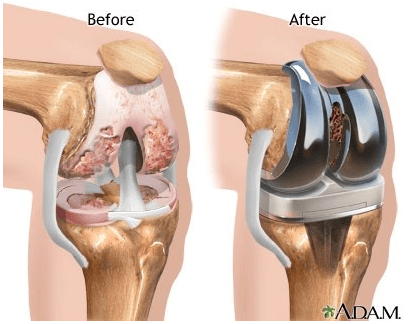
Whether you are a student looking to ace your exams or a practicing nurse seeking to enhance your expertise , our nursing education contents will empower you with the confidence and competence to make a difference in the lives of patients and become a respected leader in the healthcare field.
Visit Naxlex, invest in your future and unlock endless possibilities with our unparalleled nursing education contents today