
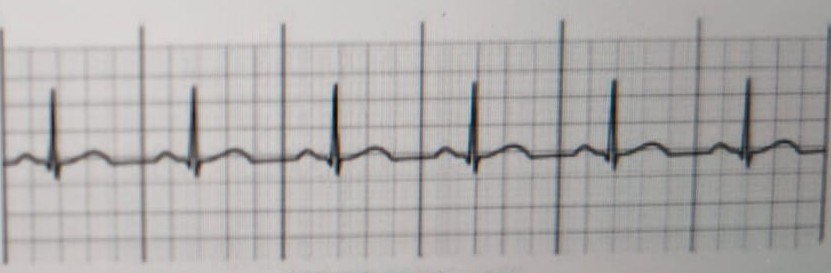
This picture shows a 6 second rhythm strip of your client's cardiac telemetry. You would document this finding as:
Ventricular Tachycardia
Normal Sinus Rhythm
Ventricular Fibrillation
Atrial Fibrillation
The Correct Answer is B
A. Ventricular Tachycardia: This rhythm would be characterized by a rapid rate and wide, bizarre QRS complexes without visible P waves. The provided strip shows narrow QRS complexes and a regular rhythm, which is inconsistent with ventricular tachycardia. This patient is not demonstrating a life-threatening ventricular arrhythmia.
B. Normal Sinus Rhythm: The strip displays a regular rhythm with a P wave preceding every QRS complex, followed by a T wave. The rate is approximately 60 to 70 beats per minute, and the complexes are narrow and uniform. This represents the standard, healthy electrical conduction of the heart starting from the sinoatrial node.
C. Ventricular Fibrillation: Ventricular fibrillation would appear as a chaotic, wavy baseline with no identifiable QRS complexes or P waves. The strip clearly shows organized electrical activity and distinct mechanical contractions. This rhythm is incompatible with the stable, organized complexes seen in the client's telemetry.
D. Atrial Fibrillation: Atrial fibrillation is marked by an irregularly irregular rhythm and the absence of distinct P waves. The telemetry strip provided shows a very regular R-R interval and clear, consistent P waves before each contraction. Therefore, it does not meet the criteria for a diagnosis of atrial fibrillation.
Nursing Test Bank
Naxlex Comprehensive Predictor Exams
Related Questions
Correct Answer is A
Explanation
A. IV fluid bolus of normal saline at 250 ml/hour: Administering a fluid bolus would be detrimental to a client already showing signs of volume overload, such as JVD and peripheral edema. This intervention would exacerbate the heart failure and worsen the client's respiratory distress. Fluid restriction is more likely indicated in this clinical scenario.
B. Furosemide and a calcium channel blocker: Furosemide will address the systemic edema and JVD by promoting diuresis and reducing fluid volume. A calcium channel blocker, such as diltiazem, is standard for rate control in atrial fibrillation to slow the ventricular response. This combination treats both the symptomatic fluid overload and the underlying arrhythmia.
C. Pantoprazole and digoxin: While digoxin can be used for rate control, pantoprazole is a proton pump inhibitor for gastric acid and does not address the client's primary cardiac issues. Digoxin alone would not treat the significant peripheral edema or JVD noted in the assessment. The primary goal is diuresis and rapid rate stabilization.
D. IV potassium and antibiotics: Antibiotics are used for bacterial infections, which are not suggested by the clear lung sounds and lack of fever. Potassium is only replaced if a deficit is confirmed via laboratory testing. These medications do not address the acute needs of a client in heart failure with a rapid heart rate.
Correct Answer is D
Explanation
A. Nitroglycerin: This vasodilator is used to treat anginal chest pain by reducing preload and dilating coronary arteries. It has no role in the management of atrial fibrillation, which is characterized by an irregularly irregular rhythm. Using a nitrate here would not address the underlying electrical disorganized activity in the atria.
B. Hydrochlorothiazide: As a thiazide diuretic, this medication is used primarily for the long-term management of hypertension and mild fluid retention. It does not possess any antiarrhythmic properties and would not be effective in controlling the ventricular rate. Diuretics are not the standard of care for treating an acute rhythm disturbance on a telemetry strip.
C. Atropine: This anticholinergic agent is indicated for the treatment of symptomatic bradycardia by increasing the heart rate. Atrial fibrillation often requires rate control to prevent tachycardia-induced cardiomyopathy rather than stimulation of a faster rate. Atropine could potentially worsen the clinical situation by causing a dangerously rapid ventricular response.
D. Warfarin: Atrial fibrillation causes blood to pool in the atria, which significantly increases the risk of mural thrombus formation and subsequent embolic stroke. Anticoagulation is a mandatory component of management to prevent these life-altering thromboembolic complications. Warfarin is a standard oral anticoagulant used to maintain a therapeutic INR in patients with this chronic dysrhythmia.
Whether you are a student looking to ace your exams or a practicing nurse seeking to enhance your expertise , our nursing education contents will empower you with the confidence and competence to make a difference in the lives of patients and become a respected leader in the healthcare field.
Visit Naxlex, invest in your future and unlock endless possibilities with our unparalleled nursing education contents today