
What directly contributes to diastolic blood pressure in the cardiac cycle?
The closure of semilunar valves during systole.
The relaxation of the atria to allow ventricular refill.
The contraction of the ventricles, which forces blood into systemic circulation.
The relaxation of the ventricles, which allows the chambers to fill with blood.
The Correct Answer is D
Choice A reason: The closure of the semilunar valves at the end of systole marks the beginning of isovolumetric relaxation. While this closure creates the second heart sound and prevents backflow into the ventricles, it is a marker of the onset of diastole rather than the mechanism that maintains diastolic pressure.
Choice B reason: Atrial relaxation, or diastole, occurs during the later stages of the cardiac cycle, but the primary determinant of diastolic blood pressure is the elastic recoil of the aorta and large arteries while the ventricles are in their relaxed state, not the mechanical status of the atria.
Choice C reason: Ventricular contraction, known as systole, is the phase responsible for generating systolic blood pressure, which is the peak pressure exerted against arterial walls. This phase does not contribute to diastolic pressure, which represents the minimum pressure in the arteries when the heart is in a resting, filling state.
Choice D reason: Diastolic blood pressure is determined by the total peripheral resistance and the elastic recoil of the arterial walls during ventricular diastole. When the ventricles relax, the semilunar valves close, and the stored potential energy in the stretched arterial walls maintains pressure to ensure continuous systemic perfusion.
Nursing Test Bank
Naxlex Comprehensive Predictor Exams
Related Questions
Correct Answer is A
Explanation
Choice A reason: Scoliosis is defined as a lateral curvature of the spine. It primarily involves structural abnormalities or rotational deformities of the vertebrae themselves. These bony segments become misaligned, leading to the characteristic S-shaped or C-shaped curvature of the spinal column that is assessed clinically in pediatric patients.
Choice B reason: The spinal cord resides within the vertebral canal. While severe scoliosis can potentially compress or affect the spinal cord, the condition itself is a disorder of the skeletal alignment of the vertebrae, not a primary pathology of the neural tissue of the central nervous system.
Choice C reason: Ligaments provide stability and connect bones to bones. Although ligaments are involved in maintaining the alignment of the spine, scoliosis is characterized by the structural deformity of the vertebrae rather than a primary disease process originating in the ligamentous tissues themselves.
Choice D reason: Muscle fibers are involved in the movement and stabilization of the spine. While imbalances in muscle strength or tone can contribute to secondary postural issues, they are not the primary structure responsible for the structural, lateral deformity defined as scoliosis in pediatric clinical diagnostic criteria.
Correct Answer is B
Explanation
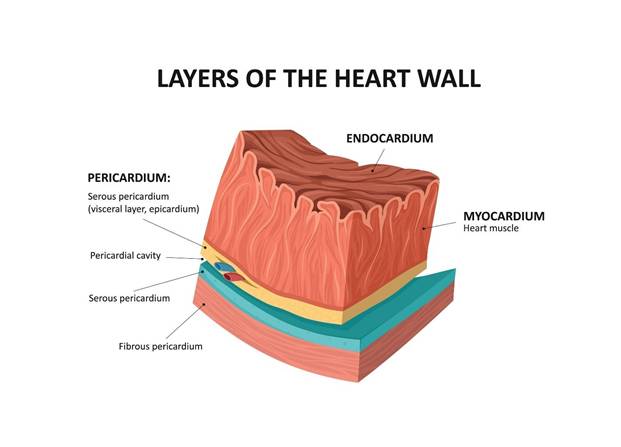
Choice A reason: The endocardium is the innermost layer of the heart, consisting of endothelial cells that line the chambers and valves. While it provides a smooth, frictionless surface for blood flow, it does not possess the contractile properties necessary to generate the mechanical force required for pumping blood.
Choice B reason: The myocardium is the thick, muscular middle layer of the heart wall. It is composed of specialized cardiac muscle cells that possess the contractile ability to generate high pressure and force, making it the primary engine responsible for the mechanical pumping action that circulates blood throughout the body.
Shutterstock
Choice C reason: The epicardium is the outer serous layer of the heart wall, also known as the visceral layer of the serous pericardium. It serves a protective function and contains coronary blood vessels and adipose tissue, but it plays no role in the direct contractile force production for blood circulation.
Choice D reason: The pericardium is the fibrous sac that surrounds and protects the heart. It provides physical support and prevents the heart from over-expanding. While it is essential for cardiac health, it is a structural covering and does not contribute to the contractile muscular force of the heart chambers.
Whether you are a student looking to ace your exams or a practicing nurse seeking to enhance your expertise , our nursing education contents will empower you with the confidence and competence to make a difference in the lives of patients and become a respected leader in the healthcare field.
Visit Naxlex, invest in your future and unlock endless possibilities with our unparalleled nursing education contents today