
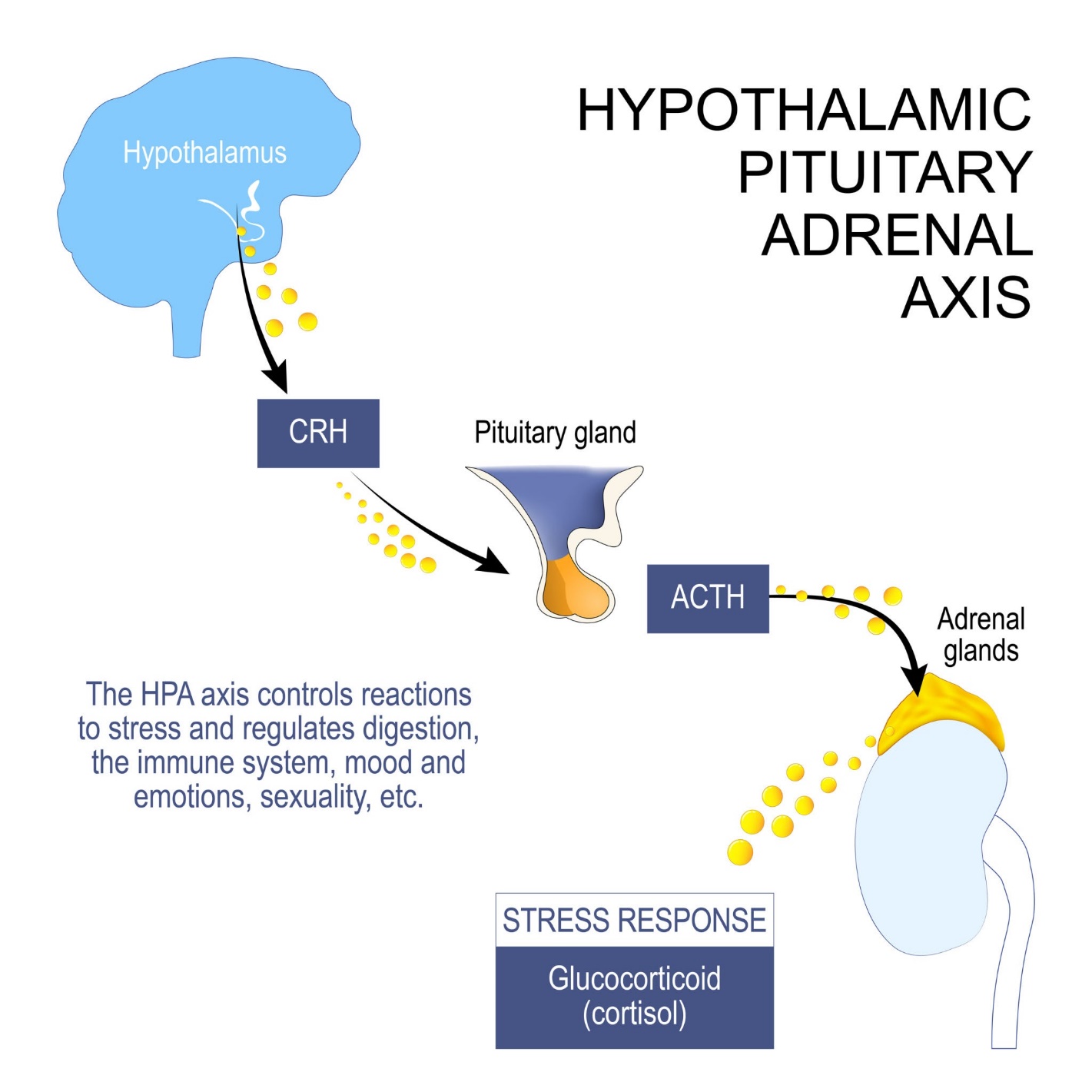
What physiological response is triggered when the amygdala activates the hypothalamic-pituitary-adrenal (HPA) axis in a client experiencing acute stress?
Release of stress hormones like cortisol
Elevation of serotonin levels
Activation of parasympathetic nervous system
Increased activity in the motor cortex
Qi Gong
The Correct Answer is A
Choice A reason: When the amygdala perceives a threat, it signals the hypothalamus to release corticotropin-releasing hormone, which prompts the pituitary gland to secrete adrenocorticotropic hormone. This ultimately triggers the adrenal cortex to release cortisol, a primary stress hormone that increases blood glucose and modulates immune responses to prepare the body for a fight-or-flight reaction.
Choice B reason: Acute stress typically results in a transient decrease or dysregulation of serotonin rather than a therapeutic elevation. Serotonin is primarily involved in mood stabilization and impulse control; the HPA axis activation is specifically geared toward the endocrine stress response involving glucocorticoids and catecholamines, not the immediate elevation of inhibitory neurotransmitters.
Choice C reason: The HPA axis and the sympathetic nervous system work in tandem to mobilize energy during stress. In contrast, the parasympathetic nervous system is responsible for "rest and digest" functions and is suppressed during acute stress to allow for maximal physiological arousal and survival behaviors mediated by the sympathetic branch.
Choice D reason: While the motor cortex may be involved in executing physical responses to stress, its activation is not the direct primary endocrine output of the HPA axis. The HPA axis is a neuroendocrine feedback loop specifically designed for chemical signaling and hormonal regulation throughout the systemic circulation rather than localized neuromuscular motor control.
Nursing Test Bank
Naxlex Comprehensive Predictor Exams
Related Questions
Correct Answer is B
Explanation
Choice A reason: Brief periods of anxiety that resolve quickly and respond to simple relaxation are considered normal stress responses. For a clinical diagnosis of a disorder, the symptoms must typically persist for a longer duration, usually six months or more for conditions like generalized anxiety disorder.
Choice B reason: The transition from normal anxiety to a clinical disorder is marked by the degree of functional impairment. When anxiety becomes maladaptive, causing significant distress or hindering an individual's occupational, social, or academic performance, it meets the diagnostic threshold for a psychiatric disorder.
Choice C reason: Developmental anxiety, such as separation anxiety in toddlers or performance jitters in adolescents, is considered a normal part of maturation. These are transient phases and do not constitute a disorder unless the intensity and duration are completely inappropriate for the individual's developmental level.
Choice D reason: Occasional physiological symptoms like mild palpitations or distress are common human experiences during high-pressure situations. These "state" anxiety episodes do not qualify as a disorder unless they are recurrent, persistent, and cause a profound shift in the individual's ability to maintain their routine.
Correct Answer is C
Explanation
Choice A reason: The prefrontal cortex is responsible for executive function, impulse control, and the cognitive appraisal of threats. In anxiety, it usually acts as an inhibitory mechanism to "down-regulate" the fear response. It does not initiate the rapid, subconscious fear reaction but rather attempts to modulate or extinguish it.
Choice B reason: The hippocampus is primarily involved in memory formation and spatial navigation. In the context of anxiety, it provides contextual information to the fear response (e.g., remembering a scary location), but it is not the primary generator of the physiological "fight or flight" activation seen in acute panic.
Choice C reason: The amygdala is an almond-shaped cluster in the temporal lobe that serves as the brain's "alarm system." It processes sensory input to detect threats and coordinates the immediate emotional and physiological response by activating the hypothalamus and autonomic nervous system, making it central to the pathology of anxiety.
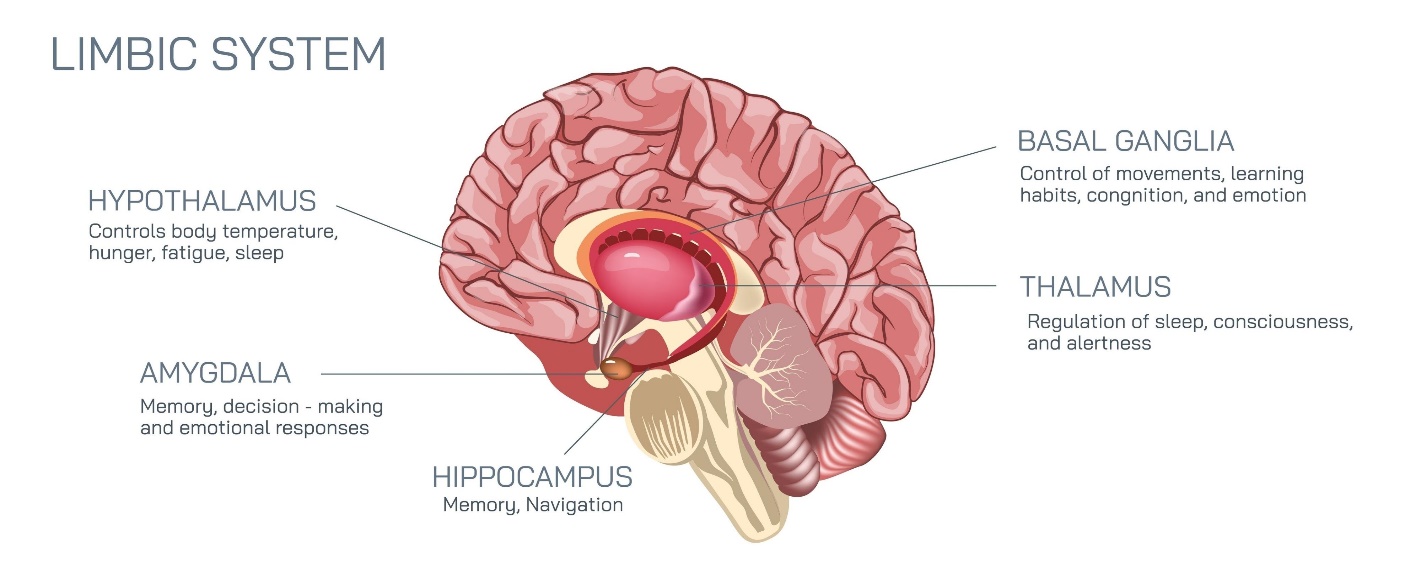
Choice D reason: The thalamus acts as a relay station for sensory information, directing signals to the appropriate areas of the cortex for processing. While it passes data to the amygdala, it does not possess the intrinsic emotional processing capabilities required to initiate the specific neurobiological fear response itself.
Whether you are a student looking to ace your exams or a practicing nurse seeking to enhance your expertise , our nursing education contents will empower you with the confidence and competence to make a difference in the lives of patients and become a respected leader in the healthcare field.
Visit Naxlex, invest in your future and unlock endless possibilities with our unparalleled nursing education contents today