
The role of the amygdala in the pathophysiology of anxiety disorders primarily involves:
Controlling digestion and metabolism.
Modulating visual sensory input.
Facilitating the fight or flight response.
Regulating voluntary motor functions.
The Correct Answer is C
Choice A reason: Digestion and metabolism are primarily regulated by the hypothalamus and the autonomic nervous system, specifically the parasympathetic branch. The amygdala does not have a direct role in these metabolic processes, as its primary function is centered on emotional processing and the detection of environmental threats.
Choice B reason: Modulating visual sensory input is the primary function of the occipital lobe and parts of the thalamus, such as the lateral geniculate nucleus. While the amygdala receives visual information to scan for threats, it does not modulate the primary sensory input itself but rather interprets the emotional significance.
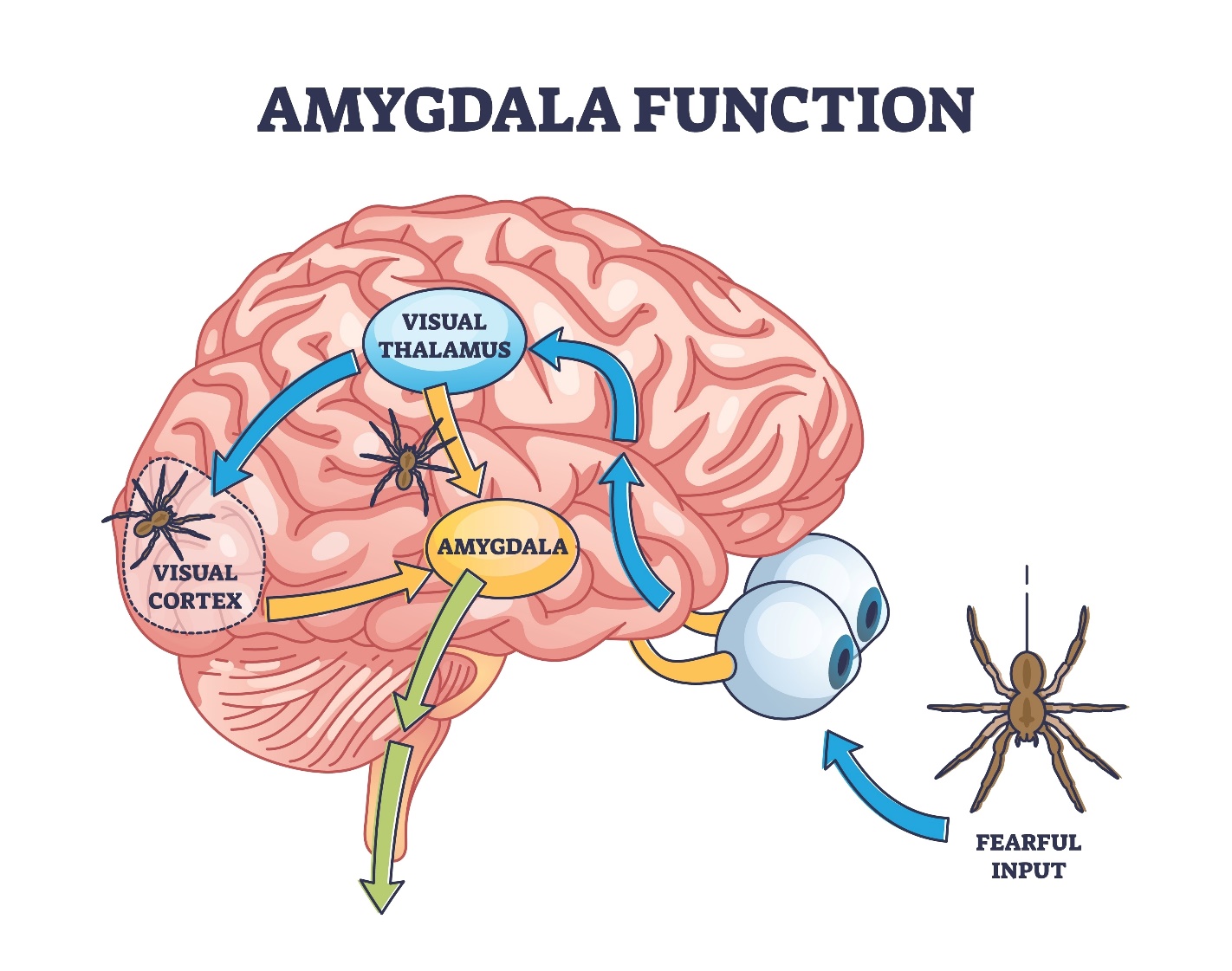
Choice C reason: The amygdala serves as the brain's emotional centers, specifically for processing fear and aggression. In anxiety disorders, the amygdala becomes hyperactive, triggering the hypothalamus to activate the sympathetic nervous system. This results in the physiological "fight or flight" response, including increased heart rate and heightened arousal.
Choice D reason: Regulating voluntary motor functions is the responsibility of the primary motor cortex, cerebellum, and basal ganglia. The amygdala is part of the limbic system, and while it can influence motor behavior in response to fear (such as freezing), it does not regulate general voluntary movement or coordination.
Nursing Test Bank
Naxlex Comprehensive Predictor Exams
Related Questions
Correct Answer is A
Explanation
Choice A reason: Hypersensitivity reactions and contact dermatitis are significant risks associated with the use of essential oils in clinical settings. Before initiating aromatherapy, the nurse must assess the patient for a history of allergies or atopy. Essential oils contain volatile organic compounds that can trigger bronchospasm or anaphylaxis in susceptible individuals.
Choice B reason: Mixing essential oils with water only is an ineffective method of dilution because oils are hydrophobic and do not dissolve in water. This lack of solubility can lead to uneven distribution, where concentrated droplets of oil come into direct contact with the patient's skin or mucous membranes, potentially causing irritation or chemical burns.
Choice C reason: Utilizing high concentrations of essential oils is contraindicated as it increases the risk of systemic toxicity and localized skin irritation. Therapeutic effectiveness in aromatherapy does not follow a linear dose-response curve where more is better; instead, high concentrations can overwhelm the patient's sensory system and cause adverse physiological responses.
Choice D reason: Applying undiluted essential oils directly to the skin, known as "neat" application, is hazardous and bypasses essential safety testing. Standard nursing practice requires a patch test on a small area of skin to monitor for adverse reactions before broad application, especially in patients with compromised skin integrity or heightened sensitivities.
Correct Answer is C
Explanation
Choice A reason: Administering 3 tablets per dose twice a day would result in a total daily dose of 1,800 mg (900 mg per dose). This significantly exceeds the 600 mg daily prescription and would likely lead to acute lithium toxicity, characterized by severe tremors, ataxia, and potential renal failure.
Choice B reason: This plan provides 600 mg in a single administration. While the total daily amount is correct, the order specifically requires the dose to be divided into two administrations. Dividing the dose helps maintain steady-state serum levels and minimizes peak-dose side effects associated with high single-dose lithium concentrations.
Choice C reason: The total daily dose is 600 mg. To divide this into two equal doses, 300 mg must be given at each interval. Since each tablet contains 300 mg, administering 1 tablet in the morning and 1 tablet in the evening accurately fulfills the physician's pharmacological order for the patient.
Choice D reason: A half tablet would provide only 150 mg per dose, totaling 300 mg per day. This is only half of the required 600 mg daily dose. Subtherapeutic lithium levels are ineffective for stabilizing mood in bipolar disorder and increase the risk of the patient experiencing a manic episode.
Whether you are a student looking to ace your exams or a practicing nurse seeking to enhance your expertise , our nursing education contents will empower you with the confidence and competence to make a difference in the lives of patients and become a respected leader in the healthcare field.
Visit Naxlex, invest in your future and unlock endless possibilities with our unparalleled nursing education contents today