
When assessing a child for an upper extremity fracture, the nurse should know that these fractures most often result from
sports injuries.
physical abuse.
falls.
automobile crashes.
The Correct Answer is C
Upper extremity fractures in children commonly occur as a result of falls. Children are more prone to falls due to their developing motor skills, balance, and coordination. They may fall from playground equipment, bicycles, or simply while running or playing.
While sports injuries (Option A) can also lead to upper extremity fractures, falls are generally the most common cause in children.
Physical abuse (Option B) is an unfortunate possibility in some cases, but it is important to approach the assessment without assuming abuse as the cause without appropriate evidence or disclosure.
Upper extremity fractures resulting from automobile crashes (Option D) are less common in children compared to falls or sports injuries, although they can occur in severe accidents.
It is always important for the nurse to assess the child's history, obtain a detailed account of the injury, and consider any additional signs or indications that may suggest non-accidental trauma if appropriate.
Nursing Test Bank
Naxlex Comprehensive Predictor Exams
Related Questions
Correct Answer is C
Explanation
Hypoglycaemia is characterized by low blood sugar levels. In children, symptoms of hypoglycaemia can vary, but irritability is a common sign. Other signs and symptoms of hypoglycaemia in children may include sweating, trembling, pale skin, hunger, weakness, confusion, and dizziness.
Normal sensorium and serum glucose greater than 160 mg/dL in (Option A) is incorrect because a normal sensorium (normal level of consciousness) and a serum glucose level greater than 160 mg/dL would not be indicative of hypoglycaemia.
Urine positive for ketones and serum glucose greater than 300 mg/dL in (Option B) is incorrect because it describes characteristics of hyperglycaemia (high blood sugar levels) rather than hypoglycaemia. Positive urine ketones and a serum glucose level greater than 300 mg/dL are commonly seen in diabetic ketoacidosis, a complication of high blood sugar levels in diabetes.
Increased urination and serum glucose less than 120 mg/dL in (Option D) is incorrect because it describes increased urination and a serum glucose level less than 120 mg/dL. While a serum glucose level less than 120 mg/dL could indicate hypoglycaemia, increased urination is not a typical sign of hypoglycaemia. Increased urination may be seen in conditions such as diabetes mellitus when blood sugar levels are consistently high.
Correct Answer is C
Explanation
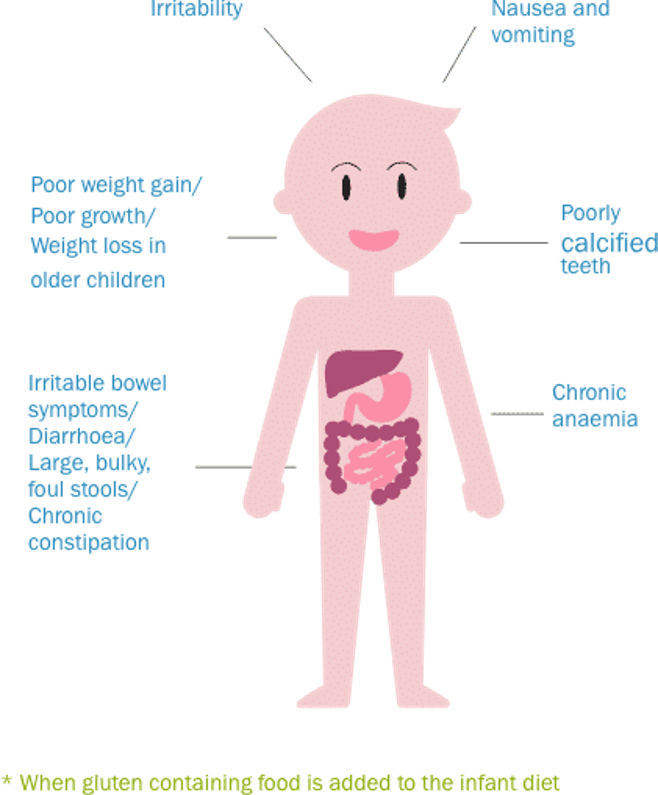
Celiac disease is an autoimmune disorder triggered by the ingestion of gluten, a protein found in wheat, barley, and rye. It causes damage to the lining of the small intestine, leading to malabsorption of nutrients. The characteristic symptoms of celiac disease include abdominal distention, underweight or failure to thrive, thin arms and legs, and foul-smelling stools.
intussusception in (option A) is incorrect because it, refers to a condition where a portion of the intestine telescopes into an adjacent section, causing an obstruction. While intussusception can present with symptoms such as abdominal pain, vomiting, and currant jelly-like stools, it is not typically associated with failure to thrive.
imperforate anus, in (option B) is incorrect because it is a congenital condition in which the opening of the anus is blocked or absent. It can cause difficulties with passing stools, but it is not typically associated with failure to thrive or the specific assessment findings described.
irritable bowel syndrome (IBS) in (option D) is incorrect because it, is a chronic disorder of the gastrointestinal tract characterized by recurrent abdominal pain, changes in bowel habits, and bloating. While IBS can cause gastrointestinal symptoms, it is not typically associated with failure to thrive, underweight, or the specific assessment findings mentioned.
Whether you are a student looking to ace your exams or a practicing nurse seeking to enhance your expertise , our nursing education contents will empower you with the confidence and competence to make a difference in the lives of patients and become a respected leader in the healthcare field.
Visit Naxlex, invest in your future and unlock endless possibilities with our unparalleled nursing education contents today