
Which evidence-based practice is most appropriate for treating acute stress disorder?
Cognitive-behavioral therapy (CBT)
Exposure therapy
Medication alone
Long-term psychoanalysis
The Correct Answer is B
Choice A reason: Trauma-focused cognitive-behavioral therapy is the gold standard for treating acute stress disorder. It helps patients identify and restructure maladaptive thought patterns related to the trauma and employs coping strategies to manage autonomic arousal, potentially preventing the progression to chronic post-traumatic stress disorder.
Choice B reason: While exposure therapy is a component of CBT often used for chronic PTSD, it must be applied very carefully in the acute phase of stress. Immediate, intensive exposure can sometimes re-traumatize a patient who has not yet developed the foundational stabilization skills taught in broader CBT models.
Choice C reason: Medication alone, such as benzodiazepines or SSRIs, may manage acute symptoms like insomnia or severe anxiety but does not address the underlying cognitive processing of the traumatic event. Evidence suggests that pharmacological intervention is most effective when used as an adjunct to psychotherapeutic modalities.
Choice D reason: Long-term psychoanalysis focuses on unconscious conflicts and early childhood experiences over several years. This approach is not appropriate for the acute, time-limited nature of acute stress disorder, which requires immediate, symptom-focused, and practical interventions to restore the patient's level of functioning.
Nursing Test Bank
Naxlex Comprehensive Predictor Exams
Related Questions
Correct Answer is B
Explanation
Choice A reason: Social network size is considered a sociocultural factor rather than a strictly economic one. While a robust social support system is vital for psychological resilience and stress mitigation, it does not directly measure the financial resources or the fiscal security required to access healthcare, housing, and nutritional needs.
Choice B reason: Income stability is a primary economic determinant of mental health because it dictates a client's ability to maintain a consistent standard of living. Fluctuations in financial security are strongly correlated with increased cortisol levels, chronic stress, and a higher prevalence of generalized anxiety disorder and major depression.
Choice C reason: The number of dependents is a demographic variable that influences financial strain but is not an economic factor itself. While having more dependents can increase the cost of living, the clinical focus of an economic assessment is the availability and reliability of the funds to support them.
Choice D reason: Educational attainment is a socioeconomic status indicator that often correlates with earning potential, but it is categorized as a social determinant of health. A high level of education does not guarantee current economic security if the client is presently unemployed or facing a volatile job market.
Correct Answer is C
Explanation
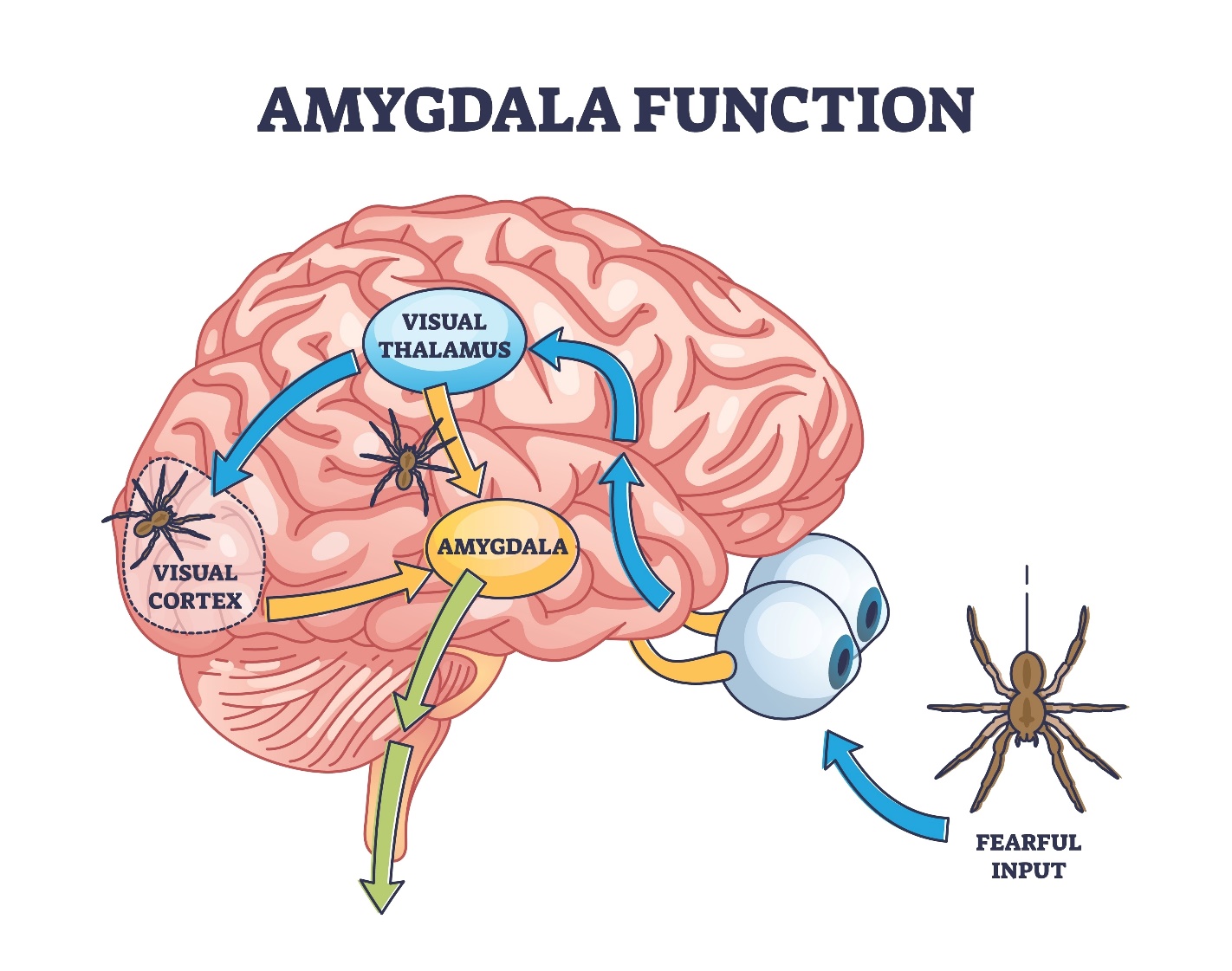
Choice A reason: Digestion and metabolism are primarily regulated by the hypothalamus and the autonomic nervous system, specifically the parasympathetic branch. The amygdala does not have a direct role in these metabolic processes, as its primary function is centered on emotional processing and the detection of environmental threats.
Choice B reason: Modulating visual sensory input is the primary function of the occipital lobe and parts of the thalamus, such as the lateral geniculate nucleus. While the amygdala receives visual information to scan for threats, it does not modulate the primary sensory input itself but rather interprets the emotional significance.
Choice C reason: The amygdala serves as the brain's emotional centers, specifically for processing fear and aggression. In anxiety disorders, the amygdala becomes hyperactive, triggering the hypothalamus to activate the sympathetic nervous system. This results in the physiological "fight or flight" response, including increased heart rate and heightened arousal.
Choice D reason: Regulating voluntary motor functions is the responsibility of the primary motor cortex, cerebellum, and basal ganglia. The amygdala is part of the limbic system, and while it can influence motor behavior in response to fear (such as freezing), it does not regulate general voluntary movement or coordination.
Whether you are a student looking to ace your exams or a practicing nurse seeking to enhance your expertise , our nursing education contents will empower you with the confidence and competence to make a difference in the lives of patients and become a respected leader in the healthcare field.
Visit Naxlex, invest in your future and unlock endless possibilities with our unparalleled nursing education contents today