
Which immunoglobulin provides the most protection against Infection in a client, as it is the most abundant?
IgG
IgE
IgM
IgA
The Correct Answer is A
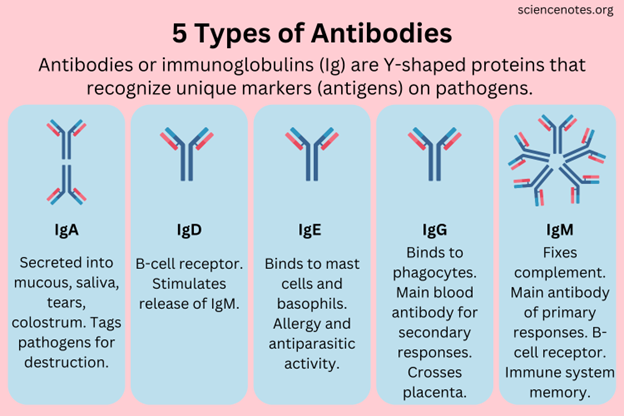
A. IgG: Immunoglobulin G (IgG) is the most abundant antibody in the bloodstream and represents about 75% of all the antibodies in the body. It provides long-term immunity because it can persist in the bloodstream for a long time. IgG antibodies are involved in secondary immune responses and are capable of crossing the placenta, providing passive immunity to newborns.
B. IgE: Immunoglobulin E (IgE) is associated mainly with allergic reactions. When the body is exposed to an allergen, it triggers the release of IgE, leading to the symptoms of an allergic response, such as sneezing or itching.
C. IgM: Immunoglobulin M (IgM) is the largest antibody and is usually the first antibody produced during an initial exposure to an antigen. It is particularly effective at agglutination (clumping together) of pathogens.
D. IgA: Immunoglobulin A (IgA) is found in high concentrations in mucous membranes, particularly those lining the respiratory passages and gastrointestinal tract. It provides localized defense against pathogens. IgA antibodies are also found in saliva, tears, and breast milk, providing immunity to infants.
Nursing Test Bank
Naxlex Comprehensive Predictor Exams
Related Questions
Correct Answer is A
Explanation
Vancomycin is often administered over at least 60 minutes to reduce the risk of infusion-related reactions, such as "Red Man Syndrome," which is characterized by flushing, rash, and itching. This reaction is caused by the rapid infusion of vancomycin, leading to the release of histamine.
Correct Answer is C
Explanation
A. Delayed hypersensitivity reaction: This type of hypersensitivity reaction, also known as Type IV hypersensitivity, involves a delayed response by the immune system and is mediated by T cells. It does not necessarily involve a failure of self-tolerance.
B. Antibody-mediated reaction: This type of hypersensitivity reaction, also known as Type II hypersensitivity, involves antibodies targeting specific antigens on cell surfaces, leading to cell destruction. It doesn't directly indicate a failure of self-tolerance but rather an immune response against specific cells or tissues.
C. Autoimmune reaction: In autoimmune reactions, the immune system fails to recognize certain body tissues or substances as "self," leading to an immune response against the body's own cells or tissues. This results from a breakdown in self-tolerance, where the immune system mistakenly targets its own body.
D. Immediate hypersensitivity reaction: This type of hypersensitivity reaction, also known as Type I hypersensitivity, involves an immediate response by the immune system to an allergen. It includes conditions like allergies and anaphylaxis, where the immune system reacts strongly to substances that are normally harmless. This response does not necessarily indicate a failure of self-tolerance but rather an exaggerated response to specific antigens.
Whether you are a student looking to ace your exams or a practicing nurse seeking to enhance your expertise , our nursing education contents will empower you with the confidence and competence to make a difference in the lives of patients and become a respected leader in the healthcare field.
Visit Naxlex, invest in your future and unlock endless possibilities with our unparalleled nursing education contents today