
Which of the following correctly orders structures from simple to complex?
Cells, tissues, atoms, organs
Atoms, organs, tissues, cells
Atoms, cells, tissues, organs
Organs, tissues, cells, atoms
The Correct Answer is C
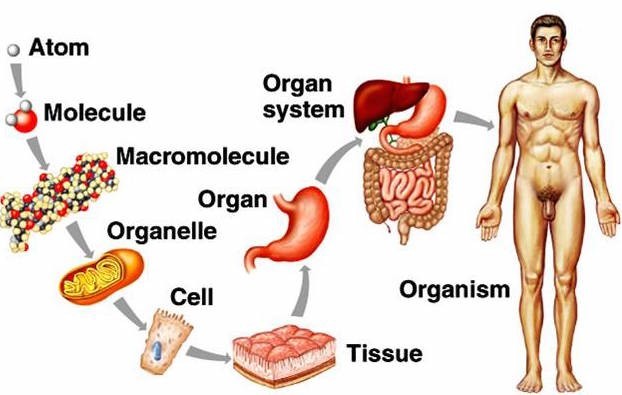
. Atoms, cells, tissues, organs. This is the correct order of structures from simple to complex. Atoms are the smallest and simplest units of matter. Cells are made up of atoms and are the basic units of life.
Tissues are groups of similar cells that work together to perform a specific function. Organs are made up of different types of tissues and perform more complex functions.
A. Cells, tissues, atoms, and organs is not in the correct order from simple to complex.
B. Atoms, organs, tissues, cells is not the correct order from simple to complex.
d. Organs, tissues, cells, atoms is not the correct order from simple to complex.
Nursing Test Bank
Naxlex Comprehensive Predictor Exams
Related Questions
Correct Answer is A
Explanation
Heart and lungs. The thoracic cavity contains the heart and lungs, which are at greatest risk from severe blunt trauma to this area.
B. The brain and spinal cord are not located in the thoracic cavity and are therefore not at greatest risk from blunt trauma to this area.
C. The liver and stomach are located in the abdominal cavity, which is below the thoracic cavity. While these organs may be affected by severe blunt trauma to the thoracic cavity, they are not at the greatest risk.
D. The large and small intestines are also located in the abdominal cavity and are not at the greatest risk from blunt trauma to the thoracic cavity.
Correct Answer is A
Explanation
The statement that best supports the grant proposal is a. Repeating the published work will provide independent confirmation of the results. Independent confirmation of results is an important part of the scientific process. By repeating an experiment that was recently published by another researcher, the researcher writing the grant proposal can provide additional evidence to support or refute the original findings.
B. Repeating published work with changed variables will extend the previous results, but this is not the main goal of repeating an experiment.
C. Funding this important research will benefit science in the long term is a general statement that does not specifically support the grant proposal to repeat an experiment.
D. Funding this grant proposal will allow this laboratory to continue to study this topic is also a general statement that does not specifically support the grant proposal to repeat an experiment.
Whether you are a student looking to ace your exams or a practicing nurse seeking to enhance your expertise , our nursing education contents will empower you with the confidence and competence to make a difference in the lives of patients and become a respected leader in the healthcare field.
Visit Naxlex, invest in your future and unlock endless possibilities with our unparalleled nursing education contents today