
Clinical Presentation and Symptoms
- The symptoms of BPH vary depending on the degree of prostate enlargement and bladder outlet obstruction
- The most common symptom are LUTS which affects the storage and emptying of urine
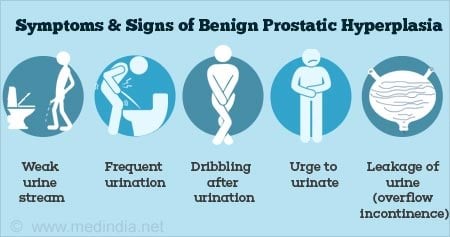
- Storage symptoms include frequency, urgency, nocturia, incontinence, and overflow incontinence
- Emptying symptoms include hesitancy, weak stream, intermittency, dribbling, incomplete emptying, and straining
- Other symptoms may include hematuria, urinary retention, bladder stones, bladder diverticula, hydronephrosis, renal insufficiency, and recurrent UTIs
Nursing Test Bank
Test Bank #1: RN Pharmacology Exams
Test Bank #2: RN Medical-Surgical Exams
Test Bank #3: RN Fundamentals Exams
Test Bank #4: RN Maternal-Newborn Exams
Test Bank #5: RN Anatomy and Physiology Exams
Test Bank #6: RN Obstetrics and Pediatrics Exams
Test Bank #7: RN Fluid and Electrolytes Exams
Test Bank #9: RN Adult Health
Test Bank #10: RN Dosage Calculation
Test Bank #11: RN Community Health Exams
Test Bank #12: RN Psychology Exams
Test Bank #13: RN Nursing Care Of Children
Test Bank #14: RN Foundations of Nursing Exams
Naxlex Comprehensive Predictor Exams
Exam #1: RN Comprehensive predictor 2023 proctored exam
Exam #2: Ati rn vati comprehensive predictor proctored exam
Exam #3: Ati Rn Comprehensive Predictor Proctored Exam 2023
Exam #4: Rn Comprehensive Predictor 2023 Proctored Exam - St. Joseph
Exam #5: RN Comprehensive Predictor Proctored Exam (National U CA San Diego)
Exam #6: Ati rn comprehensive predictor 2023 retake proctored exam
Exam #7: RN Hesi Exit Proctored Exam
Exam #8: Hesi RN Exit proctored exam
Exam #9: Hesi rn exit proctored exam
Exam #10: Hesi Rn compass exit B proctored exam
Questions on Clinical Presentation and Symptoms
Correct Answer is C
Explanation
No explanation
Correct Answer is C
Explanation
Eating a high-protein diet is not specifically indicated for managing urinary frequency and urgency in clients with BPH.Questions
Correct Answer is A
Explanation
Prostate cancer may have similar symptoms to BPH but would not present with acute urinary retention and a distended bladder.
Correct Answer is B
Explanation
<p>The evaluation of urinary flow rate is typically done through urodynamic studies and flowmetry tests, not the PSA test.</p>
Correct Answer is A
Explanation
Urgency is the sudden and strong need to urinate, and it is not specifically associated with BPH.
Correct Answer is B
Explanation
Avoiding sitting for extended periods is not a specific activity restriction after a TURP.
Correct Answer is D
Explanation
This is the correct answer. Difficulty starting a urine stream and a weak urine flow are obstructive voiding symptoms commonly seen in clients with BPH due to the enlargement of the prostate gland, which obstructs the urethra.
Correct Answer is D
Explanation
This is the correct answer. Hematuria in clients with BPH may be due to the presence of bladder stones. Urinary retention and stasis can lead to the formation of stones in the bladder, which may cause bleeding and hematuria.
Correct Answer is B
Explanation
<p>This statement is not correct. BPH does not involve the absence of the prostate gland; it is an enlargement of the gland.</p>
Correct Answer is C
Explanation
Limiting fluid intake at night may cause dehydration and is not recommended. Instead, the client should focus on reducing evening fluid intake to minimize nighttime urine production.Questions
Correct Answer is D
Explanation
<p>This is the correct answer. Hematuria (blood in the urinE. can be associated with BPH due to irritation or trauma to the urinary tract caused by the enlarged prostate. Hematuria may be gross (visiblE. or microscopic and should be further evaluated to determine its cause.</p>
Correct Answer is D
Explanation
This is the correct answer. Difficulty emptying the bladder is a hallmark symptom of bladder outlet obstruction caused by an enlarged prostate in BPH.
Correct Answer is B
Explanation
Alpha-blockers do not enhance urine production by the kidneys. They primarily focus on relaxing the smooth muscles to improve urinary flow.Questions
Correct Answer is C
Explanation
Reducing the risk of urinary incontinence is not the primary goal of combination therapy with these medications.Questions
Correct Answer is C
Explanation
Urge urinary incontinence is characterized by a sudden, strong urge to urinate, followed by involuntary urine loss. It is not related to the symptoms described in the question.Questions
Correct Answer is A
Explanation
Improved urine flow is an intended outcome of relieving urinary retention with the catheter, not a complication.
Correct Answer is D
Explanation
This is the correct answer. Clients should be instructed to report any signs of catheter blockage or leakage to their healthcare provider. Catheter blockage can lead to urinary retention, and leakage may indicate a problem with the catheter or the drainage system.
Correct Answer is A
Explanation
Increased fluid intake may be beneficial for overall bladder health but will not directly relieve the obstruction causing acute urinary retention.Questions
Correct Answer is D
Explanation
This is the correct answer. Catheterization is necessary to relieve urinary retention and drain the distended bladder.
Correct Answer is B
Explanation
Waiting for new symptoms to arise before seeking a follow-up appointment may delay necessary interventions and could lead to worsening of symptoms.
Correct Answer is A
Explanation
<p>A urinalysis is a general test used to assess the urine's appearance, specific gravity, and the presence of blood, proteins, and other substances. While it can provide information about kidney function and potential urinary tract infections, it is not specific to BPH.</p>