
Diagnostic tests and imaging
- The diagnosis of acute renal failure is based on the history, physical examination, laboratory tests, and imaging studies.
- The following tests and imaging may be used to diagnose acute renal failure:
- Serum creatinine and BUN: These are blood tests that measure the levels of creatinine and urea in the blood. Creatinine is a waste product of muscle metabolism that is normally filtered by the kidneys. Urea is a waste product of protein metabolism that is normally excreted by the kidneys. A rise in serum creatinine and BUN indicates a decrease in kidney function. The ratio of BUN to creatinine can help differentiate prerenal from intrinsic causes of acute renal failure. A ratio greater than 20:1 suggests prerenal causes, whereas a ratio less than 10:1 suggests intrinsic causes
- Urine output: This is a measure of how much urine is produced in 24 hours. A normal urine output is about 1.5 liters per day for adults. A urine output less than 0.5 ml/kg/hour for more than 6 hours indicates oliguria, which is a sign of acute renal failure.
- Urine tests: These include urinalysis, urine electrolytes, urine osmolality, urine specific gravity, and urine sediment examination. Urinalysis can reveal abnormalities such as proteinuria, hematuria, pyuria, or casts that suggest kidney damage or infection. Urine electrolytes can help assess tubular function and differentiate prerenal from intrinsic causes of acute renal failure. Urine osmolality and specific gravity can help assess the concentration ability of the kidneys and differentiate prerenal from intrinsic causes of acute renal failure. Urine sediment examination can help identify cellular or crystalline components that indicate glomerular or tubular injury.
- Blood tests: These include serum electrolytes, blood gas analysis, complete blood count (CBC), and other tests depending on the suspected cause of acute renal failure. Serum electrolytes can reveal imbalances such as hyperkalemia, hyponatremia, hyperphosphatemia, hypocalcemia, or hypermagnesemia that result from impaired kidney function. Blood gas analysis can reveal metabolic acidosis due to accumulation of acids or loss of bicarbonate by the kidneys. CBC can reveal anemia due to decreased erythropoietin production by the kidneys or blood loss.
- Other tests may include liver function tests, coagulation studies, lactate dehydrogenase (LDH), haptoglobin, antinuclear antibody (ANA), antineutrophil cytoplasmic antibody (ANCA), complement levels, serum protein electrophoresis, blood cultures, or drug levels.
- Imaging tests: These include renal ultrasound, computed tomography (CT), magnetic resonance imaging (MRI), or renal scintigraphy.
- Renal ultrasound is the preferred imaging modality for renal assessment, as it can provide valuable information such as kidney size, shape, echogenicity, blood flow, and presence of obstruction, cysts, masses, or stones.
- CT or MRI can provide more detailed information on the renal parenchyma, vessels, and collecting system, and can help identify causes such as renal artery stenosis or thrombosis, renal vein thrombosis, pyelonephritis, abscess, infarction, or tumor.
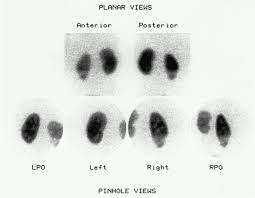
- Renal scintigraphy can help evaluate renal perfusion and function using radioactive tracers that are filtered by the kidneys.
- Biopsy: This is a procedure that involves removing a small sample of kidney tissue for microscopic examination. A biopsy can help confirm the diagnosis and determine the cause and extent of kidney damage in cases of acute renal failure that are unexplained or refractory to treatment. A biopsy can also help differentiate acute from chronic kidney injury by assessing the degree of fibrosis and scarring in the kidney tissue.
Nursing Test Bank
Test Bank #1: RN Pharmacology Exams
Test Bank #2: RN Medical-Surgical Exams
Test Bank #3: RN Fundamentals Exams
Test Bank #4: RN Maternal-Newborn Exams
Test Bank #5: RN Anatomy and Physiology Exams
Test Bank #6: RN Obstetrics and Pediatrics Exams
Test Bank #7: RN Fluid and Electrolytes Exams
Test Bank #9: RN Adult Health
Test Bank #10: RN Dosage Calculation
Test Bank #11: RN Community Health Exams
Test Bank #12: RN Psychology Exams
Test Bank #13: RN Nursing Care Of Children
Test Bank #14: RN Foundations of Nursing Exams
Naxlex Comprehensive Predictor Exams
Exam #1: RN Comprehensive predictor 2023 proctored exam
Exam #2: Ati rn vati comprehensive predictor proctored exam
Exam #3: Ati Rn Comprehensive Predictor Proctored Exam 2023
Exam #4: Rn Comprehensive Predictor 2023 Proctored Exam - St. Joseph
Exam #5: RN Comprehensive Predictor Proctored Exam (National U CA San Diego)
Exam #6: Ati rn comprehensive predictor 2023 retake proctored exam
Exam #7: RN Hesi Exit Proctored Exam
Exam #8: Hesi RN Exit proctored exam
Exam #9: Hesi rn exit proctored exam
Exam #10: Hesi Rn compass exit B proctored exam
Questions on Diagnostic tests and imaging
Correct Answer is B
Explanation
Incorrect. Preventing infection and complications is important, but it is not the priority over assessing kidney function in acute renal failure.QUESTIONS
Correct Answer is B
Explanation
Incorrect. Increased respiratory rate and depth are not typically associated with acute renal failure or its fluid and electrolyte imbalances.
Correct Answer is A
Explanation
Incorrect. While anemia can be associated with chronic kidney disease, it is not a specific risk factor for acute renal failure.
Correct Answer is D
Explanation
Correct. Loop diuretics are prescribed in acute renal failure to increase urine output and promote fluid excretion. This helps reduce fluid overload and decrease edema.
Correct Answer is C
Explanation
Incorrect. Increasing the client'sfluid intake is not appropriate during a hypotensive episode, as it may not rapidly improve blood pressure and could lead to fluid overload.
Correct Answer is C
Explanation
Incorrect. Elevated creatinine levels can be seen in both acute and chronic kidney diseases, but they are not exclusively seen in chronic kidney disease.
Correct Answer is C
Explanation
Incorrect. Gentle stretching exercises may not be appropriate for a client experiencing muscle cramps, as stretching could exacerbate the discomfort.
Correct Answer is A
Explanation
Incorrect. Antihypertensive agents are prescribed to manage hypertension and do not treat anemia in clients with renal failure.QUESTIONS
Correct Answer is C
Explanation
Incorrect. Hypoactive bowel sounds and constipation are not directly related to fluid overload in acute renal failure.
Correct Answer is C
Explanation
Incorrect. Excessive thirst and dry mucous membranes are not specific to hyperkalemia and are not the most critical indicators of severe hyperkalemia.
Correct Answer is A
Explanation
Incorrect. While ciprofloxacin and other antibiotics may have renal-related side effects, they are not a common cause of intrinsic acute renal failure.
Correct Answer is C
Explanation
Incorrect. Excessive fluid intake and fluid overload may contribute to fluid retention and edema in prerenal acute renal failure, but they are not the primary pathophysiological process in acute renal failure.
Correct Answer is B
Explanation
Incorrect. Removing jewelry and metallic objects is a standard precaution for all imaging procedures, but it is not specific to a CT scan with contrast dye.
Correct Answer is D
Explanation
Correct. Before an MRI scan, clients need to remove all metal objects and devices, including jewelry, piercings, hearing aids, and certain medical implants. Metal can interfere with the MRI's magnetic field and cause safety concerns during the procedure.
Correct Answer is B
Explanation
Incorrect. Increased respiratory rate and shallow breathing are not typical respiratory manifestations of acute renal failure.QUESTIONS
Correct Answer is B
Explanation
Incorrect. Warm, flushed skin and headache are not directly related to metabolic acidosis.
Correct Answer is C
Explanation
Incorrect. Adhesive tape can cause skin irritation and damage when removed, especially in clients at risk for impaired skin integrity.
Correct Answer is A
Explanation
Incorrect. Thiazide diuretics may cause electrolyte imbalances and metabolic disturbances, but they are not a common cause of prerenal acute renal failure.QUESTIONS
Correct Answer is C
Explanation
Incorrect. Chronic kidney disease (CKD. is a risk factor for intrinsic acute renal failure, not postrenal.
Correct Answer is C
Explanation
Incorrect. While UTIs and kidney stones can cause kidney injury, they are not the exclusive causes of acute renal failure, which can have various underlying etiologies.
Correct Answer is D
Explanation
Correct. The nurse's best response is to encourage the client to follow their healthcare provider's instructions and avoid medications that may harm the kidneys. Compliance with prescribed treatment plans and avoiding nephrotoxic medications are essential to support kidney function and prevent further damage.
Correct Answer is C
Explanation
Incorrect. Excessive fluid intake may contribute to fluid overload and decreased urine output in prerenal acute renal failure, but it is not the primary pathophysiological process that leads to decreased urine output.