
naxlex image logo
naxlex image logo
  • Home
  • Nursing School Content
  • TEAS Content
  • How It Works
  • TEAS
  • HESI prep
  • NCLEX
  • Nursing School Exams
  • Naxex Login
  • Get Started
  • Get Started
Discover valuable nursing resources and insights for your success—join our nursing community and access the tools to excel.
Naxlex
Naxlex
Home Nursing School Content TEAS/HESI A2 Content NCLEX Get Started
  • Naxlex Login
  • Blog
    • Medical Surgical
    • Genito-Urinary System Disorders
    • Etiology
    Try Naxlex NCLEX-RN (14-day Free-Trial)

    Etiology

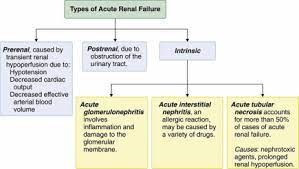
    The most common causes of ARF vary depending on the category and the setting.

    In general, prerenal ARF accounts for about 60% to 70% of cases, intrinsic ARF accounts for about 25% to 40% of cases, and postrenal ARF accounts for about 5% to 10% of cases.

    Some of the specific causes of each category are:

    - Prerenal ARF: Hypovolemia (due to hemorrhage, vomiting, diarrhea, burns), hypotension (due to septic shock, cardiogenic shock, anaphylactic shock), heart failure (due to myocardial infarction, arrhythmias, valvular disease), renal artery stenosis (due to atherosclerosis, fibromuscular dysplasia), hepatorenal syndrome (due to liver cirrhosis), drugs that affect renal perfusion (such as nonsteroidal anti-inflammatory drugs [NSAIDs], angiotensin-converting enzyme inhibitors [ACEIs], angiotensin receptor blockers [ARBs])

    - Intrinsic ARF: Acute tubular necrosis (ATN) (due to ischemia from prerenal causes or nephrotoxins such as antibiotics [aminoglycosides], antivirals [acyclovir], antifungals [amphotericin B], chemotherapeutic agents [cisplatin], contrast media [iodinated]), acute interstitial nephritis (AIN) (due to allergic reactions to drugs such as antibiotics [penicillins], anticonvulsants [phenytoin], diuretics [furosemide], NSAIDs [ibuprofen] or infections such as streptococcal pharyngitis, cytomegalovirus [CMV], etc.), glomerulonephritis (due to immune-mediated diseases such as lupus nephritis, post-streptococcal glomerulonephritis, IgA nephropathy), vasculitis (due to systemic diseases such as granulomatosis with polyangiitis,

    microscopic polyangiitis, polyarteritis nodosa), thrombotic microangiopathy (due to disorders such as hemolytic uremic syndrome [HUS], thrombotic thrombocytopenic purpura [TTP])

    - Postrenal ARF: Kidney stones (due to hypercalcemia, hyperuricemia, hyperoxaluria), benign prostatic hyperplasia (BPH) (due to hormonal changes in aging men), tumors (such as bladder cancer, prostate cancer, cervical cancer), blood clots (due to trauma, surgery, anticoagulation), neurogenic bladder (due to spinal cord injury, multiple sclerosis, diabetes mellitus)
    Nursing Test Bank

    Test Bank #1: RN Pharmacology Exams Test Bank #2: RN Medical-Surgical Exams Test Bank #3: RN Fundamentals Exams Test Bank #4: RN Maternal-Newborn Exams Test Bank #5: RN Anatomy and Physiology Exams Test Bank #6: RN Obstetrics and Pediatrics Exams Test Bank #7: RN Fluid and Electrolytes Exams Test Bank #9: RN Adult Health Test Bank #10: RN Dosage Calculation Test Bank #11: RN Community Health Exams Test Bank #12: RN Psychology Exams Test Bank #13: RN Nursing Care Of Children Test Bank #14: RN Foundations of Nursing Exams

    Naxlex Comprehensive Predictor Exams

    Exam #1: RN Comprehensive predictor 2023 proctored exam Exam #2: Ati rn vati comprehensive predictor proctored exam Exam #3: Ati Rn Comprehensive Predictor Proctored Exam 2023 Exam #4: Rn Comprehensive Predictor 2023 Proctored Exam - St. Joseph Exam #5: RN Comprehensive Predictor Proctored Exam (National U CA San Diego) Exam #6: Ati rn comprehensive predictor 2023 retake proctored exam Exam #7: RN Hesi Exit Proctored Exam Exam #8: Hesi RN Exit proctored exam Exam #9: Hesi rn exit proctored exam Exam #10: Hesi Rn compass exit B proctored exam

    Questions on Etiology

    Correct Answer is B

    Explanation

    Incorrect. The description provided refers to the insertion of a urinary catheter for bladder drainage, not hemodialysis.

    Correct Answer is C

    Explanation

    Incorrect. Elevated creatinine levels can be seen in both acute and chronic kidney diseases, but they are not exclusively seen in chronic kidney disease.

    Correct Answer is B

    Explanation

    Incorrect. Increasing the dwell time would not address the issue of cloudy dialysis fluid and potential infection.

    Correct Answer is A

    Explanation

    Incorrect. While a renal ultrasound can visualize the blood vessels in the kidneys, its primary purpose is to assess kidney structure, not blood flow.

    Correct Answer is B

    Explanation

    Incorrect. High blood sugar levels and frequent urination are not directly related to acute renal failure. These symptoms are more characteristic of diabetes mellitus.

    Correct Answer is B

    Explanation

    Incorrect. Warm, flushed skin and headache are not directly related to metabolic acidosis.

    Correct Answer is A

    Explanation

    Incorrect. Chicken and fish are sources of protein and do not have high potassium content that would require restriction in most cases.

    Correct Answer is B

    Explanation

    Incorrect. Deep breathing exercises are not specific interventions for correcting metabolic acidosis.

    Correct Answer is C

    Explanation

    Incorrect. Chronic kidney disease (CKD. is a risk factor for intrinsic acute renal failure, not postrenal.

    Correct Answer is C

    Explanation

    Incorrect. Decreased respiratory rate and shallow breathing are not directly associated with uremia.

    Correct Answer is C

    Explanation

    Incorrect. While the statement is partially true, it does not capture the acute and sudden nature of acute renal failure. The inability of the kidneys to filter waste products from the blood is one of the manifestations of AKI.

    Correct Answer is C

    Explanation

    Incorrect. Excessive fluid intake may contribute to fluid overload and decreased urine output in prerenal acute renal failure, but it is not the primary pathophysiological process that leads to decreased urine output.

    Correct Answer is C

    Explanation

    Incorrect. Gentle stretching exercises may not be appropriate for a client experiencing muscle cramps, as stretching could exacerbate the discomfort.

    Correct Answer is B

    Explanation

    Incorrect. Increased respiratory rate and depth are not typically associated with acute renal failure or its fluid and electrolyte imbalances.

    Correct Answer is B

    Explanation

    Incorrect. Increased respiratory rate and shallow breathing are not typical respiratory manifestations of acute renal failure.QUESTIONS

    Correct Answer is A

    Explanation

    Incorrect. The timing of loop diuretic administration is determined by the healthcare provider's order and the client's specific needs. Taking diuretics at bedtime may result in increased nighttime urination and sleep disruption.QUESTIONS

    Correct Answer is B

    Explanation

    Incorrect. Urinary tract obstruction is also associated with postrenal acute renal failure, not intrinsic causes.

    Correct Answer is D

    Explanation

    Correct. The nurse's best response is to encourage the client to follow their healthcare provider's instructions and avoid medications that may harm the kidneys. Compliance with prescribed treatment plans and avoiding nephrotoxic medications are essential to support kidney function and prevent further damage.

    Correct Answer is A

    Explanation

    Incorrect. Antihypertensive agents are prescribed to manage hypertension and do not treat anemia in clients with renal failure.QUESTIONS

    Correct Answer is A

    Explanation

    Incorrect. While anemia can be associated with chronic kidney disease, it is not a specific risk factor for acute renal failure.

    Correct Answer is B

    Explanation

    Incorrect. Fluid restriction is not typically recommended in acute renal failure, especially if the client is experiencing fluid depletion and dehydration.

    Correct Answer is C

    Explanation

    Incorrect. Increasing the client'sfluid intake is not appropriate during a hypotensive episode, as it may not rapidly improve blood pressure and could lead to fluid overload.

    Incorrect. Excessive thirst and dry mucous membranes are not specific to hyperkalemia and are not the most critical indicators of severe hyperkalemia.

    Correct. Before an MRI scan, clients need to remove all metal objects and devices, including jewelry, piercings, hearing aids, and certain medical implants. Metal can interfere with the MRI's magnetic field and cause safety concerns during the procedure.

    Incorrect. Hypoactive bowel sounds and constipation are not directly related to fluid overload in acute renal failure.

    Incorrect. While a renal biopsy can provide information about the kidney's structure, its primary purpose is to obtain a tissue sample for histological examination, not to assess blood flow.

    Incorrect. The cost of CRRT and intermittent hemodialysis can vary based on the healthcare setting and the client's needs. The cost-effectiveness depends on individual factors and resource availability.

    Incorrect. Removing jewelry and metallic objects is a standard precaution for all imaging procedures, but it is not specific to a CT scan with contrast dye.

    Incorrect. Renal ultrasound is an imaging test that provides information about the structure of the kidneys but does not directly measure GFR.

    Incorrect. Encouraging the client to drink water freely would exacerbate fluid overload and impair the body's ability to eliminate excess fluids.

    Incorrect. Adhesive tape can cause skin irritation and damage when removed, especially in clients at risk for impaired skin integrity.

    Incorrect. Thiazide diuretics may cause electrolyte imbalances and metabolic disturbances, but they are not a common cause of prerenal acute renal failure.QUESTIONS

    Incorrect. Seasonal allergies are not associated with an increased risk of acute renal failure.

    Correct. Fresh fruits and vegetables are generally low in phosphate and are suitable for a low-phosphate diet. These foods can help meet the client's nutritional needs while adhering to the dietary restriction.

    Correct. A renal nuclear scan, also known as a renal scintigraphy, involves injecting a small amount of radioactive material intravenously. The radioactive material is taken up by the kidneys, and the scan creates images that assess kidney function and blood flow.QUESTIONS

    Incorrect. Diabetes mellitus is a risk factor for chronic kidney disease, but it is not a specific risk factor for prerenal acute renal failure.

    Incorrect. Excessive fluid intake and fluid overload may contribute to fluid retention and edema in prerenal acute renal failure, but they are not the primary pathophysiological process in acute renal failure.

    Incorrect. Administering pain medication before passive range-of-motion exercises is not a standard practice and does not directly prevent complications of immobility.

    Correct. Loop diuretics are prescribed in acute renal failure to increase urine output and promote fluid excretion. This helps reduce fluid overload and decrease edema.

    Incorrect. Promoting shallow breathing to retain carbon dioxide is not a recommended intervention for correcting metabolic acidosis. Respiratory acidosis and metabolic acidosis are different types of acid-base imbalances with distinct causes and treatments.

    Incorrect. While UTIs and kidney stones can cause kidney injury, they are not the exclusive causes of acute renal failure, which can have various underlying etiologies.

    Incorrect. Preventing infection and complications is important, but it is not the priority over assessing kidney function in acute renal failure.QUESTIONS

    Incorrect. While ciprofloxacin and other antibiotics may have renal-related side effects, they are not a common cause of intrinsic acute renal failure.
    Try Naxlex NCLEX-RN
    (14 Day Free-Trial)

    Search Here

    More on Nursing

    • Medico-Surgical Procedures
    • Immunological System
    • Blood and Cardiovascular Disorders
    • Digestive System Disorders
    • Perioperative Nursing
    • Endocrine Systems
    • Communicable Diseases
    • Introduction
    • Musculoskeletal System

    Free Nursing Study Materials

    Access to all study guides and practice questions for nursing for free.

    • Free Nursing Study Trials
    • Free Nursing Video tutorials
    • Free Nursing Practice Tests
    • Free Exam and Study Modes
    • Free Nursing Revision Quizlets
    Join Us Today
    naxlex-logo-footer

    Designed to assess a student's preparedness for entering the health science fields.

    Email Address: [email protected]

    Study Resources

    • Naxlex Login
    • TEAS 7 Practice Tests
    • HESI A2 Prep
    • Nursing Test Banks
    • NCLEX Practice Questions

    Company

    • Pricing
    • Refund Policy
    • Terms And Conditions
    • Privacy Policy
    • Delivery Policy
    • Consumer and Data Privacy Policy

    © 2026 Naxlex.com