
Social Isolation
Social Isolation
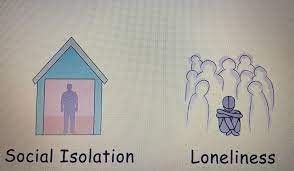 Social isolation is the lack of meaningful contact or interaction with other people. It can result from factors such as:
- Loss of spouse, friends or relatives due to death, divorce or relocation
- Decreased mobility or transportation due to physical limitations or lack of access
- Decreased hearing or vision due to sensory impairments
- Decreased communication skills due to cognitive impairments or language barriers
- Decreased social skills due to depression, anxiety or personality changes
Social isolation can have adverse effects on the older adult’s physical and mental health such as:
- Increased risk of cardiovascular disease, infection, dementia or mortality
- Decreased immune function, wound healing and pain tolerance
- Decreased cognitive function, memory and learning ability
- Decreased self-esteem, self-efficacy and coping skills
- Increased depression, anxiety, loneliness and suicidal ideation
Social isolation can be prevented or reduced by providing interventions such as:
- Assessing the older adult’s social network, support system and preferences
- Encouraging the older adult to maintain contact with family, friends and neighbors
- Facilitating the older adult’s participation in community activities or events that match their interests, abilities and values
- Providing assistive devices or adaptive equipment to enhance hearing, vision or mobility
- Providing transportation or escort services to enable access to social venues
- Referring the older adult to social services or agencies that offer companionship, respite or home care
Nursing Test Bank
Test Bank #1: RN Pharmacology Exams
Test Bank #2: RN Medical-Surgical Exams
Test Bank #3: RN Fundamentals Exams
Test Bank #4: RN Maternal-Newborn Exams
Test Bank #5: RN Anatomy and Physiology Exams
Test Bank #6: RN Obstetrics and Pediatrics Exams
Test Bank #7: RN Fluid and Electrolytes Exams
Test Bank #9: RN Adult Health
Test Bank #10: RN Dosage Calculation
Test Bank #11: RN Community Health Exams
Test Bank #12: RN Psychology Exams
Test Bank #13: RN Nursing Care Of Children
Test Bank #14: RN Foundations of Nursing Exams
Naxlex Comprehensive Predictor Exams
Exam #1: RN Comprehensive predictor 2023 proctored exam
Exam #2: Ati rn vati comprehensive predictor proctored exam
Exam #3: Ati Rn Comprehensive Predictor Proctored Exam 2023
Exam #4: Rn Comprehensive Predictor 2023 Proctored Exam - St. Joseph
Exam #5: RN Comprehensive Predictor Proctored Exam (National U CA San Diego)
Exam #6: Ati rn comprehensive predictor 2023 retake proctored exam
Exam #7: RN Hesi Exit Proctored Exam
Exam #8: Hesi RN Exit proctored exam
Exam #9: Hesi rn exit proctored exam
Exam #10: Hesi Rn compass exit B proctored exam
Questions on Social Isolation
Correct Answer is ["A","D"]
Explanation
<p>This is wrong because having poor hygiene and grooming habits does not imply that the client is socially isolated or lonely.</p>
<p>Poor hygiene and grooming habits can be a result of various factors, such as depression, dementia, physical disability, or lack of resources.</p>
<p>They can also affect the client’s self-esteem and social interactions, but they are not necessarily caused by social isolation or loneliness.</p>
Correct Answer is A
Explanation
<p>This is wrong because it suggests that the client should find new relationships to replace his wife, which can be insensitive and unrealistic.</p>
<p>This can make the client feel pressured and guilty.</p>