
naxlex image logo
naxlex image logo
  • Home
  • Nursing School Content
  • TEAS Content
  • How It Works
  • TEAS
  • HESI prep
  • NCLEX
  • Nursing School Exams
  • Naxex Login
  • Get Started
  • Get Started
Discover valuable nursing resources and insights for your success—join our nursing community and access the tools to excel.
Naxlex
Naxlex
Home Nursing School Content TEAS/HESI A2 Content NCLEX Get Started
  • Naxlex Login
  • Blog
    • Medical Surgical
    • Immunological System
    • Transmission-Based Precautions:
    Try Naxlex NCLEX-RN (14-day Free-Trial)

    Transmission-Based Precautions:

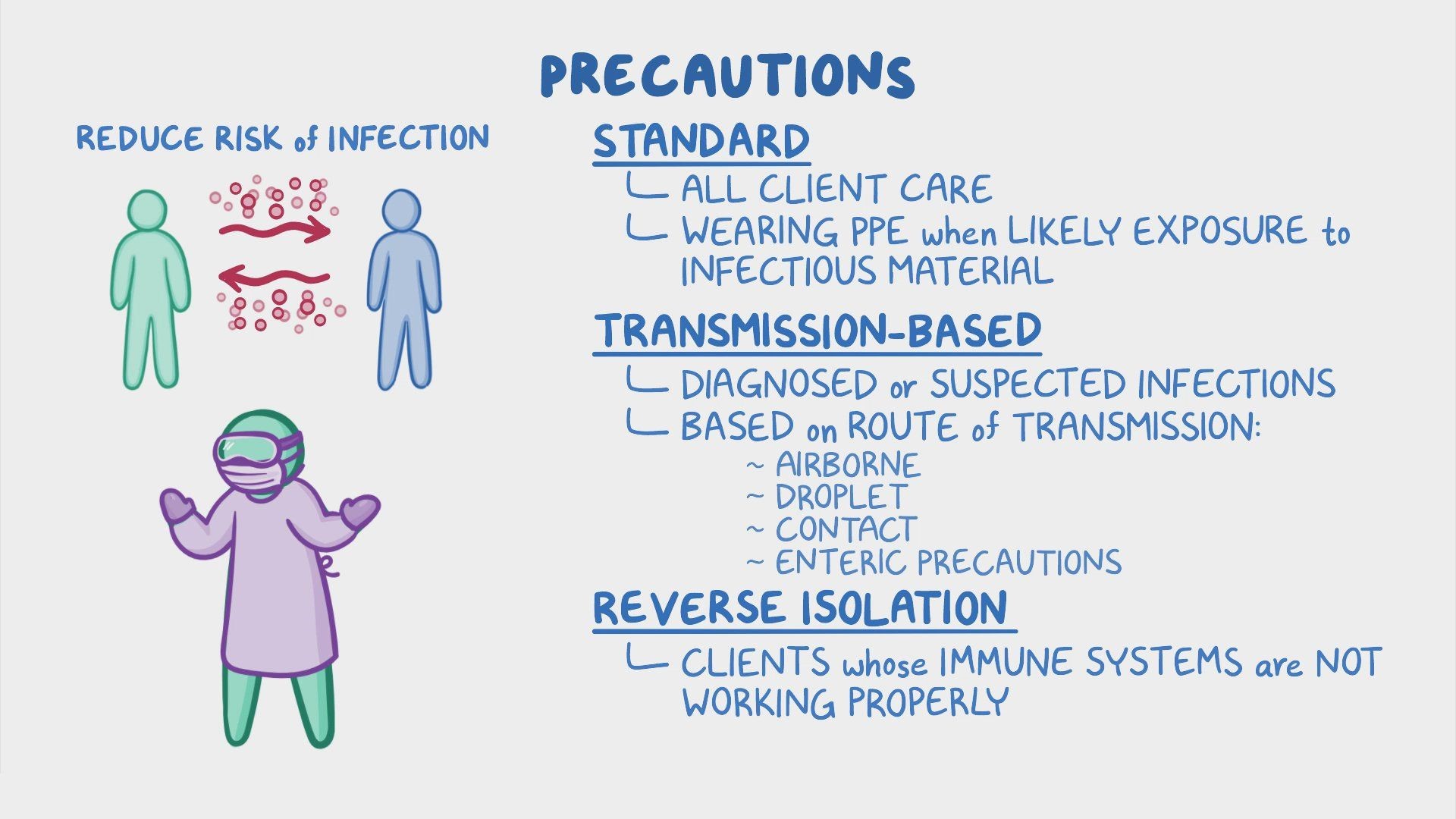
    - Transmission-based precautions are used in addition to standard precautions for patients with known or suspected infections that are spread through specific routes, including contact, droplet, or airborne transmission.

    - Contact precautions: Used for infections spread through direct or indirect contact with the patient or their environment. Examples include methicillin-resistant Staphylococcus aureus (MRSA), Clostridium difficile (C. diff), and vancomycin-resistant enterococci (VRE).

    - Droplet precautions: Used for infections spread through respiratory droplets generated by coughing, sneezing, or talking. Examples include influenza, pertussis, and meningococcal meningitis.

    - Airborne precautions: Used for infections spread through small droplet nuclei that remain suspended in the air for long periods. Examples include tuberculosis (TB), measles, and varicella (chickenpox).
    Nursing Test Bank

    Test Bank #1: RN Pharmacology Exams Test Bank #2: RN Medical-Surgical Exams Test Bank #3: RN Fundamentals Exams Test Bank #4: RN Maternal-Newborn Exams Test Bank #5: RN Anatomy and Physiology Exams Test Bank #6: RN Obstetrics and Pediatrics Exams Test Bank #7: RN Fluid and Electrolytes Exams Test Bank #9: RN Adult Health Test Bank #10: RN Dosage Calculation Test Bank #11: RN Community Health Exams Test Bank #12: RN Psychology Exams Test Bank #13: RN Nursing Care Of Children Test Bank #14: RN Foundations of Nursing Exams

    Naxlex Comprehensive Predictor Exams

    Exam #1: RN Comprehensive predictor 2023 proctored exam Exam #2: Ati rn vati comprehensive predictor proctored exam Exam #3: Ati Rn Comprehensive Predictor Proctored Exam 2023 Exam #4: Rn Comprehensive Predictor 2023 Proctored Exam - St. Joseph Exam #5: RN Comprehensive Predictor Proctored Exam (National U CA San Diego) Exam #6: Ati rn comprehensive predictor 2023 retake proctored exam Exam #7: RN Hesi Exit Proctored Exam Exam #8: Hesi RN Exit proctored exam Exam #9: Hesi rn exit proctored exam Exam #10: Hesi Rn compass exit B proctored exam

    Questions on Transmission-Based Precautions:

    Correct Answer is A

    Explanation

    <p>Hand hygiene with soap and water should be performed even if gloves were worn during patient care, as gloves may have microscopic defects or contamination.</p>

    Correct Answer is A

    Explanation

    No explanation

    Correct Answer is C

    Explanation

    <p>Standard precautions are the basic level of infection prevention and control measures that should be followed for all clients, regardless of their specific infectious status.</p>

    Correct Answer is B

    Explanation

    <p>Wearing a gown when administering oral medication to a non-isolated patient is not typically required unless there is a risk of splashing or exposure to bodily fluids.</p>

    Correct Answer is C

    Explanation

    Attending team-building activities is beneficial for team dynamics but not directly related to staff health and immunization.

    Correct Answer is B

    Explanation

    <p>60 seconds are longer than necessary for using an alcohol-based hand rub and can lead to wastage of the product.</p>

    Correct Answer is B

    Explanation

    Administering prophylactic antibiotics is not a preventive measure for healthcare-associated infections but rather a treatment option in certain cases.

    Correct Answer is C

    Explanation

    Assigning blame for the occurrence of infections is not the primary purpose of analyzing surveillance data.

    Correct Answer is D

    Explanation

    Using single-use syringes and needles for each injection is an essential component of safe injection practices. It helps prevent the transmission of infectious agents between patients.

    Correct Answer is C

    Explanation

    10 feet (3 meters) is farther than necessary for routine respiratory etiquette and may not be practical in most healthcare settings.

    Correct Answer is B

    Explanation

    Reusing masks throughout the day to conserve supplies increases the risk of contamination and compromises respiratory hygiene practices.

    Correct Answer is A

    Explanation

    <p>Standard precautions should always be followed, but additional precautions specific to the mode of transmission (in this case, contact precautions) are necessary when dealing with infectious wounds.</p>

    Correct Answer is C

    Explanation

    Assisting a patient with ambulation does not require sterile gloves. Non-sterile gloves should be used.

    Correct Answer is B

    Explanation

    Removing the mask first can potentially expose the face to contamination. The correct order is to remove the gown first.

    Correct Answer is B

    Explanation

    <p>Standard precautions should always be followed, but additional precautions specific to the mode of transmission (in this case, droplet precautions) are required for effective infection control.</p>

    Correct Answer is A

    Explanation

    No explanation

    Correct Answer is A

    Explanation

    <p>Standard precautions should always be followed, but additional precautions specific to the mode of transmission (in this case, airborne precautions) are required for effective infection control.</p>

    Correct Answer is C

    Explanation

    Assigning blame for the occurrence of infections is not the primary purpose of infection reporting.

    Correct Answer is C

    Explanation

    <p>Maintaining a pleasant scent is not the primary purpose of aseptic techniques but can be achieved through other means unrelated to infection prevention.</p>

    Correct Answer is B

    Explanation

    <p>Mild respiratory infections in healthcare providers may not necessarily be considered HAIs and may not require reporting.</p>

    Correct Answer is C

    Explanation

    Face shield and gloves are not the recommended combination of PPE for tuberculosis precautions.

    Correct Answer is A

    Explanation

    <p>Standard precautions should always be followed, but additional precautions specific to the mode of transmission (in this case, airborne precautions) are required for effective infection control.</p>

    Correct Answer is C

    Explanation

    <p><strong>Leave them on a clean surface for someone else to handle</strong>: This is highly inappropriate as it exposes others to potential infection and does not follow proper hygiene and infection control practices.</p>

    Correct Answer is B

    Explanation

    <p>Reducing healthcare costs associated with infections is a potential benefit of effective infection prevention and control, but it is not the primary purpose of isolation precautions.</p>

    Correct Answer is C

    Explanation

    <p>N95 respirators should be fit-tested to ensure a proper seal and provide adequate respiratory protection.</p>

    Correct Answer is C

    Explanation

    <p>Standard precautions should always be followed, but additional precautions specific to the mode of transmission (in this case, contact precautions) are necessary for effective infection control.</p>

    Correct Answer is C

    Explanation

    Blowing air over the surface does not effectively clean or disinfect it. Cleaning agents should be used.

    Correct Answer is C

    Explanation

    Increasing patient satisfaction scores is important but not the primary goal of environmental control in infection prevention.

    Correct Answer is B

    Explanation

    <p>The recommended duration for hand hygiene before and after administering injections is typically 15 seconds. This allows sufficient time to effectively clean the hands and reduce the risk of infection transmission.</p>

    <p>Standard precautions should always be followed, but additional precautions specific to the mode of transmission (in this case, droplet precautions) are required for effective infection control.</p>

    No explanation

    <p>Tuberculosis requires airborne precautions due to the risk of transmission through airborne particles.</p>

    Performing routine maintenance of medical equipment is important for preventing equipment-related infections but is not the only infection prevention measure.

    No explanation

    <p>Using a shared hand towel with other healthcare providers can promote the spread of microorganisms and is not recommended.</p>

    Effective infection surveillance requires the collection and analysis of accurate and timely data to identify trends, patterns, and potential areas for improvement.

    <p>Hand hygiene should be performed regardless of visible dirt or contamination, as microorganisms may be present even if not visible.</p>

    <p>Gloves should be removed and hand hygiene performed before touching clean surfaces.</p>

    Delaying vaccination until the contraindication resolves may not be appropriate, as some contraindications may be permanent.

    If a needlestick injury occurs during an injection, the healthcare provider should follow the facility's protocol for reporting the incident and receiving appropriate post-exposure prophylaxis (PEP) to minimize the risk of infection transmission.

    Ampules should be broken open using a sterile device or ampule breaker to ensure a clean break and prevent injuries.

    Ensuring compliance with documentation requirements is important but not the primary purpose of surveillance.

    The influenza vaccine is a common vaccine recommended for healthcare staff to protect themselves and prevent the spread of influenza to patients and coworkers.

    The recommended duration for performing hand hygiene with alcohol-based hand sanitizers is approximately 15 seconds, ensuring all surfaces of the hands are covered and allowed to dry.

    Fumigation of patient rooms is a more extreme measure typically used for specific situations, such as outbreaks, and is not part of routine cleaning.

    <p>Enforcing strict dress code policies is unrelated to the primary purpose of staff health programs.</p>

    Healthcare staff receiving immunizations helps prevent the transmission of infectious diseases to vulnerable patients and also protects themselves from contracting vaccine-preventable infections.

    <p>Discarding used tissues on the floor is unsanitary and can contribute to the transmission of infections.</p>

    Leaving used needles and syringes on the patient's bedside table is unsafe and can pose a risk to the patient and healthcare providers.

    Using dedicated equipment for each patient is an example of transmission-based precautions, not standard precautions.

    No explanation

    Air filtration systems are designed to control airborne contaminants but do not act as physical barriers themselves.

    Proper ventilation is important in environmental control to minimize the concentration of airborne pathogens and maintain air quality within healthcare facilities.

    Publishing infection reports in local newspapers is not a standard method for reporting infections in healthcare facilities.More Questions

    Performing hand hygiene only once at the end of the shift does not ensure continuous protection throughout patient care interactions.

    <p>Standard precautions should always be followed, but additional precautions specific to the mode of transmission (in this case, contact precautions) are necessary when dealing with infectious wounds.</p>

    Athlete's foot from a public swimming pool is not an example of a healthcare-associated infection.

    Self-limiting viral upper respiratory infections are not typically considered reportable healthcare-associated infections.
    Try Naxlex NCLEX-RN
    (14 Day Free-Trial)

    Search Here

    More on Nursing

    • Medico-Surgical Procedures
    • Blood and Cardiovascular Disorders
    • Genito-Urinary System Disorders
    • Digestive System Disorders
    • Perioperative Nursing
    • Endocrine Systems
    • Communicable Diseases
    • Introduction
    • Musculoskeletal System

    Free Nursing Study Materials

    Access to all study guides and practice questions for nursing for free.

    • Free Nursing Study Trials
    • Free Nursing Video tutorials
    • Free Nursing Practice Tests
    • Free Exam and Study Modes
    • Free Nursing Revision Quizlets
    Join Us Today
    naxlex-logo-footer

    Designed to assess a student's preparedness for entering the health science fields.

    Email Address: [email protected]

    Study Resources

    • Naxlex Login
    • TEAS 7 Practice Tests
    • HESI A2 Prep
    • Nursing Test Banks
    • NCLEX Practice Questions

    Company

    • Pricing
    • Refund Policy
    • Terms And Conditions
    • Privacy Policy
    • Delivery Policy
    • Consumer and Data Privacy Policy

    © 2026 Naxlex.com