
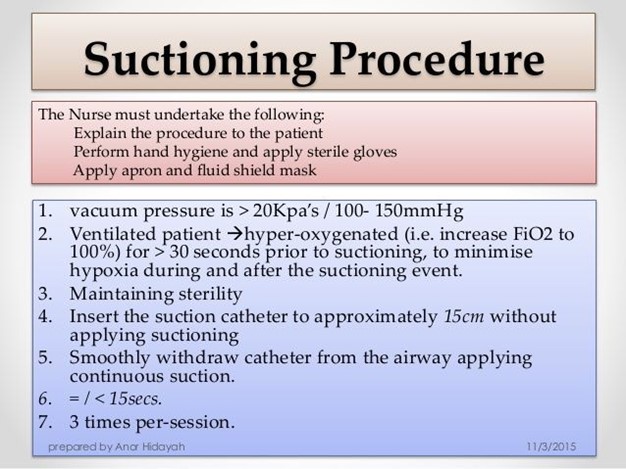
56. The practical nurse (PN) is caring for a client who has a tracheostomy tube. After donning sterile gloves, in which sequence should the PN should implement these interventions? (Arrange from the first action on top to last on the bottom.)
Insert sterile suction catheter in tracheostomy tube.
Hyperoxygenate with a bag valve mask (BVM) using a nondominant hand.
Activate suction by covering the catheter opening.
Withdraw and rotate the catheter while suction is applied.
The Correct Answer is B, A, C, D
The correct sequence for the interventions when caring for a client with a tracheostomy tube, after donning sterile gloves, is as follows:
Hyperoxygenate with a bag valve mask (BVM) using a nondominant hand. Insert sterile suction catheter in tracheostomy tube.
Activate suction by covering the catheter opening. Withdraw and rotate the catheter while suction is applied.
The first step is to hyperoxygenate the client using a bag valve mask (BVM) with the nondominant hand. This helps to ensure that the client receives adequate oxygenation during the suctioning procedure.
Next, the sterile suction catheter is inserted into the tracheostomy tube. The catheter is carefully advanced until resistance is met, ensuring it does not force its way in.
After the catheter is inserted, the suction is activated by covering the catheter opening. This creates negative pressure and allows for the removal of secretions.
Finally, the catheter is withdrawn and rotated while suction is applied. This helps to thoroughly suction the secretions from the tracheostomy tube.
Nursing Test Bank
Naxlex Comprehensive Predictor Exams
Related Questions
Correct Answer is D
Explanation
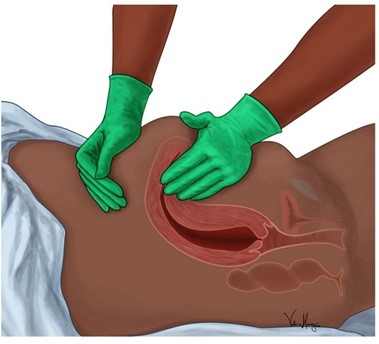
This is the best action to take for a client who experiences a sudden gush of vaginal blood and clots after a cesarean section. Massaging the fundus helps to stimulate uterine contractions and reduce bleeding. Avoiding direct pressure on the incision prevents pain and wound dehiscence.
Correct Answer is A
Explanation
Inspecting the client's skin near the end of the bathing procedure allows the PN to directly assess the UAP's performance and evaluate the effectiveness of the bed bath. By observing the client's skin, the PN can determine if the UAP has properly cleaned and cared for the client's skin, identified any areas that may have been missed, and ensured that proper hygiene practices have been followed.
B. While verifying with the client that the bath was complete and thorough is important for client satisfaction, it may not provide a comprehensive evaluation of the UAP's performance. Clients may not be aware of all the necessary steps involved in a complete bed bath, so their perception may not accurately reflect the quality of the UAP's work.
C. Requesting the UAP to report and chart when the bath is complete is a useful documentation practice, but it does not provide a direct evaluation of the UAP's performance during the bed bath.
D. Asking another UAP to help the orientee may be helpful for providing guidance and support during the orientation process, but it does not provide a specific evaluation of the UAP's performance in completing the bed bath.
Whether you are a student looking to ace your exams or a practicing nurse seeking to enhance your expertise , our nursing education contents will empower you with the confidence and competence to make a difference in the lives of patients and become a respected leader in the healthcare field.
Visit Naxlex, invest in your future and unlock endless possibilities with our unparalleled nursing education contents today