
A 45-year-old patient presents with severe abdominal pain, nausea, and vomiting. Laboratory results indicate elevated lipase/amylase. Which organ is primarily affected in this scenario?
Pancreas
Small Intestine
Liver
Stomach
The Correct Answer is A
Choice A reason: Serum lipase and amylase are digestive enzymes produced and secreted by the exocrine pancreas. Elevated levels of these enzymes in the blood are the hallmark diagnostic criteria for acute pancreatitis, reflecting glandular inflammation and damage, which allows the leakage of these intracellular enzymes into the systemic circulation.
Choice B reason: While the small intestine is involved in the final stages of chemical digestion using pancreatic enzymes, it does not synthesize these enzymes. Elevated levels of amylase or lipase would not typically originate from intestinal pathology, as these enzymes are produced in the pancreatic acinar cells and secreted into the duodenum.
Choice C reason: The liver is primarily responsible for bile production, detoxification, and metabolic processing. While liver enzyme elevation is common in hepatobiliary diseases, it does not involve the specific elevation of lipase or amylase, which are specifically reflective of pancreatic inflammatory processes rather than hepatocellular or biliary obstruction.
Choice D reason: The stomach secretes hydrochloric acid and pepsinogen to initiate protein digestion. Although gastric pathologies such as peptic ulcer disease can cause severe abdominal pain and nausea, they do not result in the elevated lipase and amylase levels seen in inflammatory pancreatic conditions or obstruction of the pancreatic duct.
Nursing Test Bank
Naxlex Comprehensive Predictor Exams
Related Questions
Correct Answer is D
Explanation
Choice A reason: Skeletal muscle is responsible for voluntary body movements and is attached to the skeleton via tendons. It is innervated by the somatic nervous system, which allows for conscious control of contractions, making it entirely inappropriate for the involuntary, peristaltic functions required by the gastrointestinal tract.
Choice B reason: Cardiac muscle is a specialized type of involuntary, striated muscle found exclusively in the heart. While it functions involuntarily, it possesses unique structural properties, such as intercalated discs, specifically designed to synchronize the contraction of the myocardium, and it does not exist within the gastrointestinal system.
Choice C reason: Striated muscle is a classification that includes both skeletal and cardiac muscle, characterized by a microscopic pattern of alternating light and dark bands. The gastrointestinal tract relies on non-striated, involuntary muscle tissue, meaning the classification of striated muscle does not apply to the majority of the digestive tract.
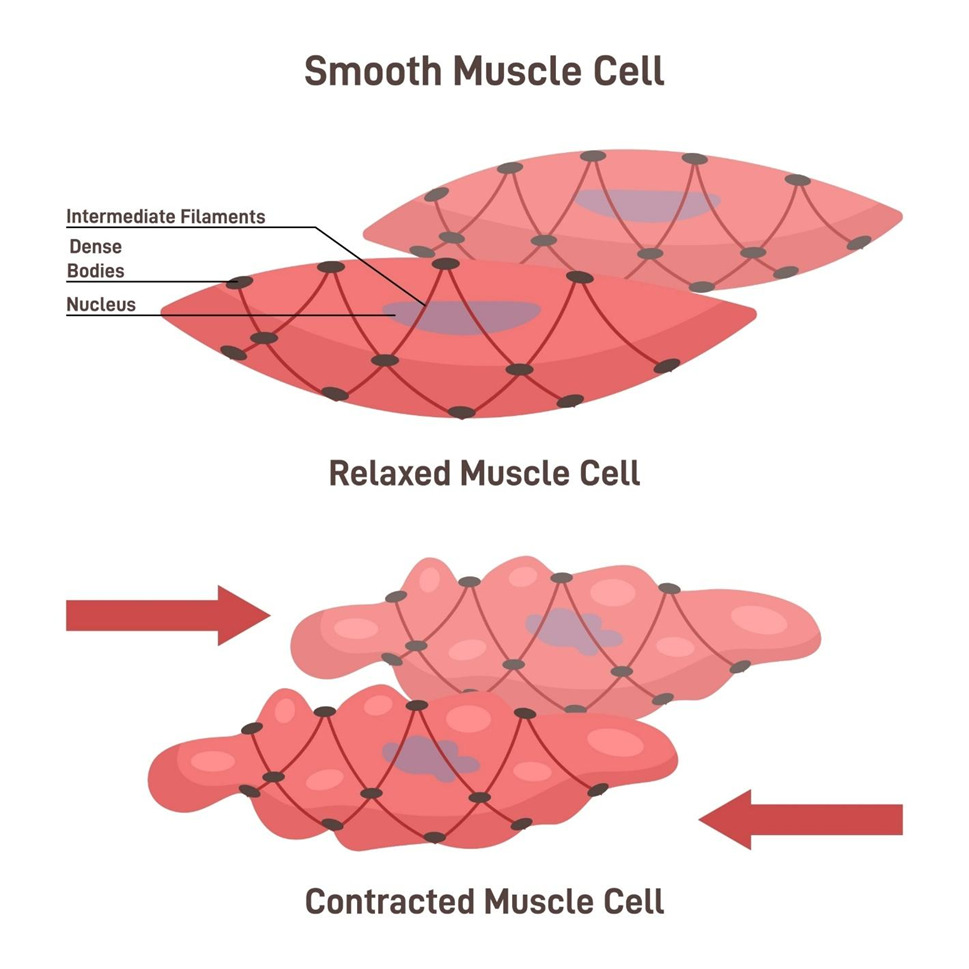
Choice D reason: Smooth muscle is non-striated, involuntary muscle found in the walls of hollow organs, including the esophagus, stomach, and intestines. Its structural properties allow it to undergo slow, sustained contractions, which are essential for generating the rhythmic peristaltic waves required to move food through the gastrointestinal tract.
Correct Answer is C
Explanation
Choice A reason: Placing a pulse oximetry sensor on the same extremity as an active blood pressure cuff is contraindicated because the inflation of the cuff occludes arterial blood flow, leading to inaccurate readings and potential signal loss, as the device requires adequate pulsatile arterial perfusion to determine oxygen saturation accurately.
Choice B reason: Pulse oximetry sensors must be rotated at much more frequent intervals, typically every 2 to 4 hours depending on institutional policy and the perfusion status of the patient, to prevent localized skin breakdown, pressure ulcers, or thermal injury caused by the continuous pressure and heat emitted by the probe.
Choice C reason: A capillary refill time of less than 2 seconds indicates adequate peripheral perfusion. Optimal pulse oximetry readings depend on high-quality pulsatile arterial flow; selecting an extremity with good perfusion ensures the sensor can detect the changing optical absorption associated with the arterial pulse wave, providing an accurate reading.
Choice D reason: Pulse oximetry devices utilize spectrophotometry to provide near-instantaneous readings. While it may take a few moments for the waveform to stabilize and synchronize with the heart rate, waiting a full 10 seconds is not a standard clinical requirement and does not improve the accuracy of the result.
Whether you are a student looking to ace your exams or a practicing nurse seeking to enhance your expertise , our nursing education contents will empower you with the confidence and competence to make a difference in the lives of patients and become a respected leader in the healthcare field.
Visit Naxlex, invest in your future and unlock endless possibilities with our unparalleled nursing education contents today