
A 53-year-old male patient with deep partial-thickness burns from a chemical spill in the workplace has severe pain followed by nausea during dressing changes.
Which action will be most useful in decreasing the patient's nausea?
Give the prescribed prochlorperazine before dressing changes.
Keep the patient NPO for 2 hours before dressing changes.
Avoid performing dressing changes close to the patient's mealtimes.
Administer prescribed morphine sulfate before dressing changes.
The Correct Answer is A
Prochlorperazine is an antiemetic medication that is commonly used to treat nausea and vomiting caused by various conditions, including chemotherapy, radiation therapy, and surgery. Giving the medication before the dressing changes, can prevent or minimize the onset of nausea and vomiting, which can be triggered by the pain and anxiety associated with the procedure.
Option B, keeping the patient NPO (nothing by mouth) for 2 hours before dressing changes, may be helpful in reducing the risk of aspiration if the patient needs sedation or general anesthesia for the procedure. However, it is not directly related to reducing the patient's nausea.
Option C, avoiding performing dressing changes close to the patient's mealtimes, may help reduce the risk of nausea caused by an overly full stomach, but it is not directly related to reducing the patient's nausea during the procedure.
Option D, administering prescribed morphine sulfate before dressing changes, may help reduce the patient's pain during the procedure, but it may also increase the risk of nausea and vomiting as a side effect. Therefore, this option may not be the most useful in decreasing the patient's nausea.
Nursing Test Bank
Naxlex Comprehensive Predictor Exams
Related Questions
Correct Answer is ["A","B","C"]
Explanation
b. Monitoring blood glucose levels: This is an essential nursing intervention as patients with Cushing syndrome are at risk for developing diabetes mellitus because of cortisol on glucose metabolism. The nurse should monitor the patient's blood glucose levels regularly and report any abnormal readings to the healthcare provider.
c. Protecting patients from exposure to infection: Patients with Cushing syndrome are also at risk for developing infections due to the immunosuppressive effects of cortisol. The nurse should take appropriate infection control measures, such as frequent handwashing, wearing gloves, and isolation precautions if necessary.
a. Observing for signs of hypotension: Although hypotension is not typically seen in patients with Cushing syndrome, it can occur in some cases due to the depletion of cortisol. The nurse should monitor the patient's blood pressure regularly and report any abnormal readings to the healthcare provider.
Correct Answer is D
Explanation
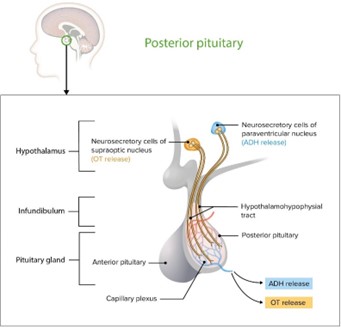
Demeclocycline is a tetracycline antibiotic that can be used to treat SIADH, a condition characterized by excessive water retention and a decrease in urinary output. Demeclocycline blocks the action of antidiuretic hormone (ADH), which can help increase urinary output and decrease water retention in patients with SIADH. Therefore, an increase in urinary output would indicate that demeclocycline is effective in treating the patient's SIADH. Options a, b, and c are incorrect because they do not directly relate to the mechanism of action of demeclocycline in treating SIADH.
Whether you are a student looking to ace your exams or a practicing nurse seeking to enhance your expertise , our nursing education contents will empower you with the confidence and competence to make a difference in the lives of patients and become a respected leader in the healthcare field.
Visit Naxlex, invest in your future and unlock endless possibilities with our unparalleled nursing education contents today