
A charge nurse is teaching a newly licensed nurse about administering heparin to a client. Which of the following statements by the newly licensed nurse indicates an understanding of the teaching?
"I will check the client's INR before administering the heparin."
"I will aspirate before administering the heparin."
"I will massage the site after the injecting the heparin."
"I will apply pressure for 1 minute after the injection."
The Correct Answer is D
Choice A Reason:
. "I will check the client's INR before administering the heparin." Is incorrect. Checking the client's INR (International Normalized Ratio) is essential, but it's more applicable for monitoring anticoagulants like warfarin, not heparin. Heparin's effect is typically monitored via activated partial thromboplastin time (aPTT) or anti-Xa levels, not INR.
Choice B Reason:
"I will aspirate before administering the heparin." Is incorrect. Aspirating before administering heparin injections is not necessary because the medication is given subcutaneously or intravenously and not into a blood vessel.
Choice C Reason:
"I will massage the site after injecting the heparin." Is incorrect. Massaging the site after injecting heparin could increase the risk of bruising or hematoma formation at the injection site. It's generally advised to avoid massaging the area after a heparin injection to prevent tissue trauma.
Choice D Reason:
"I will apply pressure for 1 minute after the injection." Is correct. Applying pressure to the injection site for about a minute after administering heparin helps minimize the risk of bleeding or hematoma formation, especially with subcutaneous injections. This practice aids in reducing bleeding at the injection site.
Nursing Test Bank
Naxlex Comprehensive Predictor Exams
Related Questions
Correct Answer is C
Explanation
Choice A Reason:
"I will have my partner tilt their head back while I am instilling the drops." Is incorrect. Tilting the head back is not typically recommended for administering optic medication as it might cause the medication to flow out instead of remaining in the ear canal.
Choice B Reason:
"I will make sure the solution is cool prior to instilling the drops." Is incorrect. The temperature of the solution usually doesn't need to be adjusted before instilling optic drops unless directed otherwise by specific medication instructions or healthcare provider guidance.
Choice C Reason:
"I will pull the pinna upward and outward prior to instilling the drops." Is correct statement. Pulling the pinna (outer ear) upward and outward helps straighten the ear canal in adults, facilitating the proper administration of optic (ear) drops. This action helps ensure that the medication reaches the ear canal effectively.
Choice D Reason:
"I will have my partner lie down on their back while I am instilling the drops." Is incorrect statement.
Having the partner lie down on their back might not be necessary for administering optic medication and might not be the optimal position for effective instillation.
Correct Answer is D
Explanation
Choice A Reason:
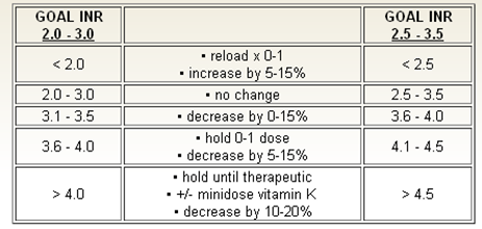
Decrease the dose of the medication is incorrect. Lowering the dose could potentially drop the INR below the therapeutic range, increasing the risk of clot formation.
Choice B Reason:
Increase the dose of the medication is incorrect. Raising the dose might push the INR above the therapeutic range, increasing the risk of bleeding.
Choice C Reason:
Withhold the medication is incorrect. Withholding the medication might lead to inadequate anticoagulation and an increased risk of clot formation.
Choice D Reason:
Administer the current dose of the medication. An INR of 2.5 is within the therapeutic range for many indications, including atrial fibrillation. This means the blood is appropriately anticoagulated to prevent clot formation without an excessive risk of bleeding. In this scenario, maintaining the current dose of warfarin is often appropriate to sustain the desired therapeutic effect.
Whether you are a student looking to ace your exams or a practicing nurse seeking to enhance your expertise , our nursing education contents will empower you with the confidence and competence to make a difference in the lives of patients and become a respected leader in the healthcare field.
Visit Naxlex, invest in your future and unlock endless possibilities with our unparalleled nursing education contents today