
A client with sickle cell anemia is coming in for a follow-up appointment after receiving two units of packed red blood cells five days ago. Which priority blood test will the nurse expect the primary health care provider to order for this client?
Platelet function test
Hemoglobin test
Prothrombin time test
Liver function test
The Correct Answer is B
Choice A reason: A platelet function test is not routinely indicated five days post-transfusion for sickle cell anemia. Unless the patient presents with specific signs of coagulopathy or thrombocytopenia, monitoring platelet function does not address the primary reason for the transfusion, which is to increase oxygen-carrying capacity and treat anemia.
Choice B reason: Following a transfusion of packed red blood cells, a hemoglobin check is the priority to evaluate the therapeutic efficacy of the intervention. The goal of the transfusion is to increase the oxygen-carrying capacity of the blood to prevent sickling and ischemia. Monitoring this level confirms if the transfusion successfully raised the hemoglobin concentration to a safe range.
Choice C reason: Prothrombin time (PT) measures the extrinsic pathway of the coagulation cascade. While blood transfusions can lead to dilutional coagulopathy if massive amounts are given, a routine transfusion of two units does not typically necessitate PT monitoring unless the patient has a history of liver disease or is on anticoagulation therapy.
Choice D reason: Liver function tests might be monitored in chronic sickle cell disease to screen for hepatopathy, but they are not the priority test five days after a transfusion. The primary focus post-transfusion is to verify the hematologic response to the donated cells to ensure adequate tissue oxygenation and prevent further hemolysis.
Nursing Test Bank
Naxlex Comprehensive Predictor Exams
Related Questions
Correct Answer is D
Explanation
Choice A reason: Maternal bradycardia is a systemic change in the mother’s heart rate. While maternal hemodynamic status impacts the fetus, late decelerations are not defined as a result of maternal bradycardia, as they specifically relate to the fetal heart rate response to uterine contractions.
Choice B reason: Fetal head compression is associated with early decelerations. These are benign, mirror-image decelerations that occur in response to uterine contractions as the fetal head is compressed against the cervix or pelvis, stimulating a vagal response.
Choice C reason: Umbilical cord compression is associated with variable decelerations. These are abrupt decreases in fetal heart rate that may occur at any time relative to a contraction, caused by the occlusion of the umbilical cord vessels.
Choice D reason: Late decelerations are caused by uteroplacental insufficiency, where the blood flow and oxygen transfer to the fetus are compromised during uterine contractions. This is a non-reassuring sign that indicates the fetus is not receiving adequate oxygenation, necessitating immediate nursing interventions to improve placental perfusion.
Correct Answer is B
Explanation
Choice A reason: Lactate dehydrogenase (LDH) is a non-specific enzyme that was historically used as a marker for myocardial infarction. However, it lacks specificity for cardiac tissue and is not used in modern clinical practice for assessing the risk of developing coronary artery disease.
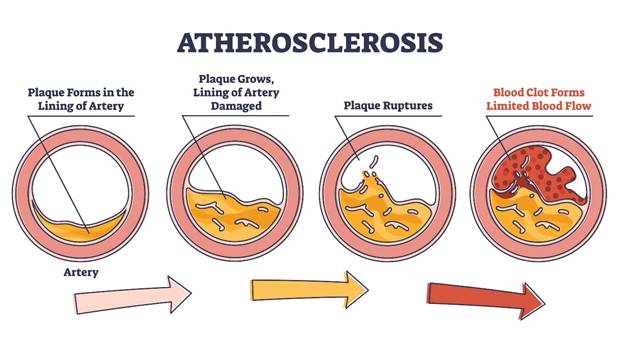
Choice B reason: Low-density lipoprotein (LDL) cholesterol is a primary, modifiable risk factor for the development of atherosclerosis. Elevated levels of LDL lead to the deposition of cholesterol in the arterial walls, forming plaques that narrow the coronary arteries. Monitoring and managing LDL is fundamental to preventing the progression of coronary artery disease.
Choice C reason: Creatinine kinase-MB (CK-MB) is a cardiac-specific isoenzyme that elevates during an active myocardial infarction. It is a diagnostic marker for acute tissue damage, not a predictive screening tool for assessing the future risk of developing coronary artery disease in an asymptomatic client.
Choice D reason: Cardiac troponin levels are highly specific diagnostic markers for acute myocardial injury. Like CK-MB, they are used to detect current or recent heart damage. They have no clinical utility in assessing a client's baseline risk or propensity for developing coronary artery disease in the future.
Whether you are a student looking to ace your exams or a practicing nurse seeking to enhance your expertise , our nursing education contents will empower you with the confidence and competence to make a difference in the lives of patients and become a respected leader in the healthcare field.
Visit Naxlex, invest in your future and unlock endless possibilities with our unparalleled nursing education contents today