
A client with trichomoniasis is to receive metronidazole. What should the nurse instruct the client to avoid while taking this drug?
Caffeine
Chocolate
Nicotine
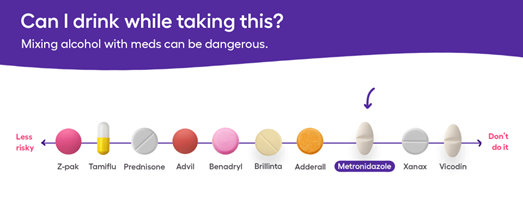
Alcohol
The Correct Answer is D
Choice A: Caffeine is not the correct answer because it does not interact with metronidazole. Caffeine is a stimulant that can increase alertness, energy, and heart rate. However, it has no effect on the effectiveness or side effects of metronidazole.
Choice B: Chocolate is not the correct answer because it does not interact with metronidazole. Chocolate is a food that contains caffeine, sugar, and fat. However, it has no effect on the effectiveness or side effects of metronidazole.
Choice C: Nicotine is not the correct answer because it does not interact with metronidazole. Nicotine is a substance that can be found in tobacco products, such as cigarettes, cigars, or chewing tobacco. However, it has no effect on the effectiveness or side effects of metronidazole.
Choice D: Alcohol is the correct answer because it interacts with metronidazole. Alcohol is a substance that can be found in beverages, such as beer, wine, or liquor. It can cause a severe reaction when combined with metronidazole, resulting in symptoms such as nausea, vomiting, headache, flushing, and palpitations. Therefore, the nurse should instruct the client to avoid alcohol while taking metronidazole.
Nursing Test Bank
Naxlex Comprehensive Predictor Exams
Related Questions
Correct Answer is C
Explanation
Choice A: Call the surgeon to perform a femoral puncture. This action is not appropriate because it is unnecessary and invasive. A femoral puncture is a procedure that involves inserting a needle into the femoral vein in the groin area to obtain a blood sample. It is usually reserved for situations where other veins are inaccessible or unsuitable, such as in trauma or shock. It is not indicated for a routine CBC test.
Choice B: Assist in holding the client's arm still. This action is not appropriate because it is harmful and contraindicated. Holding the client's arm still may cause injury or infection to the arm that has undergone surgery and lymph node removal. It may also increase the risk of lymphedema, which is a condition that causes swelling and pain in the arm due to fluid accumulation and impaired lymphatic drainage.
Choice C: Tell the technician to obtain the blood sample from the client's left arm. This action is appropriate because it is safe and recommended. Obtaining the blood sample from the client's left arm can avoid complications such as injury, infection, or lymphedema in the right arm that has undergone surgery and lymph node removal. The technician can use a different site than the antecubital space, such as the hand or wrist, to avoid interfering with the intravenous line.
Choice D: Suggest a finger stick be done on one of the client's left fingers. This action is not appropriate because it is unreliable and inaccurate. A finger stick is a procedure that involves pricking the finger with a lancet to obtain a small amount of blood for testing. It is usually used for point-of-care testing, such as glucose or hemoglobin levels, but not for a CBC test. A CBC test requires a larger volume of blood and a venous sample for accurate results.
Correct Answer is D
Explanation
Choice A: A 26-year-old client who has migraine headaches at the start of each menstrual cycle does not have a contraindication for receiving oral contraceptives. Oral contraceptives are pills that contain synthetic hormones (estrogen and progestin) that prevent ovulation and pregnancy. They can also help regulate menstrual cycles and reduce menstrual pain and bleeding. Some women with migraine headaches may benefit from oral contraceptives, especially if their migraines are related to hormonal fluctuations or menstruation. However, oral contraceptives may worsen migraines in some women, especially if they have aura (visual or sensory disturbances) or other risk factors for stroke. Therefore, oral contraceptives should be used with caution and under medical supervision in women with migraine headaches.
Choice B: A 28-year-old client who has a history of pelvic inflammatory disease does not have a contraindication for receiving oral contraceptives. Pelvic inflammatory disease (PID) is an infection of the female reproductive organs (uterus, fallopian tubes, ovaries) that can cause pain, fever, discharge, or infertility. It can be caused by various bacteria, often sexually transmitted ones such as gonorrhea or chlamydia. Oral contraceptives do not protect against STIs or PID, but they may reduce the risk of PID by thickening the cervical mucus and preventing bacteria from entering the uterus. Therefore, oral contraceptives can be used safely in women with a history of PID, but they should also use condoms or other barrier methods to prevent STIs.
Choice C: A 32-year-old client who has benign breast disease does not have a contraindication for receiving oral contraceptives. Benign breast disease (BBD) is a term that refers to various noncancerous conditions that affect the breast tissue, such as cysts, fibroadenomas, or mastitis. They can cause symptoms such as lumps, pain, or tenderness in the breasts. Oral contraceptives do not cause or increase the risk of BBD, but they may improve some symptoms of BBD by stabilizing the hormonal levels and reducing breast tissue sensitivity. Therefore, oral contraceptives can be used safely in women with BBD, but they should also have regular breast exams and mammograms to monitor their breast health.
Choice D: A 38-year-old client who reports smoking one pack of cigarettes every day has a contraindication for receiving oral contraceptives. Smoking is a habit that involves inhaling the smoke of tobacco or other substances that can cause various health problems, such as lung cancer, heart disease, or stroke. Oral contraceptives can increase the risk of these problems, especially in women who are older than 35 years or smoke more than 15 cigarettes per day. Smoking and oral contraceptives can interact and cause blood clots, high blood pressure, or reduced blood flow to the organs. Therefore, oral contraceptives should be avoided or discontinued in women who smoke, and alternative methods of contraception should be used.
Whether you are a student looking to ace your exams or a practicing nurse seeking to enhance your expertise , our nursing education contents will empower you with the confidence and competence to make a difference in the lives of patients and become a respected leader in the healthcare field.
Visit Naxlex, invest in your future and unlock endless possibilities with our unparalleled nursing education contents today