
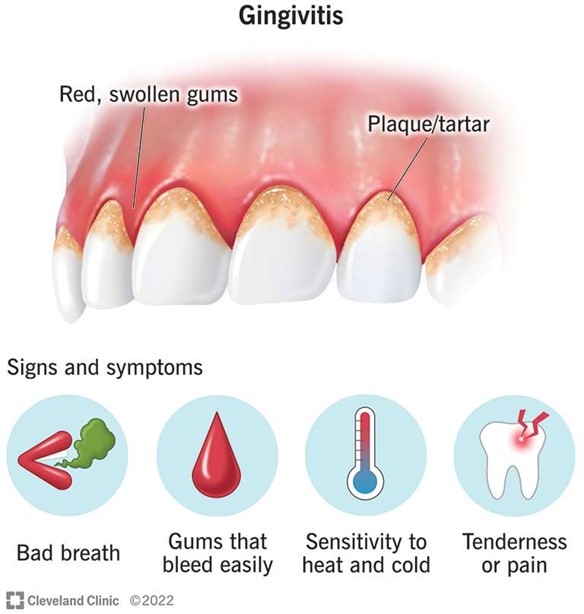
A dentist informs the practical nurse (PN) that she has a family history of cancer and has increased the amount of dairy products in her diet to reduce the risk of gingivitis. How should the PN respond?
Suggest an increase in fruits and vegetables is more beneficial.
Encourage the client to get plenty of exercise as well as the dietary change.
Remind the client to make sure the dairy products are fortified with Vitamin D.
Provide written information about the warning signs of cancer.
Provide written information about the warning signs of cancer.
The Correct Answer is A
In this scenario, the dentist is increasing the amount of dairy products in her diet with the aim of reducing the risk of gingivitis due to her family history of cancer. However, the practical nurse (PN) should respond by suggesting that an increase in fruits and vegetables would be more beneficial.
Fruits and vegetables are rich in essential vitamins, minerals, and antioxidants, which can help support overall oral health and reduce the risk of gingivitis. They provide a wide range of nutrients that are important for maintaining healthy gums and teeth.
While dairy products can contribute to overall dental health due to their calcium content, they should not be solely relied upon as the primary means of preventing gingivitis or reducing the risk of cancer. A well- rounded and balanced diet, including plenty of fruits and vegetables, is essential for optimal oral health.
Options b, c, and d are not directly related to the dentist's concern about gingivitis and the increased consumption of dairy products. Encouraging exercise (option b) is generally beneficial for overall health, but it does not specifically address gingivitis. Reminding the client to ensure dairy products are fortified with vitamin D (option c) is not necessary in this context, as the focus is on preventing gingivitis rather than addressing vitamin D deficiency. Providing written information about the warning signs of cancer (option d) is not directly relevant to the dentist's current situation and concern about gingivitis.
Nursing Test Bank
Naxlex Comprehensive Predictor Exams
Related Questions
Correct Answer is D
Explanation
Hives (also known as urticaria) are raised, red, itchy welts on the skin that can be caused by an allergic reaction to medication, including antibiotics. It is essential for the PN to recognize this potentially severe allergic reaction and take immediate action.
Immediate action steps include:
- Stop the infusion of the intravenous antibiotic immediately.
- Notify the healthcare provider and report the allergic reaction.
- Assess the client's airway, breathing, and circulation to ensure there are no signs of respiratory distress or anaphylaxis.
- Administer prescribed emergency medications if needed (e.g., epinephrine, antihistamines).
- Monitor the client closely for any further signs of an allergic reaction or anaphylaxis.
The other assessment findings mentioned are also important to address, but they do not require immediate action:
A- Dry mouth with thirst: This may indicate dehydration, which should be addressed by encouraging the client to drink fluids, but it does not pose an immediate threat to the client's safety.
B- Warm skin with elastic turgor: This suggests that the client is adequately hydrated, and the skin's elasticity is normal, which is a positive finding.
C- Low-grade fever with diaphoresis: A low-grade fever indicates a mild elevation in temperature, and diaphoresis (sweating) may be the body's response to regulate temperature. The PN should monitor the client's temperature and assess for other signs of infection, but this finding does not require immediate action
Correct Answer is B, A, C, D
Explanation
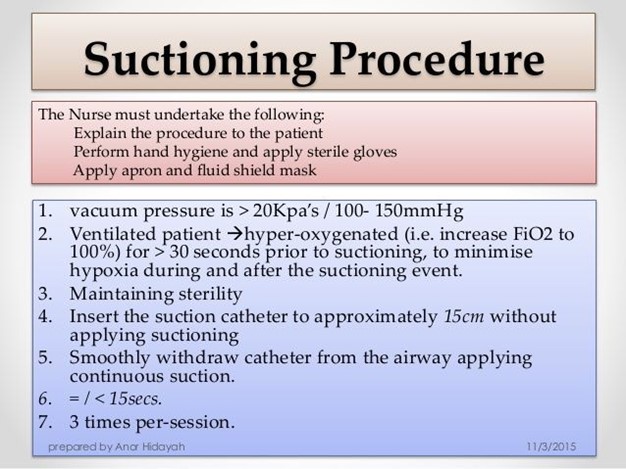
The correct sequence for the interventions when caring for a client with a tracheostomy tube, after donning sterile gloves, is as follows:
Hyperoxygenate with a bag valve mask (BVM) using a nondominant hand. Insert sterile suction catheter in tracheostomy tube.
Activate suction by covering the catheter opening. Withdraw and rotate the catheter while suction is applied.
The first step is to hyperoxygenate the client using a bag valve mask (BVM) with the nondominant hand. This helps to ensure that the client receives adequate oxygenation during the suctioning procedure.
Next, the sterile suction catheter is inserted into the tracheostomy tube. The catheter is carefully advanced until resistance is met, ensuring it does not force its way in.
After the catheter is inserted, the suction is activated by covering the catheter opening. This creates negative pressure and allows for the removal of secretions.
Finally, the catheter is withdrawn and rotated while suction is applied. This helps to thoroughly suction the secretions from the tracheostomy tube.
Whether you are a student looking to ace your exams or a practicing nurse seeking to enhance your expertise , our nursing education contents will empower you with the confidence and competence to make a difference in the lives of patients and become a respected leader in the healthcare field.
Visit Naxlex, invest in your future and unlock endless possibilities with our unparalleled nursing education contents today