
A fire is found in a client's room during a routine medication pass. What is the nurse's first action?
Activate the fire alarm.
Contain the fire.
Notify the supervisor.
Remove the client from the room.
The Correct Answer is D
The nurse’s first action when a fire is discovered in a client’s room is to evacuate any clients or visitors in immediate danger12.
This is because the safety of the clients and visitors is the top priority.
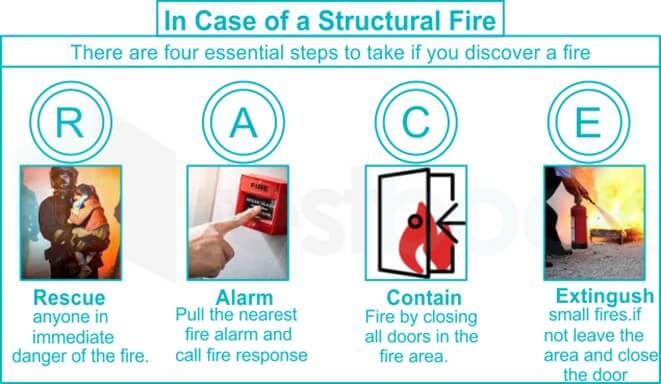
Choice A is not the correct answer because activating the fire alarm is not the first action that should be taken.
Choice B is not the correct answer because confining the fire by closing all doors and windows is not the first action that should be taken.
Choice C is not the correct answer because notifying the supervisor is not the first action that should be taken.
Nursing Test Bank
Naxlex Comprehensive Predictor Exams
Related Questions
Correct Answer is B
Explanation
Folk medicine is not a standard practice in the North American Healthcare system.
Standard practices in the North American Healthcare system include private health insurance, federal government health insurance programs such as Medicare and Medicaid, and a focus on improving health and preventing disease1.
Choice A is not correct because punctuality is considered a standard practice in many professional settings, including healthcare.
Choice C is not correct because handwashing is a standard practice in healthcare to prevent the spread of infection.
Choice D is not correct because annual exams are a standard practice in healthcare for preventative care and early detection of health issues.
Correct Answer is A
Explanation
“Do you know how to change your dressing?” This statement can create a barrier to communication because it may make the patient feel judged or defensive if they do not know how to change their dressing.
It is better to phrase the question in a more open-ended and non-judgmental way, such as “Can you tell me about your experience with changing your dressing?”
Choice B is not an answer because it encourages the patient to share information about their hospitalization and promotes open communication.
Choice C is not an answer because it shows that the speaker is actively listening and engaging with the patient’s previous statements.
Choice D is not an answer because it encourages the patient to share information about their pain management and promotes open communication.
Whether you are a student looking to ace your exams or a practicing nurse seeking to enhance your expertise , our nursing education contents will empower you with the confidence and competence to make a difference in the lives of patients and become a respected leader in the healthcare field.
Visit Naxlex, invest in your future and unlock endless possibilities with our unparalleled nursing education contents today