
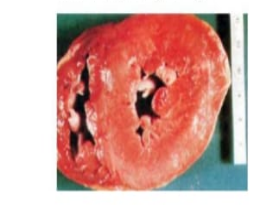
The left ventricle of the heart from an 82-year-old man is examined at autopsy (shown). Which of the following is the most cause of this pathologic finding?
Alcoholism
Atherosclerosis
Cigarette smoking
Rheumatic fever
Systemic hypertension
The Correct Answer is E
A. Alcoholism: Chronic alcoholism can lead to dilated cardiomyopathy due to direct toxic effects on the myocardium, resulting in ventricular dilation rather than concentric hypertrophy. It does not typically produce the thickened, muscular left ventricular wall seen here.
B. Atherosclerosis: Atherosclerosis may cause ischemic heart disease and myocardial infarction, but it does not directly cause concentric left ventricular hypertrophy. It primarily affects the coronary arteries rather than creating a pressure overload stimulus.
C. Cigarette smoking: Smoking is a risk factor for atherosclerosis, coronary artery disease, and pulmonary hypertension, but it is not a direct cause of chronic pressure overload leading to massive concentric left ventricular hypertrophy.
D. Rheumatic fever: Rheumatic fever can lead to valvular heart disease, often causing volume overload from regurgitation, which typically produces eccentric rather than concentric hypertrophy.
E. Systemic hypertension: Chronic systemic hypertension increases afterload on the left ventricle, forcing it to generate higher pressures to overcome elevated arterial resistance. This persistent pressure overload leads to concentric left ventricular hypertrophy as an adaptive response, thickening the ventricular wall while preserving chamber size.
Nursing Test Bank
Naxlex Comprehensive Predictor Exams
Related Questions
Correct Answer is D
Explanation
A. Adenocarcinoma of the lung:Adenocarcinoma is the most common type of lung cancer in nonsmokers and often arises in the peripheral lung tissue. It can develop due to genetic factors, environmental exposures, or unknown causes, making it possible even in individuals with no history of smoking or secondhandsmoke.
B. Small cell carcinoma of the lung:Small cell carcinoma is strongly associated with smoking but can rarely occur in nonsmokers. While uncommon, its occurrence is not impossible in someone who has never smoked, especially if other risk factors are present.
C. Mature carcinoid tumor:Carcinoid tumors are neuroendocrine tumors that often occur in the lungs independently of smoking. They are slow-growing and can develop in individuals with no history of tobacco exposure, making them likely in nonsmokers.
D. Squamous cell carcinoma of the lung:Squamous cell carcinoma is strongly linked to cigarette smoking and chronic exposure to tobacco smoke. It typically arises in the central bronchi and is extremely rare in individuals who have never smoked or been exposed to significant secondhand smoke, making it the least likely lung cancer in this patient.
Correct Answer is D
Explanation
A. Congestive heart failure:Congestive heart failure can cause dyspnea and pulmonary congestion, but hemoptysis and sudden pleuritic chest pain are not classic presenting features. CHF-related pulmonary edema usually produces pink, frothy sputum rather than frank blood and develops in the context of volume overload rather than acute embolic events.
B. Cor pulmonale:Cor pulmonale refers to right ventricular hypertrophy and failure secondary to chronic pulmonary hypertension. It develops gradually in patients with chronic lung disease and presents with peripheral edema and fatigue, not sudden chest pain and hemoptysis.
C. Phlebothrombosis:Phlebothrombosis refers to thrombus formation in a vein, often in the lower extremities, especially in patients with varicose veins. While it is the underlying source of emboli, it does not directly cause chest pain or hemoptysis unless a clot dislodges and travels to the lungs.
D. Pulmonary thromboembolism:Pulmonary thromboembolism occurs when a thrombus, often originating from deep leg veins, embolizes to the pulmonary arteries. Sudden chest pain and hemoptysis result from pulmonary infarction and pleural irritation. Varicose veins increase venous stasis, predisposing to thrombosis and subsequent embolism.
E. Pulmonary edema:Pulmonary edema involves fluid accumulation in the alveoli, most commonly due to left-sided heart failure. It causes dyspnea and crackles but does not typically present with sudden pleuritic chest pain and hemoptysis linked to venous thromboembolic risk factors.
Whether you are a student looking to ace your exams or a practicing nurse seeking to enhance your expertise , our nursing education contents will empower you with the confidence and competence to make a difference in the lives of patients and become a respected leader in the healthcare field.
Visit Naxlex, invest in your future and unlock endless possibilities with our unparalleled nursing education contents today