
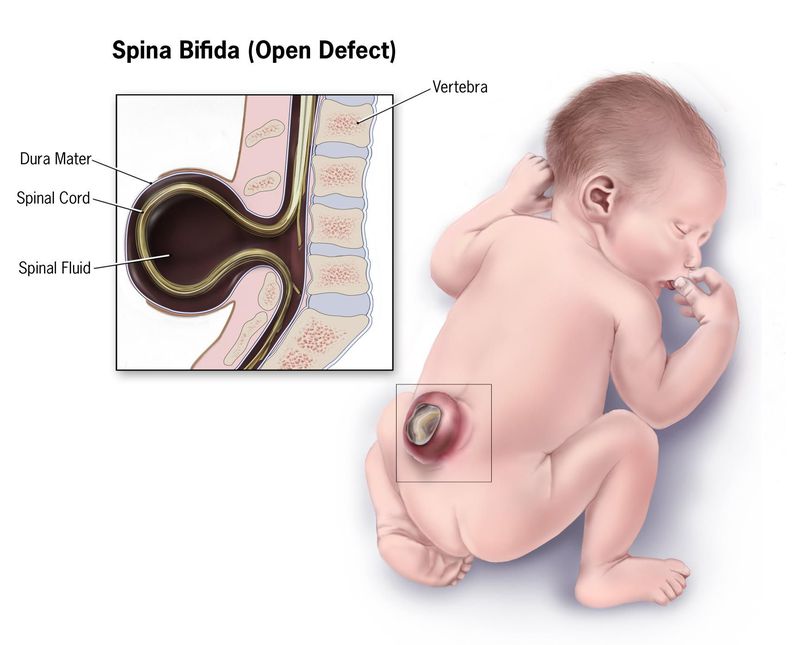
A nurse in planning care immediately following birth for a newborn who has a myelomeningocele that is leaking cerebrospinal fluid. Which of the following actions should the nurse include in the plan of care?
Monitor the rectal temperature every 4 hr.
Administer broad-spectrum antibiotics
Prepare for surgical closure after 72 hr.
Cleanse the site with povidone-iodine
The Correct Answer is B
Correct Answer: B
B. Administer broad-spectrum antibiotics
Newborns with a leaking myelomeningocele are at a high risk for infection, especially meningitis, due to the exposure of cerebrospinal fluid (CSF). Administering broad-spectrum antibiotics helps reduce the risk of infection until the defect is surgically closed.
Incorrect answers:
A. Monitor the rectal temperature every 4 hr. Taking rectal temperatures is contraindicated in a newborn with a myelomeningocele due to the risk of trauma to the rectum and potential introduction of bacteria near the exposed spinal cord and CSF. Axillary temperatures should be used instead.
C. Prepare for surgical closure after 72 hr. Surgical repair of a myelomeningocele is typically performed within the first 24–48 hours of life to reduce the risk of infection and prevent further nerve damage.
D. Cleanse the site with povidone-iodine. Povidone-iodine is not appropriate for cleansing the exposed myelomeningocele site because it can be too harsh and toxic to neural tissue.
Nursing Test Bank
Naxlex Comprehensive Predictor Exams
Related Questions
Correct Answer is B
Explanation
A. Give oxytocin 20 units IV bolus: Oxytocin is a medication used to induce or augment labor, and it is not the appropriate intervention for a client with placenta previa and significant vaginal bleeding. The priority in this situation is to assess and manage the bleeding.
B. Obtain serial hemoglobin and hematocrit: This is the correct action. Placenta previa can lead to significant bleeding, and obtaining serial hemoglobin and hematocrit levels will help monitor the extent of blood loss and guide decisions regarding transfusions or other interventions.
C. Perform a fundal massage: Fundal massage is not the appropriate intervention for placenta previa. In cases of placenta previa, the placenta is covering or near the cervical os, and vigorous fundal massage can worsen bleeding.
D. Assess for abdominal tenderness: While assessing for abdominal tenderness is important in the overall assessment of a pregnant client, in the context of active bleeding with placenta previa, the immediate focus should be on assessing the extent of bleeding and the client's hemodynamic status.
Correct Answer is D
Explanation
A. "You cannot have an amniocentesis until you are at least 35 years of age": This statement is not accurate. While advanced maternal age (35 years or older) is often a factor considered for offering amniocentesis due to the increased risk of chromosomal abnormalities, it is not the only factor. Amniocentesis may be recommended for various medical reasons, such as a history of genetic disorders or abnormal prenatal screening results.
B. "We can schedule the procedure for later today if you'd like": The decision to undergo amniocentesis should not be made lightly, and it is typically based on medical indications or concerns. Immediate scheduling without a medical reason is not appropriate. Informed consent and discussion with the healthcare provider about the risks and benefits of the procedure are essential.
C. "Your provider will schedule a chorionic villus sampling to determine the sex of your baby": Chorionic villus sampling (CVS) is a different prenatal diagnostic procedure used to obtain a small sample of placental tissue for genetic testing. It is not typically used solely for determining the sex of the baby. Amniocentesis is the procedure commonly used for both genetic testing and determining the sex of the fetus.
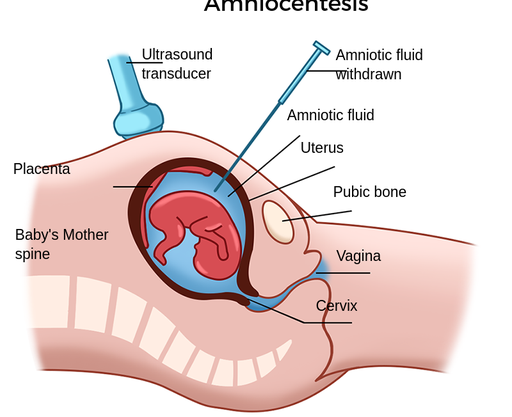
D. "This procedure determines if your baby has genetic or congenital disorders": This is the most appropriate response. Amniocentesis is a diagnostic procedure that involves the removal of a small amount of amniotic fluid for analysis. It is commonly used to assess the risk of genetic and congenital disorders, including chromosomal abnormalities.
Whether you are a student looking to ace your exams or a practicing nurse seeking to enhance your expertise , our nursing education contents will empower you with the confidence and competence to make a difference in the lives of patients and become a respected leader in the healthcare field.
Visit Naxlex, invest in your future and unlock endless possibilities with our unparalleled nursing education contents today