
A nurse is performing an initial assessment of a newborn who was delivered vaginally at term with no complications.
Which of the following findings should alert the nurse to a potential problem?
Molding of the head
Acrocyanosis of hands and feet
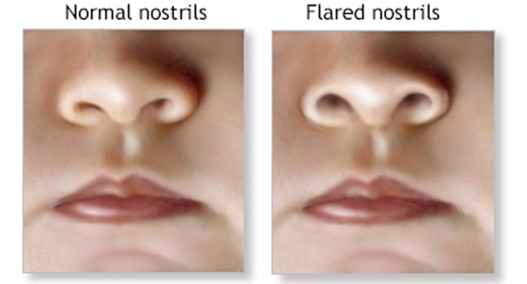
Nasal flaring and grunting
Vernix caseosa on skin folds
The Correct Answer is C
The correct answer is choice C. Nasal flaring and grunting are signs of respiratory distress in a newborn and should alert the nurse to a potential problem.
The nurse should monitor the newborn’s respiratory rate, oxygen saturation, and chest movements, and notify the provider if the symptoms persist or worsen.
Choice A is wrong because molding of the head is a normal finding in a newborn who was delivered vaginally.
It is caused by the pressure of the birth canal on the skull bones and usually resolves within a few days.
Choice B is wrong because acrocyanosis of hands and feet is a normal finding in a newborn during the first 24 hours of life.
It is caused by poor peripheral circulation and does not indicate hypoxia or cyanosis.
Choice D is wrong because vernix caseosa on skin folds is a normal finding in a newborn.
It is a white, cheesy substance that protects the skin from amniotic fluid and helps with thermoregulation.
It usually disappears within a few days.
Nursing Test Bank
Naxlex Comprehensive Predictor Exams
Related Questions
Correct Answer is C
Explanation
The correct answer is choice C. A temperature of 36°C (96.8°F) is below the normal range for a newborn, which is 36.5°C to 37.5°C (97.7°F to 99.5°F).
A low temperature can indicate hypothermia, infection, or hypoglycemia, and should be reported to the provider.
Choice A is wrong because a heart rate of 140/min is within the normal range for a newborn, which is 120 to 160/min.
Choice B is wrong because a respiratory rate of 50/min is within the normal range for a newborn, which is 30 to 60/min.
Choice D is wrong because a blood pressure of 60/40 mm Hg is within the normal range for a newborn, which is 50 to 75/30 to 45 mm Hg.
Correct Answer is B
Explanation
The correct answer is choice B. Give the vaccine intramuscularly in the anterolateral thigh.
This is because the anterolateral thigh is the recommended site for intramuscular injections in infants less than 12 months of age.
It has a large muscle mass and minimal risk of injury to nerves or blood vessels.
Choice A is wrong because informed consent is not required for routine immunizations, unless the parent or guardian requests more information or declines the vaccine.
Choice C is wrong because hepatitis B immune globulin (HBIG) is only indicated for newborns whose mothers are hepatitis B surface antigen positive (HBsAg+), as they have a high risk of acquiring the infection from their mothers.
Choice D is wrong because there is no need to delay giving the vaccine until after breastfeeding is established.
Breastfeeding does not interfere with the vaccine’s effectiveness or safety, and it does not increase the risk of adverse reactions.
Whether you are a student looking to ace your exams or a practicing nurse seeking to enhance your expertise , our nursing education contents will empower you with the confidence and competence to make a difference in the lives of patients and become a respected leader in the healthcare field.
Visit Naxlex, invest in your future and unlock endless possibilities with our unparalleled nursing education contents today