
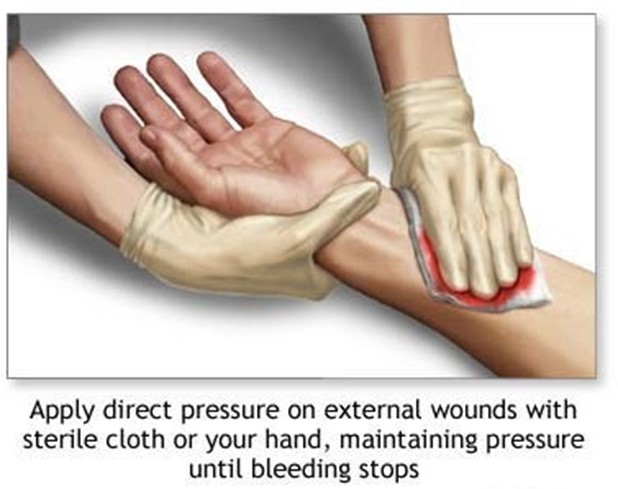
A nurse in the emergency department is assisting with the care of a client who has a deep laceration on her left lower forearm and is bleeding heavily from the wound.
Which of the following actions should the nurse take first?
Apply a tourniquet just above the wound.
Place the client in a modified Trendelenburg position.
Apply pressure directly to the wound.
Settle the client in a reclining position.
The Correct Answer is C
This is the first step in controlling bleeding and preventing hematoma formation 1.
Applying direct pressure to the wound with a sterile gauze or a clean cloth can help stop the bleeding 2.
Choice A is not the best answer because a tourniquet should only be used as a last resort to control life-threatening bleeding from a limb 2.
Choice B is not the best answer because placing the client in a modified Trendelenburg position is not necessary for this situation.
Choice D is not the best answer because settling the client in a reclining position is not necessary for this situation.
Nursing Test Bank
Naxlex Comprehensive Predictor Exams
Related Questions
Correct Answer is C
Explanation
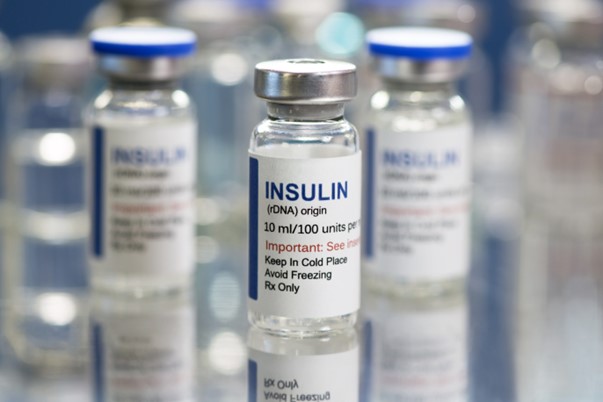
Unopened vials of insulin should be kept in the refrigerator at a temperature between 36°F to 46°F (2°C to 8°C) 1.
This helps to ensure that the insulin remains safe and effective until its expiration date.
Choice A is incorrect because insulin injected into the abdomen is absorbed more rapidly than insulin injected into other areas such as the thigh.
Choice B is incorrect because insulin should not be shaken vigorously as this can cause it to break down and become less effective.
Instead, gently roll the bottle between your hands to mix it.
Choice D is incorrect because not all types of insulin can be mixed together in the same syringe.
Only certain types of insulin can be mixed together and this should only be done under the guidance of a healthcare provider.
Correct Answer is B
Explanation
The nurse should administer 2 tablets.
Since each tablet contains 1.5 mg of dexamethasone, to administer a dose of 3 mg, the nurse should give 3 mg / 1.5 mg/tablet = 2 tablets.
Choice A is incorrect because 1 tablet would only provide a dose of 1.5 mg.
Choice C is incorrect because 3 tablets would provide a dose of 4.5 mg.
Choice D is incorrect because 4 tablets would provide a dose of 6 mg.
Whether you are a student looking to ace your exams or a practicing nurse seeking to enhance your expertise , our nursing education contents will empower you with the confidence and competence to make a difference in the lives of patients and become a respected leader in the healthcare field.
Visit Naxlex, invest in your future and unlock endless possibilities with our unparalleled nursing education contents today