
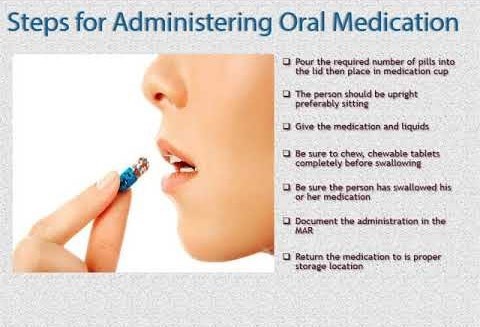
A nurse is administering a client's morning oral medications. Which of the following actions should the nurse take?
Verify the medication three times with the medication administration record.
Document medication administration prior to administering medication.
Administer time-critical medication 60 min before or after the scheduled time.
Identify the client by using one identifier before giving the medication.
The Correct Answer is A
When administering oral medications, the nurse should verify the medication three times with the medication administration record to ensure that the correct medication is being given to the correct client at the correct time. This is known as the "three checks" and is an important step in preventing medication errors.
Nursing Test Bank
Naxlex Comprehensive Predictor Exams
Related Questions
Correct Answer is C
Explanation
Instruct the client to close their mouth tightly around the mouthpiece of the inhaler. This ensures that the medication is delivered directly into the lungs and minimizes the amount of medication escaping into the surrounding environment.
The correct technique for using a metered-dose inhaler does not involve tilting the head forward.
Instead, the client should keep their head in a neutral position while using the inhaler. After inhaling the medication from the inhaler, it is recommended to hold the breath for about 10 seconds before exhaling. This allows the medication to be fully deposited in the lungs and absorbed effectively.
The proper technique for using an albuterol metered-dose inhaler involves taking a slow and deep breath. The client should depress the canister once at the beginning of inhalation and continue to inhale slowly and deeply to ensure adequate medication delivery.
It is important for the nurse to demonstrate and observe the client's technique while using the inhaler to ensure proper administration.
Correct Answer is C
Explanation
Palliative care is an approach to care that focuses on improving the quality of life for individuals with serious or life-threatening illnesses. It aims to provide relief from pain, symptoms, and stress, rather than focusing solely on curing the underlying disease. Palliative care can be provided alongside curative treatments and is not limited to clients with a specific life expectancy.
It does not involve the restriction of nutritional support but rather aims to address the overall physical, emotional, and spiritual needs of the client.
While palliative care may be provided to clients with terminal illnesses, it is not exclusive to them, as it can be initiated at any stage of a serious illness.
Whether you are a student looking to ace your exams or a practicing nurse seeking to enhance your expertise , our nursing education contents will empower you with the confidence and competence to make a difference in the lives of patients and become a respected leader in the healthcare field.
Visit Naxlex, invest in your future and unlock endless possibilities with our unparalleled nursing education contents today