
A nurse is monitoring a client who is postoperative. Which of the following actions should the nurse take when collecting data about the client's respirations?
Place the client in a supine position.
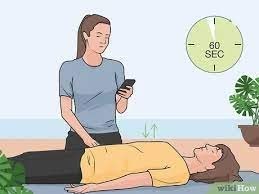
Observe the movements of the client's chest wall.
Inform the client when beginning to observe his respirations.
Count the client's respirations for 15 seconds.
The Correct Answer is B
To accurately assess the client's respirations, the nurse should observe the movements of the client's chest wall. This can be done by visually inspecting the rise and fall of the chest or by placing a hand on the client's chest to feel the movements. This allows the nurse to assess the depth, rhythm, and effort of the client's breathing. I
It is important to observe the client's respirations without informing them, as this may cause the client to alter their breathing pattern consciously.
Counting the client's respirations for a full minute (rather than 15 seconds) provides a more accurate measurement.
Placing the client in a supine position may not be necessary for assessing respirations, as it is primarily focused on observing the chest movements.
Nursing Test Bank
Naxlex Comprehensive Predictor Exams
Related Questions
Correct Answer is A
Explanation
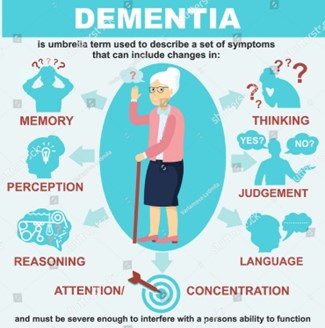
Dementia is a condition characterized by a decline in cognitive function that affects a person's ability to perform activities of daily living (ADLs). Memory loss is a common symptom of dementia, particularly in the early stages. Memory loss can disrupt a person's ability to carry out tasks they were previously able to do independently, such as dressing, bathing, and eating. Therefore, option A is the correct answer.
Option b, catatonia, is a condition characterized by a lack of movement or activity, which is not typically associated with dementia.
Option c, illusions, involve a misinterpretation of sensory information and may occur in some forms of dementia but are not a defining feature.
Option d, pressured speech, is a symptom commonly associated with mania or bipolar disorder but is not typically seen in dementia.
Correct Answer is ["C","D","E"]
Explanation
When managing oxygenation for a client in a PACU, the nurse should take several actions. The nurse should add a humidifier to the oxygen device to help prevent dryness of the nasal passages¹. The nurse should also encourage the client to perform deep breathing exercises to promote oxygenation¹. Additionally, the nurse should examine the client's nail beds for signs of cyanosis, which can indicate inadequate oxygenation¹.
Whether you are a student looking to ace your exams or a practicing nurse seeking to enhance your expertise , our nursing education contents will empower you with the confidence and competence to make a difference in the lives of patients and become a respected leader in the healthcare field.
Visit Naxlex, invest in your future and unlock endless possibilities with our unparalleled nursing education contents today