
A nurse is assessing a client who is experiencing an anaphylactic reaction to an antibiotic. Which of the following manifestations of anaphylaxis should the nurse expect?
Hypertonic reflexes
increase in systolic blood pressure
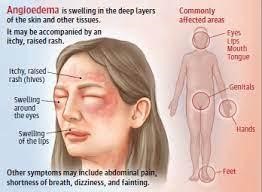
Angioedema
Urinary retention
The Correct Answer is C
The nurse should expect angioedema as one of the manifestations of anaphylaxis in a client experiencing an allergic reaction to an antibiotic. Angioedema is a severe swelling that occurs beneath the skin, typically affecting the face, lips, tongue, throat, or other body parts. It is a result of the release of histamine and other inflammatory mediators in response to the allergen.
Anaphylaxis is a life-threatening allergic reaction that can occur rapidly and affect multiple body systems. In addition to angioedema, other common manifestations of anaphylaxis include:
-
Difficulty breathing or wheezing due to bronchospasm
-
Hives or urticaria, which are itchy raised skin rashes
-
Severe itching or tingling sensation
-
Rapid and weak pulse
-
Low blood pressure leading to hypotension
-
Nausea, vomiting, or diarrhea
-
Feeling of impending doom or anxiety
Let's go through the other options:
A. Hypertonic reflexes: This is not a manifestation of anaphylaxis. "Hypertonic reflexes" are not typically associated with allergic reactions or anaphylaxis. Hypertonic reflexes refer to increased muscle tone, but they are not part of the usual presentation of anaphylaxis.
B. Increase in systolic blood pressure: Anaphylaxis usually leads to a decrease in blood pressure rather than an increase. The decrease in blood pressure can be severe and result in shock, which is a life-threatening condition.
D. Urinary retention: Urinary retention is not a common manifestation of anaphylaxis. Anaphylaxis primarily affects the respiratory and circulatory systems, leading to airway constriction, difficulty breathing, and cardiovascular collapse. Urinary retention is not directly related to the pathophysiology of anaphylaxis.
Nursing Test Bank
Naxlex Comprehensive Predictor Exams
Related Questions
Correct Answer is C
Explanation
Flumazenil is the antidote for diazepam, which is a benzodiazepine. Flumazenil is a selective antagonist that can reverse the sedative effects of benzodiazepines and is commonly used in cases of benzodiazepine overdose or to reverse sedation after procedures.
Naloxone (A) is the antidote for opioid overdose and would not be appropriate for reversing the effects of diazepam.
Atropine (B) is an anticholinergic medication used to increase heart rate and is not specific to the reversal of diazepam sedation.

Neostigmine (D) is a cholinesterase inhibitor used to reverse the effects of non-depolarizing neuromuscular blocking agents and is not indicated for reversing the effects of diazepam.
Correct Answer is A
Explanation
Furosemide is a loop diuretic commonly used to treat fluid volume excess by promoting diuresis. One of the expected outcomes of furosemide administration is an increased urinary output as excess fluid is eliminated from the body. Therefore, if the medication has been effective, the nurse would expect to see an increased urinary output as a result of the diuretic effect.
Increased respiratory rate (B) is not an expected outcome of furosemide administration. It may occur in some cases due to increased fluid elimination and potential electrolyte imbalances, but it is not the primary indicator of the medication's effectiveness.
Decreased blood pressure (C) is a possible outcome of furosemide administration due to the diuretic effect and subsequent reduction in fluid volume. However, it is not the most specific indicator of the medication's effectiveness in this case.
Increased pulse (D) is not a typical finding associated with the effectiveness of furosemide. In fact, furosemide can sometimes cause a decrease in heart rate due to its impact on fluid and electrolyte balance.
Whether you are a student looking to ace your exams or a practicing nurse seeking to enhance your expertise , our nursing education contents will empower you with the confidence and competence to make a difference in the lives of patients and become a respected leader in the healthcare field.
Visit Naxlex, invest in your future and unlock endless possibilities with our unparalleled nursing education contents today