
A nurse is caring for a client who has a prescription for total parental nutrition (TPN).
Which of the following routes of administration should the nurse use?
Subcutaneous
Intraosseous
Midline catheter
Central venous access device
The Correct Answer is D
Choice A rationale: TPN cannot be administered subcutaneously due to its composition.
Choice B rationale: Intraosseous access is for emergency situations when IV access isn't attainable.
Choice C rationale: A midline catheter might not be suitable for the hypertonic nature of TPN and can lead to complications.
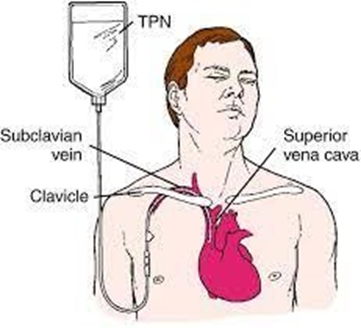
Choice D rationale: Total parenteral nutrition (TPN) is a hypertonic solution that requires infusion into a large vein. The central venous access device allows for high-flow rates and avoids irritation or damage to smaller peripheral veins.
Nursing Test Bank
Naxlex Comprehensive Predictor Exams
Related Questions
Correct Answer is B
Explanation
Choice A rationale: Hydrochlorothiazide does not typically cause hypocalcemia.
Choice B rationale: Hydrochlorothiazide is a diuretic that can cause potassium loss.
Hypokalemia (low potassium levels) is an adverse effect that needs monitoring due to its potential to exacerbate heart failure and lead to various complications.
Choice C rationale: Hydrochlorothiazide is more associated with hyponatremia rather than hypernatremia.
Choice D rationale: Hydrochlorothiazide is not linked to causing hypermagnesemia.
Correct Answer is C
Explanation
Choice A rationale: Presence of pedal pulses bilaterally is a normal finding and does not reflect the status of the blood clot.
Choice B rationale: Decreased INR is a measure of how quickly the blood clots and is used to monitor warfarin therapy, not heparin therapy.
Choice C rationale: A reduced calf circumference indicates that the swelling caused by the blood clot has decreased, which means that the heparin therapy is working.
Choice D rationale: Platelet levels are not the primary indicator of the effectiveness of heparin therapy for deep-vein thrombosis.
Whether you are a student looking to ace your exams or a practicing nurse seeking to enhance your expertise , our nursing education contents will empower you with the confidence and competence to make a difference in the lives of patients and become a respected leader in the healthcare field.
Visit Naxlex, invest in your future and unlock endless possibilities with our unparalleled nursing education contents today