
A nurse is caring for a client who has an indwelling catheter with a urinary drainage system. Which of the following actions should the nurse take?
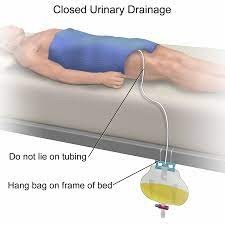
Coil the tubing on the bed above the collection bag.
Instruct the client to hold the drainage bag at waist height when ambulating.
Collect a sterile specimen from the urinary drainage bag.
Secure the tubing with adhesive tape to the lower abdomen
The Correct Answer is D
A) Coiling the tubing on the bed above the collection bag is incorrect because it can cause urine to flow back into the bladder, increasing the risk of infection and compromising the effectiveness of the drainage system. The tubing should be kept below the level of the bladder to ensure proper drainage.
B) Instructing the client to hold the drainage bag at waist height when ambulating is incorrect because the drainage bag should always be kept below the level of the bladder to prevent urine from flowing back into the bladder, which could lead to a urinary tract infection (UTI).
C) Collecting a sterile specimen from the urinary drainage bag is incorrect because urine in the drainage bag is not considered sterile. If a sterile specimen is needed, it should be obtained by cleaning the catheter's sampling port with an antiseptic solution and withdrawing urine directly from the port using a sterile syringe.
D) Securing the tubing with adhesive tape to the lower abdomen is correct because it helps prevent accidental pulling or tugging on the catheter, which could cause discomfort or dislodgement. Properly securing the tubing also helps maintain a continuous flow of urine and reduces the risk of infection.
Nursing Test Bank
Naxlex Comprehensive Predictor Exams
Related Questions
Correct Answer is C
Explanation
Children often have difficulty understanding the complex nature of illness and death. They may develop feelings of guilt or responsibility for the situation, thinking that their behavior or actions caused the illness or its outcome.
It is important for the nurse to provide support, reassurance, and age-appropriate explanations to address the sibling's concerns and misconceptions.
Correct Answer is D
Explanation
A productive cough with pink, frothy sputum is indicative of pulmonary edema, which is a serious manifestation of left-sided heart failure.
It suggests fluid accumulation in the lungs, impairing gas exchange and oxygenation.
Prompt notification of the provider is crucial for appropriate intervention and management of the client's condition.
Whether you are a student looking to ace your exams or a practicing nurse seeking to enhance your expertise , our nursing education contents will empower you with the confidence and competence to make a difference in the lives of patients and become a respected leader in the healthcare field.
Visit Naxlex, invest in your future and unlock endless possibilities with our unparalleled nursing education contents today