
A nurse is caring for a client who has dysphagia. Which of the following instructions should the nurse give to the client to decrease the risk of choking?
Tilt your head forward while you eat.
Obtain your vitamins in liquid form.
Cool foods down to room temperature before consuming.
Drink water with each bite of food.
The Correct Answer is A
Choice A reason: Tilt your head forward while you eat is a correct instruction for dysphagia. This position can help prevent choking by closing the airway and directing food and fluids to the back of the mouth and throat.
Choice B reason: Obtain your vitamins in liquid form is not a correct instruction for dysphagia. Liquid vitamins can be too thin and watery for people with dysphagia, as they can easily enter the airway and cause aspiration. Vitamins should be taken in pill or chewable form, or crushed and mixed with thickened liquids or pureed foods.
Choice C reason: Cool foods down to room temperature before consuming is not a correct instruction for dysphagia. Food temperature does not affect the risk of choking for people with dysphagia, as long as the food is not too hot or too cold. Food texture and consistency are more important factors for safe swallowing.
Choice D reason: Drink water with each bite of food is not a correct instruction for dysphagia. Water can also be too thin and watery for people with dysphagia, as it can also enter the airway and cause aspiration. Water should be thickened to a nectar-like, honey-like, or pudding-like consistency, depending on the individual's needs and preferences.
Nursing Test Bank
Naxlex Comprehensive Predictor Exams
Related Questions
Correct Answer is D
Explanation
Choice A reason: Reporting ability to complete ADLs is not a specific finding that indicates that probiotic therapy is effective. Ability to complete ADLs depends on various factors, such as energy level, muscle strength, mobility, cognition, and motivation. Ability to complete ADLs may improve with parenteral nutrition, but not necessarily with probiotic therapy.
Choice B reason: Having pink mucous membranes is not a specific finding that indicates that probiotic therapy is effective. Pink mucous membranes reflect adequate hydration and oxygenation status, which are important for overall health, but not directly related to probiotic therapy.
Choice C reason: Having blood glucose level within the expected reference range is not a specific finding that indicates that probiotic therapy is effective. Blood glucose level is influenced by carbohydrate intake, insulin production, and medication use, which are related to parenteral nutrition, but not probiotic therapy.
Choice D reason: Having soft, formed bowel movements is a specific finding that indicates that probiotic therapy is effective. Probiotic therapy is the use of beneficial bacteria or yeast to restore the normal flora and function of the gastrointestinal tract, which can prevent or treat diarrhea, constipation, or infection. Having soft, formed bowel movements shows that the client has a healthy and balanced gut microbiome.
Correct Answer is A
Explanation
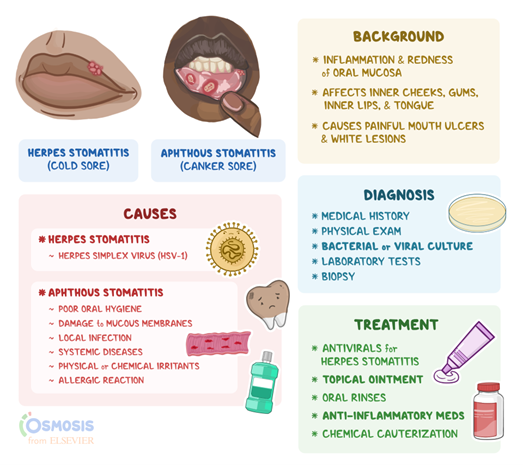
Choice A reason: Offering the client frozen banana as a snack is an appropriate intervention for the nurse to take because it can help soothe and cool the inflamed mucous membranes in the mouth and throat, which are caused by stomatitis. Stomatitis is an inflammation of the oral cavity that can result from radiation therapy or chemotherapy. Frozen banana also provides potassium, vitamin C, and fiber for the client.
Choice B reason: Serving the client hot meals is not an appropriate intervention for the nurse to take because it can worsen nausea and vomiting. Hot meals are aromatic, spicy, and greasy, which are characteristics of emetic foods. Hot meals can also irritate the stomach lining and trigger the gag reflex.
Choice C reason: Avoiding serving sauces or gravies is not an appropriate intervention for the nurse to take because it can cause dehydration and malnutrition. Sauces and gravies are liquid, mild, and moist, which are characteristics of antiemetic foods. Sauces and gravies can also enhance the flavor and texture of bland foods and provide calories and nutrients for the client.
Choice D reason: Discouraging the use of a straw is not an appropriate intervention for the nurse to take because it can prevent adequate fluid intake and hydration. Using a straw can help the client sip small amounts of clear liquids, such as water, ginger ale, or broth, which are antiemetic fluids. Using a straw can also reduce the exposure to odors and tastes that may cause nausea.
Whether you are a student looking to ace your exams or a practicing nurse seeking to enhance your expertise , our nursing education contents will empower you with the confidence and competence to make a difference in the lives of patients and become a respected leader in the healthcare field.
Visit Naxlex, invest in your future and unlock endless possibilities with our unparalleled nursing education contents today