
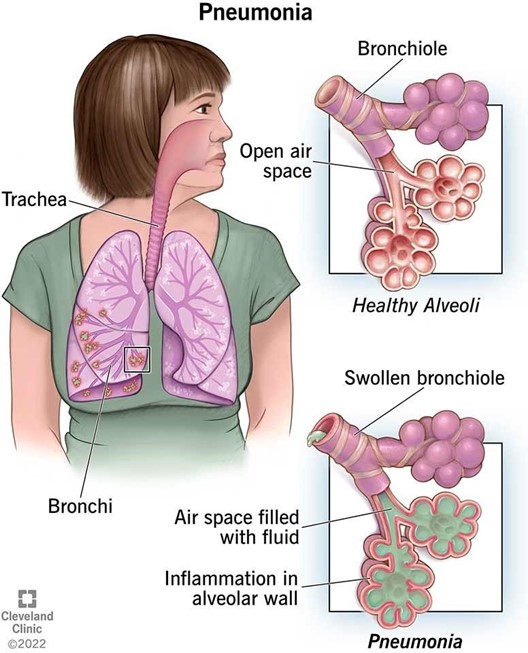
A nurse is caring for a client who has pneumonia. Which of the following actions should the nurse take to promote thinning of respiratory secretions?
Encourage coughing and deep breathing
Encourage regular use of the incentive spirometer
Encourage the client to increase fluid intake
Encourage the client to ambulate frequently
The Correct Answer is C
Increasing fluid intake helps to hydrate the mucous membranes and thin the respiratory secretions, which facilitates expectoration and improves gas exchange.
- Encourage coughing and deep breathing. This is beneficial for clearing the airways and preventing atelectasis, but it does not directly affect the viscosity of the secretions.
- Encourage regular use of the incentive spirometer. This is helpful for expanding the lungs and preventing complications such as pneumonia or pleural effusion, but it does not influence the consistency of the secretions.
- Encourage the client to ambulate frequently. This is important for promoting circulation and mobility, but it does not have a significant effect on the thinning of the secretions.
Nursing Test Bank
Naxlex Comprehensive Predictor Exams
Related Questions
Correct Answer is C
Explanation
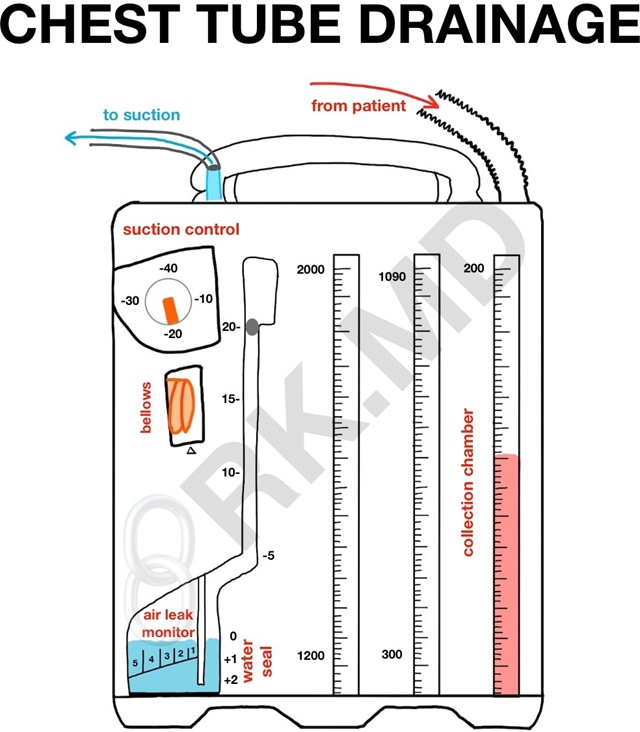
Continuing to monitor the client is the appropriate action for the nurse to take, as a rise in the water seal chamber with client inspiration is a normal and expected finding. The water seal chamber acts as a one-way valve that allows air to exit from the pleural space and prevents air from entering. The water level in this chamber fluctuates with breathing, rising with inspiration and falling with expiration. This indicates that the chest tube system is functioning properly and that there is no air leak.
a) Immediately notifying the provider is not necessary, as a rise in the water seal chamber with client inspiration is not an abnormal or urgent finding. The nurse should only notify the provider if there are signs of complications, such as persistent bubbling in the water seal chamber, which indicates an air leak, or no fluctuation in the water level, which indicates an obstruction or resolution of pneumothorax.
b) Clamping the chest tube near the water seal is not advisable, as it can cause increased pressure in the pleural space and lead to tension pneumothorax. Clamping the chest tube should only be done for a brief period of time and under specific circumstances, such as changing the drainage system, assessing for an air leak, or preparing for chest tube removal.
d) Repositioning the client toward the left side is not helpful, as it does not affect the water level in the water seal chamber. The nurse should position the client according to their comfort and condition, and avoid placing them flat or on their affected side, as this can impair drainage and ventilation.
Correct Answer is ["A","B","D"]
Explanation
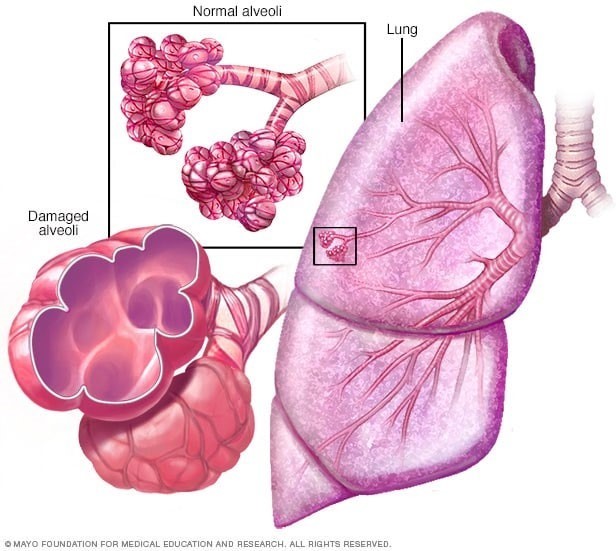
These findings are expected to be assessed in a client who has emphysema, which is a type of chronic obstructive pulmonary disease (COPD) characterized by destruction and enlargement of alveoli, loss of elastic recoil, and air trapping. These changes impair gas exchange and oxygenation, leading to chronic hypoxia and hypercapnia.
a) Dyspnea, or difficulty breathing, is a common symptom of emphysema, as the client has reduced lung capacity and increased work of breathing. Dyspnea may be worse with exertion, stress, or infection, and may cause anxiety and fatigue. The nurse should monitor the client's respiratory rate, rhythm, depth, and effort, and provide oxygen therapy as prescribed.
b) Barrel chest, or increased anteroposterior diameter of the chest, is a physical sign of emphysema, as the client has chronic air trapping and hyperinflation of the lungs. Barrel chest may also cause kyphosis, or curvature of the spine, and reduced chest wall movement. The nurse should measure the client's chest circumference and observe for any deformities or asymmetry.
d) Clubbing of the fingers, or enlargement and rounding of the nail beds, is a late sign of emphysema, as the client has chronic hypoxia and tissue ischemia. Clubbing may also affect the toes and ears, and may indicate pulmonary or cardiac disease. The nurse should inspect the client's nails for shape, color, angle, and capillary refill.
c) Deep respirations are not expected to be assessed in a client who has emphysema, as the client has shallow and rapid breathing due to air trapping and reduced lung compliance. Deep respirations may indicate other conditions, such as metabolic acidosis or anxiety. The nurse should assess the client's arterial blood gas levels and provide reassurance and relaxation techniques as needed.
e) Bradycardia, or slow heart rate, is not expected to be assessed in a client who has emphysema, as the client has tachycardia or normal heart rate due to hypoxia and increased sympathetic stimulation. Bradycardia may indicate other conditions, such as medication side effects, vagal stimulation, or heart block. The nurse should monitor the client's pulse rate, rhythm, quality, and electrocardiogram as indicated.
Whether you are a student looking to ace your exams or a practicing nurse seeking to enhance your expertise , our nursing education contents will empower you with the confidence and competence to make a difference in the lives of patients and become a respected leader in the healthcare field.
Visit Naxlex, invest in your future and unlock endless possibilities with our unparalleled nursing education contents today