
A nurse is caring for a client who is scheduled for a colonoscopy. The client asks the nurse if there will be a lot of pain during the procedure. Which of the following responses should the nurse make?
“You shouldn’t feel any pain since the local area is anesthetized.”
“Don’t worry, you won’t remember anything about the procedure due to the effects of the medication.”
“Most clients report more discomfort from the preparation than from the procedure itself.”
“You may feel some cramping during the procedure.”
The Correct Answer is D
Choice A: “You shouldn’t feel any pain since the local area is anaesthetized.” This is not a response that the nurse should make to the client who is scheduled for a colonoscopy. The nurse should not tell the client that they will not feel any pain, as this may create unrealistic expectations and increase anxiety if they do experience discomfort. The nurse should also not tell the client that the local area is anaesthetized, as this is not true. The client does not receive local anesthesia for a colonoscopy, but rather sedation and pain medication.
Choice B: “Don’t worry, you won’t remember anything about the procedure due to the effects of the medication.” This is not a response that the nurse should make to the client who is scheduled for a colonoscopy. The nurse should not tell the client not to worry, as this may sound dismissive and insensitive to their concerns. The nurse should also not tell the client that they will not remember anything about the procedure, as this is not true. The client may receive conscious sedation for a colonoscopy, which means that they are awake but drowsy and relaxed. They may have some memory loss of the procedure, but they are not completely unconscious.
Choice C: “Most clients report more discomfort from the preparation than from the procedure itself.” This is not a response that the nurse should make to the client who is scheduled for a colonoscopy. The nurse should not compare the client’s experience to other clients, as this may minimize their feelings and individual differences. The nurse should also not focus on the preparation, which involves drinking a large amount of liquid laxative to empty the colon, as this may increase anxiety and dread for the client. The nurse should instead focus on providing information and support for both the preparation and the procedure.
Choice D: “You may feel some cramping during the procedure.” This is a response that the nurse should make to the client who is scheduled for a colonoscopy, which is a diagnostic test that uses a flexible tube with a camera to examine the colon and rectum. The nurse should inform the client that they may feel some cramping during the procedure as the tube is inserted and moved through the colon. The nurse should also reassure the client that they will receive sedation and pain medication to make them comfortable and relaxed.

Nursing Test Bank
Naxlex Comprehensive Predictor Exams
Related Questions
Correct Answer is D
Explanation
Choice A: Measure the tube for insertion from the tip of the nose to the umbilicus. This is not an intervention that the nurse should take when inserting a nasogastric tube. The nurse should measure the tube for insertion from the tip of the nose to the earlobe and then to the xiphoid process, which is a more accurate way of estimating the length of the tube needed to reach the stomach.
Choice B: Place the client in a supine position. This is not an intervention that the nurse should take when inserting a nasogastric tube. The nurse should place the client in a high-Fowler’s position, which is a position with the head of the bed elevated to 90 degrees. This position can prevent aspiration, promote breathing, and allow gravity to assist with the insertion of the tube.
Choice C: Withdraw the tube if the client gags during insertion. This is not an intervention that the nurse should take when inserting a nasogastric tube. The nurse should not withdraw the tube if the client gags during insertion, as this can cause trauma to the nasal or pharyngeal mucosa and increase discomfort. The nurse should pause and allow the client to rest and breathe until gagging subsides, then resume insertion. The nurse should also provide reassurance and encouragement to the client throughout the procedure.
Choice D: Instruct the client to place his chin to his chest and swallow. This is an intervention that the nurse should take when inserting a nasogastric tube, which is a flexible tube that is inserted through the nose and into the stomach. The nurse should instruct the client to place his chin to his chest and swallow as the tube passes through the pharynx and into the esophagus. This can facilitate the insertion of the tube and prevent it from entering the trachea or causing injury to the nasal or pharyngeal mucosa.
Correct Answer is B
Explanation
Choice A: Dysphagia. This is not a complication that the nurse should monitor the client for who has hyperparathyroidism. Dysphagia is difficulty swallowing, which can be caused by disorders of the esophagus, throat, or nervous system. It is not related to hyperparathyroidism or calcium and phosphorus levels.
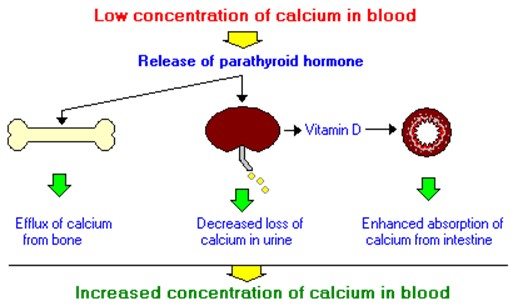
Choice B: Pathologic fractures. This is a complication that the nurse should monitor the client for who has hyperparathyroidism, which is a condition that occurs when the parathyroid glands produce too much parathyroid hormone (PTH). PTH regulates calcium and phosphorus levels in the blood and bones. Hyperparathyroidism can cause hypercalcemia, which is a high level of calcium in the blood, and hypophosphatemia, which is a low level of phosphorus in the blood. These imbalances can lead to bone resorption, which is the breakdown of bone tissue and release of calcium into the blood. Bone resorption can weaken the bones and increase the risk of pathologic fractures, which are fractures that occur due to disease or injury to the bone.
Choice C: Fluid retention. This is not a complication that the nurse should monitor the client for who has hyperparathyroidism. Fluid retention is excess fluid accumulation in the body, which can be caused by disorders of the heart, kidney, liver, or lymphatic system. It is not related to hyperparathyroidism or calcium and phosphorus levels.
Choice D: Impaired skin integrity. This is not a complication that the nurse should monitor the client for who has hyperparathyroidism. Impaired skin integrity is damage or loss of skin tissue, which can be caused by trauma, infection, inflammation, or pressure. It is not related to hyperparathyroidism or calcium and phosphorus levels.
Whether you are a student looking to ace your exams or a practicing nurse seeking to enhance your expertise , our nursing education contents will empower you with the confidence and competence to make a difference in the lives of patients and become a respected leader in the healthcare field.
Visit Naxlex, invest in your future and unlock endless possibilities with our unparalleled nursing education contents today