
A nurse is caring for a client who is taking multiple medications and asks about possible interactions. To which of the following members of the interdisciplinary team should the nurse make a referral?
Social worker
Patient care technician
Psychologist
Advanced practice nurse
The Correct Answer is D
The APN, also known as a nurse practitioner or clinical nurse specialist, has advanced knowledge and expertise in pharmacology and medication management. They are trained to assess medication interactions, evaluate potential risks, and provide guidance to ensure safe and effective medication use.
The other members of the interdisciplinary team listed are not specifically trained to address medication interactions:
- Social worker: Social workers focus on addressing psychosocial aspects of care, such as emotional support, counseling, and resource coordination. While they may provide valuable assistance in various areas of the client's care, they typically do not have specialized knowledge in medication interactions.
- Patient care technician: Patient care technicians, also known as nursing assistants or certified nursing assistants, provide direct patient care under the supervision of nurses. They do not typically have the training or authority to address medication interactions.
- Psychologist: Psychologists specialize in the assessment, diagnosis, and treatment of mental and emotional health concerns. While they may be involved in the client's overall care, including medication management for mental health conditions, their expertise lies primarily in psychological assessment and therapy rather than medication interactions.
Nursing Test Bank
Naxlex Comprehensive Predictor Exams
Related Questions
Correct Answer is A
Explanation
Explanation
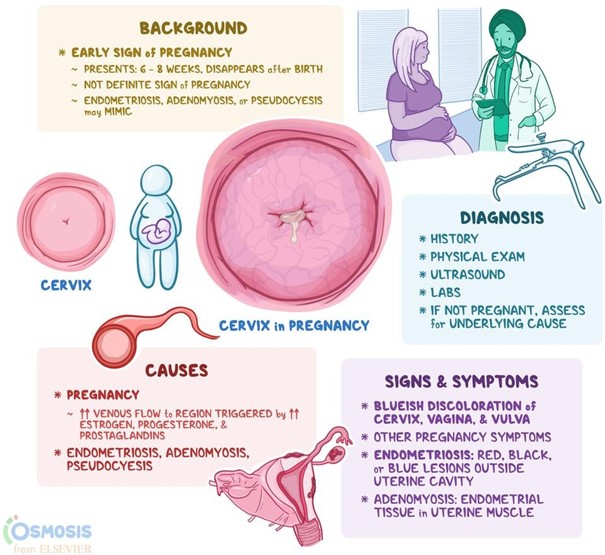
A. Chadwick’s sign
Chadwick's sign is a characteristic change that occurs during pregnancy, specifically in the cervix, vagina, and vulva. It is characterized by a bluish or purplish discoloration of these areas.
Chloasma in (option B) is incorrect because it is a condition characterized by the development of dark patches on the skin, commonly referred to as "mask of pregnancy." Chloasma typically affects the face, particularly the cheeks, forehead, and upper lip. It is not associated with a change in colour in the vaginal or vulvar area.
Hegar's sign in (option C) is incorrect because it is a softening of the lower uterine segment that can be felt during a pelvic examination. It is not related to the colour changes in the vaginal or vulvar area.
Ballottement in (option D) is incorrect because it is a palpation technique used during a prenatal examination to assess the position of the foetus. It involves the examiner gently pushing against the uterus and feeling a rebound or "floating" movement of the foetus. It does not involve changes in the colour of the vaginal or vulvar area.
Correct Answer is D
Explanation
The priority is to address any significant changes in the child's behavior, such as withdrawal, as it may indicate emotional or psychological distress. Switching daycare providers can be a significant event for a young child, and it is essential to explore the reasons behind the child's withdrawal and address any potential underlying issues. The nurse should gather more information, assess the child's emotional well-being, and discuss any concerns or observations with the guardian. This will help identify appropriate interventions or support for the child's emotional adjustment.
While the other statements may also warrant attention, the potential emotional impact of the daycare provider change on the child's behavior and well-being takes priority in this case. The nurse should address the other concerns raised by the guardian during the assessment process, but the immediate focus should be on addressing the child's withdrawal and ensuring their emotional well-being.
Whether you are a student looking to ace your exams or a practicing nurse seeking to enhance your expertise , our nursing education contents will empower you with the confidence and competence to make a difference in the lives of patients and become a respected leader in the healthcare field.
Visit Naxlex, invest in your future and unlock endless possibilities with our unparalleled nursing education contents today