
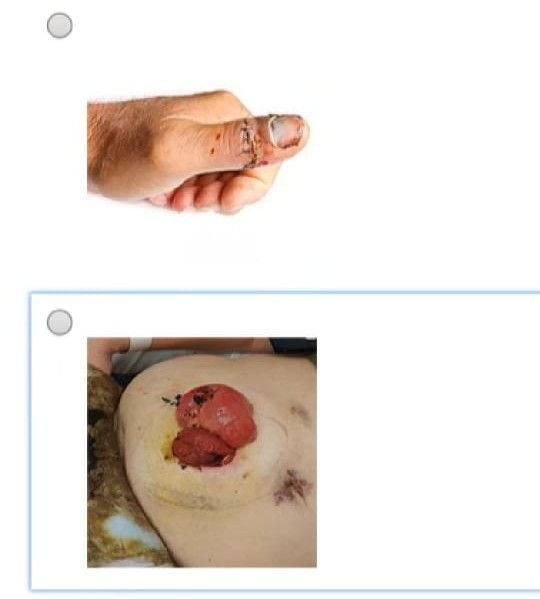
A nurse is caring for a group of clients on a surgical unit. Which of the following images should the nurse identify as evisceration?
A
B
The Correct Answer is B
A. The first image depicts a finger injury with partial nail and tissue trauma, which represents a localized hand wound but does not involve internal organs. This is not evisceration.
B. The second image shows abdominal organs protruding through a surgical incision, which is the defining feature of evisceration. Evisceration is a surgical emergency requiring immediate intervention to protect the exposed organs and prevent infection.
Nursing Test Bank
Naxlex Comprehensive Predictor Exams
Related Questions
Correct Answer is B
Explanation
A. "I am only contagious while the lesions are present.": HSV-2 can be transmitted even when no lesions are visible due to asymptomatic viral shedding. Relying solely on the presence of lesions for precautions increases the risk of spreading the virus.
B. "The lesions may reoccur in times of stress.": HSV-2 can reactivate during periods of stress, illness, or immunosuppression, leading to recurrent genital lesions. Understanding this helps the client anticipate and manage flare-ups appropriately.
C. "The virus cannot spread to areas other than the genital area.": HSV-2 can infect other areas through direct contact, such as oral-genital transmission or autoinoculation. Clients should be aware of the potential for spreading the virus beyond the genital region.
D. "I can have unprotected sex as long as I am taking acyclovir.": Antiviral therapy reduces viral shedding but does not eliminate the risk of transmission. Safe sex practices, including condom use, remain necessary to prevent spreading HSV-2 to partners.
Correct Answer is ["B","C","D","E"]
Explanation
A. WBC count: The WBC count is within the normal range and does not indicate infection or inflammatory worsening at this time. It does not require urgent follow-up compared with other more concerning findings in this presentation.
B. Abdominal findings: High-pitched bowel sounds, pain, vomiting, and tenderness correlate with small-bowel obstruction and signal worsening motility. These findings raise concern for progression toward ischemia or perforation, so they require prompt follow-up.
C. BUN level: The elevated BUN suggests dehydration from vomiting and third-spacing associated with obstruction. This may lead to worsening renal perfusion if not corrected, indicating a need for timely follow-up and fluid management.
D. Potassium level: The potassium level is low and may worsen due to continued fluid losses, placing the client at risk for arrhythmias. Correction and monitoring are important, especially in the context of dehydration and tachycardia.
E. Blood pressure: The low blood pressure and elevated pulse indicate possible hypovolemia from fluid shifts and decreased intake. This hemodynamic change requires intervention to prevent further decline and maintain organ perfusion.
F. Breath sounds: Breath sounds are clear bilaterally and show no signs of respiratory involvement. They are not concerning in relation to the client’s current abdominal pathology and do not need immediate follow-up.
Whether you are a student looking to ace your exams or a practicing nurse seeking to enhance your expertise , our nursing education contents will empower you with the confidence and competence to make a difference in the lives of patients and become a respected leader in the healthcare field.
Visit Naxlex, invest in your future and unlock endless possibilities with our unparalleled nursing education contents today