
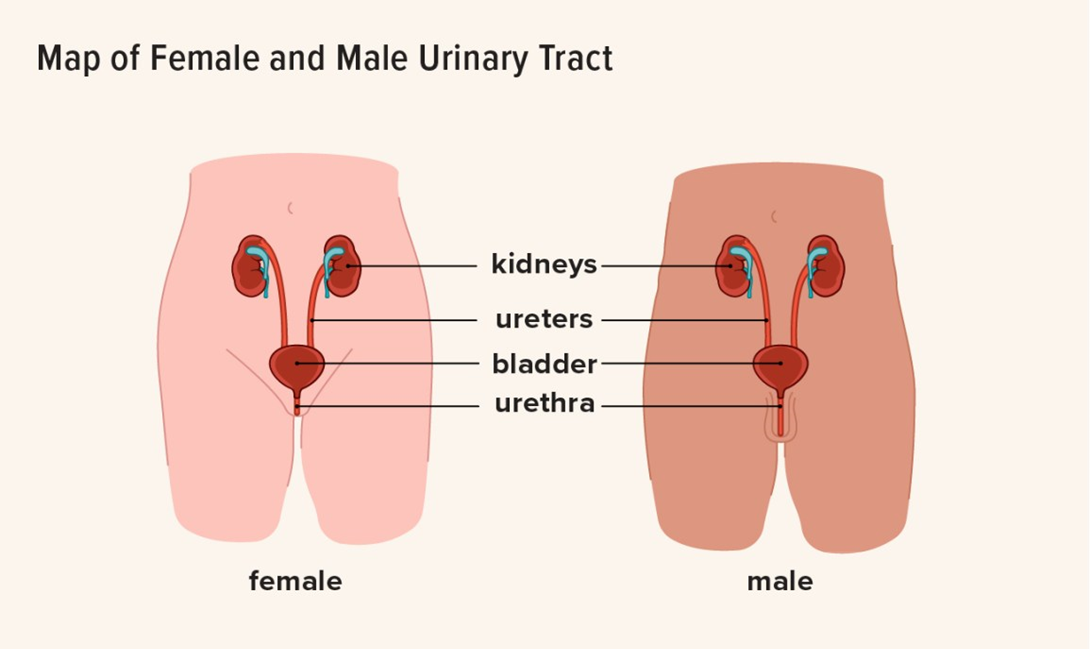
A nurse is collecting data on an older adult client. Which of the following findings should indicate to the nurse that the client has a bladder infection?
Changed mental status
WBC count 9,000/mm³
Diminished reflexes
Temperature 37.3°C (99.1°F)
The Correct Answer is A
Choice A reason: Changed mental status, such as confusion, agitation, or delirium, can be a sign of a bladder infection in older adults, as they may not have the typical symptoms of dysuria, frequency, or urgency.
Choice B reason: WBC count 9,000/mm³ is within the normal range of 4,500 to 11,000/mm³ and does not indicate an infection.
Choice C reason: Diminished reflexes are not related to a bladder infection and may be due to aging, neurological disorders, or medication side effects.
Choice D reason: Temperature 37.3°C (99.1°F) is slightly elevated but not indicative of a bladder infection. Older adults may have lower baseline temperatures and may not develop fever in response to an infection.
Nursing Test Bank
Naxlex Comprehensive Predictor Exams
Related Questions
Correct Answer is d,b,e,a,c
Explanation
The sequence the nurse should use to administer the medication using the Z-track technique is:
- Step 1: Put on gloves and cleanse the site with an antiseptic swab.
- Step 2: Use the nondominant hand to pull the skin and subcutaneous tissue 2.5 cm (1 in) laterally.
- Step 3: Insert the needle into the muscle.
- Step 4: Aspirate by pulling back on the plunger and inject the medication.
- Step 5: Remove the needle and release the tissue.
Correct Answer is A
Explanation
Choice a: Placing the client in high-Fowler's position is the first action that the nurse should take because it can improve lung expansion and oxygenation, which are priority needs for a client who has a pulmonary embolism and is experiencing dyspnea.
Choice b is not correct because administering heparin to the client is not the first action that the nurse should take, but rather a subsequent action after ensuring adequate oxygenation. Heparin can prevent further clot formation and reduce the risk of complications, but it does not dissolve existing clots or improve respiratory status.
Choice c is not correct because encouraging the client to cough and deep breathe is not the first action that the nurse should take, but rather an ongoing intervention that can help mobilize secretions and prevent atelectasis. However, it may not be effective or feasible for a client who has severe dyspnea.
Choice d is not correct because obtaining the client's vital signs is not the first action that the nurse should take, but rather an assessment that can provide baseline data and monitor changes in condition. However, it does not address the immediate problem of impaired gas exchange or relieve dyspnea.
Whether you are a student looking to ace your exams or a practicing nurse seeking to enhance your expertise , our nursing education contents will empower you with the confidence and competence to make a difference in the lives of patients and become a respected leader in the healthcare field.
Visit Naxlex, invest in your future and unlock endless possibilities with our unparalleled nursing education contents today