
A nurse is reviewing the ABG values of a client who has pneumonia. Which of the following findings indicates the client is developing respiratory acidosis?
PaO2 85 mmHg
pH 7.47
HCO3 25 mEq/L
PaCO2 55 mmHg
The Correct Answer is D
Choice A reason: PaO2 85 mmHg is within the normal range of 80 to 100 mmHg and does not indicate any hypoxemia or oxygen deficiency.
Choice B reason: pH 7.47 is within the normal range of 7.35 to 7.45 and does not indicate any acid-base imbalance.
Choice C reason: HCO3 25 mEq/L is within the normal range of 22 to 26 mEq/L and does not indicate any metabolic disturbance.
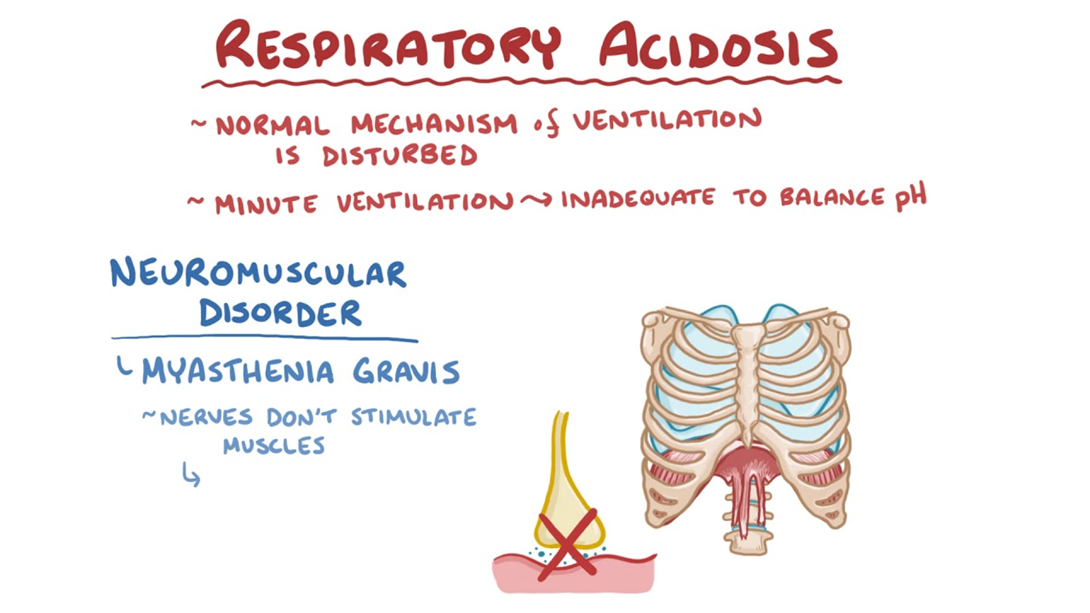
Choice D reason: PaCO2 55 mmHg is above the normal range of 35 to 45 mmHg and indicates respiratory acidosis, which is a condition where the lungs cannot eliminate enough carbon dioxide and the blood becomes too acidic. This can be caused by pneumonia, which can impair gas exchange and ventilation.
Nursing Test Bank
Naxlex Comprehensive Predictor Exams
Related Questions
Correct Answer is B
Explanation
Choice A reason: Restricting the client's calorie intake to no more than 2,000 calories per day is not an appropriate action, as it can impair wound healing and increase the risk of infection or malnutrition. The nurse should provide adequate calories and protein to meet the increased metabolic demands and support tissue repair and regeneration.
Choice B reason: Changing sterile gloves between caring for wounds on different areas of the body is an appropriate action, as it can prevent cross-contamination and infection of the burn wounds, which are susceptible to bacterial colonization and sepsis.
Choice C reason: Limiting movement or bending of the client's affected extremities is not an appropriate action, as it can cause contractures, joint stiffness, or muscle atrophy in the burned areas. The nurse should encourage early and frequent range of motion exercises and use splints or positioning devices to maintain functional alignment and mobility.
Choice D reason: Administering a diuretic if the client's urine output falls below 30 mL/hr is not an appropriate action, as it can worsen dehydration, electrolyte imbalance, or renal failure that can occur after severe burns. The nurse should monitor fluid status and urine output closely and administer intravenous fluids as prescribed to maintain adequate hydration and perfusion.
Correct Answer is D
Explanation
Choice A reason: Hypertension is not a sign of a septic reaction, but rather a sign of a hypertensive or circulatory overload reaction to the blood transfusion.
Choice B reason: Distended neck veins are not a sign of a septic reaction, but rather a sign of a circulatory overload or cardiac failure reaction to the blood transfusion.
Choice C reason: Polyuria is not a sign of a septic reaction, but rather a sign of a hemolytic or renal failure reaction to the blood transfusion.
Choice D reason: Vomiting is a sign of a septic reaction, which occurs when the blood transfusion is contaminated with bacteria. Other signs of a septic reaction include fever, chills, hypotension, and shock.
Whether you are a student looking to ace your exams or a practicing nurse seeking to enhance your expertise , our nursing education contents will empower you with the confidence and competence to make a difference in the lives of patients and become a respected leader in the healthcare field.
Visit Naxlex, invest in your future and unlock endless possibilities with our unparalleled nursing education contents today