
A nurse is contributing to the plan of care for a client who has a chest tube set to continuous suction to relieve a pneumothorax. Which of the following interventions should the nurse include?
Ensure the device is kept below the level of the client's chest.
Clamp the chest tube every 4 hr.
Place the client in a supine position.
Empty the collection chamber every 8 hr.
The Correct Answer is A
Ensuring the device is kept below the level of the client's chest is important to ensure that the drainage system functions properly by allowing the fluid and air to flow downhill. Placing the device below the level of the chest helps facilitate gravity drainage.
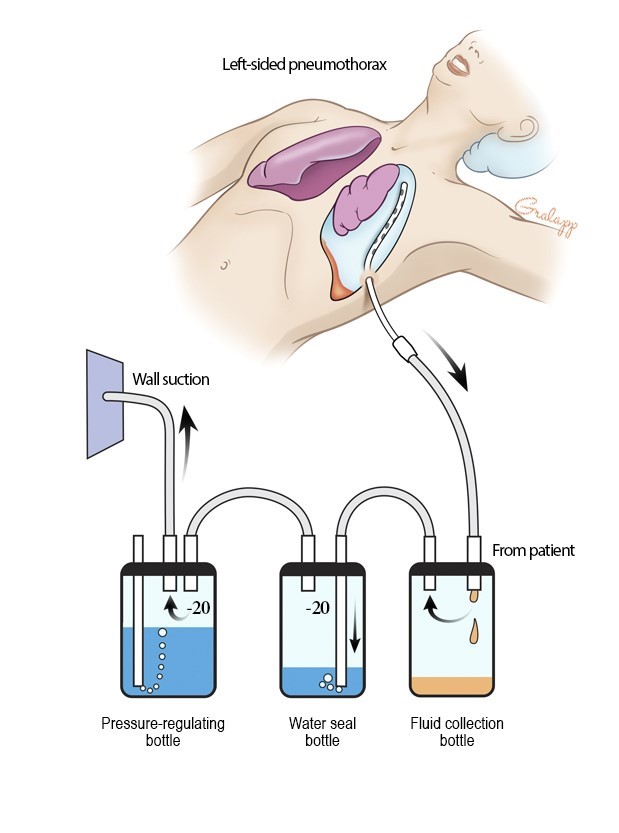
Continuous suction is required for proper functioning of the chest tube drainage system. Clamping the chest tube can disrupt the suction and impede the removal of air or fluid from the pleural space. Only in specific circumstances, such as when changing the drainage system or assessing for air leaks, may the healthcare provider request a temporary clamping of the chest tube.
Positioning the client semi-Fowler's, with the head of the bed elevated, can help promote lung expansion and improve oxygenation. The specific positioning may vary depending on the client's condition and the healthcare provider's recommendations.
The nurse should empty the collection chamber as per the facility's protocol, which typically includes monitoring the drainage and emptying it when it reaches a certain level. Regular emptying of the collection chamber helps maintain proper functioning of the chest tube system and allows for accurate measurement of drainage output.
Nursing Test Bank
Naxlex Comprehensive Predictor Exams
Related Questions
Correct Answer is C
Explanation
Document the client's behavior leading to the initiation of the restraints: Accurate and comprehensive documentation is essential in the client's medical record. This includes documenting the client's behavior or actions that necessitated the use of restraints. It is important to document the reason, duration, and type of restraint used.
Release the client's restraints every 2 hours or as per institutional policy: It is important to periodically release the restraints to assess the client's circulation, skin integrity, and overall well-being. Restraints should never be kept on continuously without intermittent release. Check the client's status every 15 minutes: The nurse should closely monitor the client's vital signs, level of comfort, and any signs of distress or complications. Frequent assessment ensures early identification and intervention if any issues arise.
Obtain informed consent: While obtaining consent is necessary for many procedures or treatments, including the use of restraints, it is not applicable in situations where there is an imminent risk of harm to the client or others. The use of restraints in mental health units is based on legal and ethical guidelines, prioritizing the client's safety and the safety of others.
Correct Answer is C
Explanation
Delirium is a state of acute confusion and cognitive impairment that can cause disorientation and difficulty with time perception. Reminding the client of the day and time frequently helps provide orientation and reduce confusion. It can help ground the client in reality and improve their understanding of their current circumstances.
Avoiding discussing the client's fears can hinder their ability to express and address their concerns. It is important to provide a safe and supportive environment where the client can communicate their fears and feelings.
Offering the client several choices at mealtimes might be overwhelming and confusing for someone experiencing delirium. It is generally better to provide structure and simplicity in their meal options, reducing decision-making demands.
Alternating daily caregivers can disrupt continuity of care and increase the client's confusion. Consistency in the caregiving team can help establish a therapeutic relationship and familiarity, which can aid in managing delirium.
Whether you are a student looking to ace your exams or a practicing nurse seeking to enhance your expertise , our nursing education contents will empower you with the confidence and competence to make a difference in the lives of patients and become a respected leader in the healthcare field.
Visit Naxlex, invest in your future and unlock endless possibilities with our unparalleled nursing education contents today