
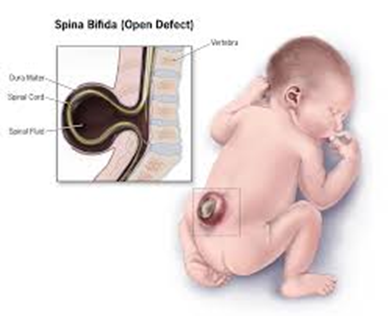
A nurse is planning care immediately following birth for a newborn who has a myelomeningocele that is leaking cerebrospinal fluid. Which of the following actions should the nurse include in the plan of care?
Cleanse the site with povidone-iodine.
Administer broad-spectrum antibiotics.
Prepare for surgical closure after 72 hr.
Monitor the rectal temperature every 4 hr.
The Correct Answer is B
Explanation
Choice A Reason:
Cleaning the site with povidone-iodine may further irritate the exposed neural tissue and is not recommended. Povidone-iodine is a strong antiseptic that can be damaging to delicate tissues.
Choice B Reason:
Administering antibiotics helps prevent infection, which is a significant concern when there is exposure of cerebrospinal fluid due to the open neural tube defect. Infection can lead to meningitis or other serious complications if not promptly treated.
Choice C Reason:
"Prepare for surgical closure after 72 hr," may also be part of the overall plan of care, but immediate administration of antibiotics takes precedence to reduce the risk of infection while the newborn awaits surgical intervention. However, the exact timing of surgical closure may vary depending on the specific clinical circumstances and recommendations from the healthcare provider
Choice D Reason:
Monitoring the rectal temperature is important for assessing the newborn's overall well-being, but it is not the most immediate priority in this situation. The focus should be on preventing infection and protecting the exposed neural tissue.
Nursing Test Bank
Naxlex Comprehensive Predictor Exams
Related Questions
Correct Answer is A,B,C,E,D
Explanation
Choice A Reason:
Instruct the client to empty their bladder: Emptying the bladder before the examination allows for better visualization and palpation of the uterus and fetal parts. A full bladder can interfere with the ability to assess the position, presentation, and engagement of the fetus accurately.
Choice B Reason:
Position the client supine with knees flexed and place a small, rolled towel under one of their hips: Positioning the client supine with knees flexed helps relax the abdominal muscles and provides better access to the uterus for palpation. Placing a small, rolled towel under one hip helps tilt the pelvis slightly, which can improve visualization and palpation of the uterine fundus.
Choice C Reason:
Palpate the fetal part positioned above the symphysis pubis: Palpating the fetal part above the symphysis pubis (typically the fetal head) allows the healthcare provider to determine the presenting part, engagement, and degree of descent of the fetus. This step provides valuable information about the fetal position and presentation.
Choice E Reason:
Palpate the fetal parts along both sides of the uterus: Palpating the fetal parts along both sides of the uterus helps the healthcare provider identify the fetal back and limbs. This step provides further confirmation of the fetal position and presentation and helps assess fetal lie and attitude.
Choice D Reason:
Palpate the fetal part positioned in the fundus: Palpating the fetal part in the fundus (typically the buttocks or head) confirms the findings from the previous steps and helps determine the presenting part and its relationship to the maternal pelvis. This step provides additional information about the fetal position, presentation, and engagement, which is crucial for assessing fetal well-being and planning for labor and delivery.
Correct Answer is B
Explanation
Explanation
Choice A Reason:
"Put a soft mattress in your baby's crib." This incorrect. Soft mattresses increase the risk of sudden infant death syndrome (SIDS) and suffocation. It's important to use a firm mattress in the baby's crib to reduce the risk of these adverse events.
Choice B Reason:
"Wash your baby's face with plain water." This is correct instruction to include in the teaching about home safety for a newborn. Washing the baby's face with plain water is a safe and appropriate way to keep the baby clean without the risk of irritation or allergic reactions that can occur with the use of soaps or cleansers in the early days of life.
Choice C Reason:
"Place a bumper pad in your baby's crib." This is incorrect. Bumper pads pose a suffocation and entrapment hazard for infants, and they have been associated with an increased risk of SIDS. Current guidelines recommend against the use of bumper pads in cribs to ensure the safety of the baby.
Choice D Reason:
"Bathe your baby immediately after a feeding." This is incorrect. Bathing a baby immediately after a feeding is not recommended because it may lead to discomfort, vomiting, or spitting up. It's best to wait for at least 30 minutes to an hour after a feeding before bathing the baby to allow time for digestion and to reduce the risk of regurgitation during the bath.
Whether you are a student looking to ace your exams or a practicing nurse seeking to enhance your expertise , our nursing education contents will empower you with the confidence and competence to make a difference in the lives of patients and become a respected leader in the healthcare field.
Visit Naxlex, invest in your future and unlock endless possibilities with our unparalleled nursing education contents today